
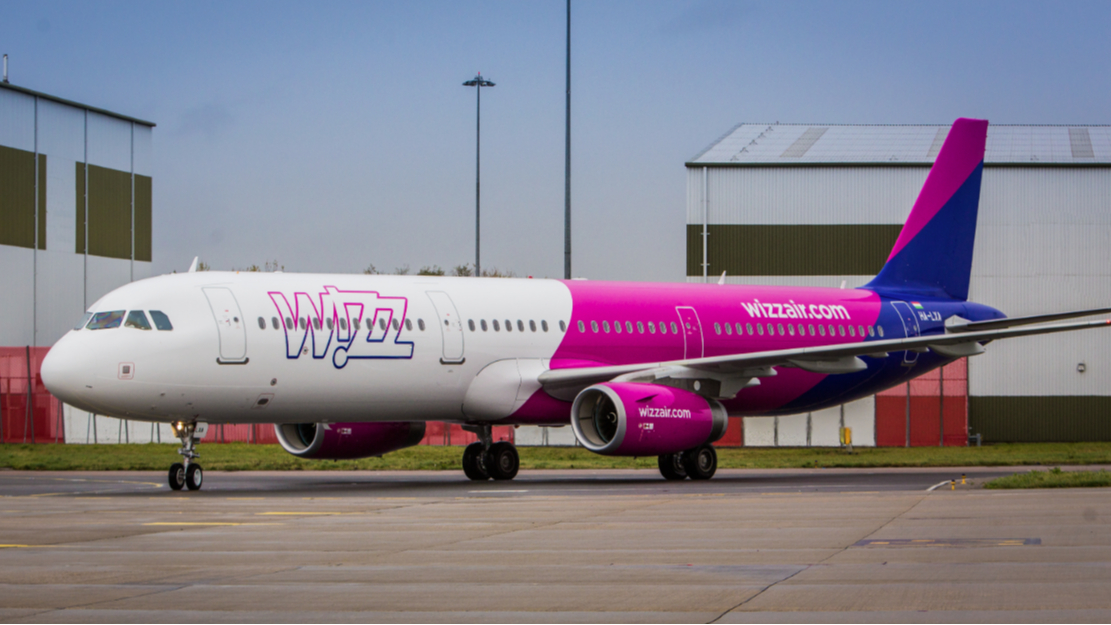
Wizz Air Holdings PLC (AIM:WIZZ) shares took off from their recent lows despite the airline reporting a total collapse in annual profit after aircraft groundings, higher costs and disruption in the Middle East offset record passenger growth.
The low-cost carrier flew a record 69.7 million passengers in the year to 31 March, up 10% from 63.4 million a year earlier, helping revenue rise 8% to €5.69 billion.
However, profit after tax slumped to just €1.3 million from €213.9 million in the previous year, while operating profit fell 17% to €139.7 million.
The analyst consensus forecast had been for a loss of around €50 million.
The airline continued to grapple with inspections of Pratt & Whitney geared turbofan engines, which left 30 aircraft grounded at the year-end, although this was an improvement on 42 aircraft a year earlier. The number has since fallen to 24.
Higher maintenance, depreciation, navigation and crew costs pushed non-fuel unit costs up 5.8%, while the company also faced disruption from the conflict in the Middle East. Wizz said the suspension of routes to Israel and other destinations during the year threatened to reduce earnings by around €50 million, although fuel hedges mitigated much of the impact.
Chief executive József Váradi said the company had strengthened its position by closing its Abu Dhabi base and redeploying capacity to core Central and Eastern European markets, where its market share increased to 25.3%.
Despite a positive start to the new financial year, Wizz declined to provide full-year guidance, citing uncertainty surrounding the conflict with Iran and the closure of the Strait of Hormuz.
However, the carrier said it expects capacity growth of 15% in the first quarter and 20% in the second as more aircraft return to service, but a decline in unit revenues is expected in the first quarter and only a modest improvement in underlying costs.
The shares rose 5.5% to 1,020p, having fallen over 27% since the start of the Iran war.
Profits came in "marginally ahead of potentially stale consensus", said Panmure Liberum.
The broker added that capacity growth is still set to accelerate but unit revenues are under pressure and unit costs are set to rise.
Guidance for non-fuel cost per available seak kilometre in the first half was for somewhere between flat and up by a low single digit, with fuel hedging increased.
"In our view, this points to a margin squeeze in H1, which is the seasonally profitable half of the year for the group," the broker said.
Also flagged was a balance sheet that is still not yet comfortable, with net debt/EBITDA is at 3.7x, "albeit better than the 4.4x from a year ago", with gross cash of €2.1 billion.
** UPDATE: Adds share price and broker comments **


