
- FTSE 100 closes down 146 points
- UK retail sales bounced back last month
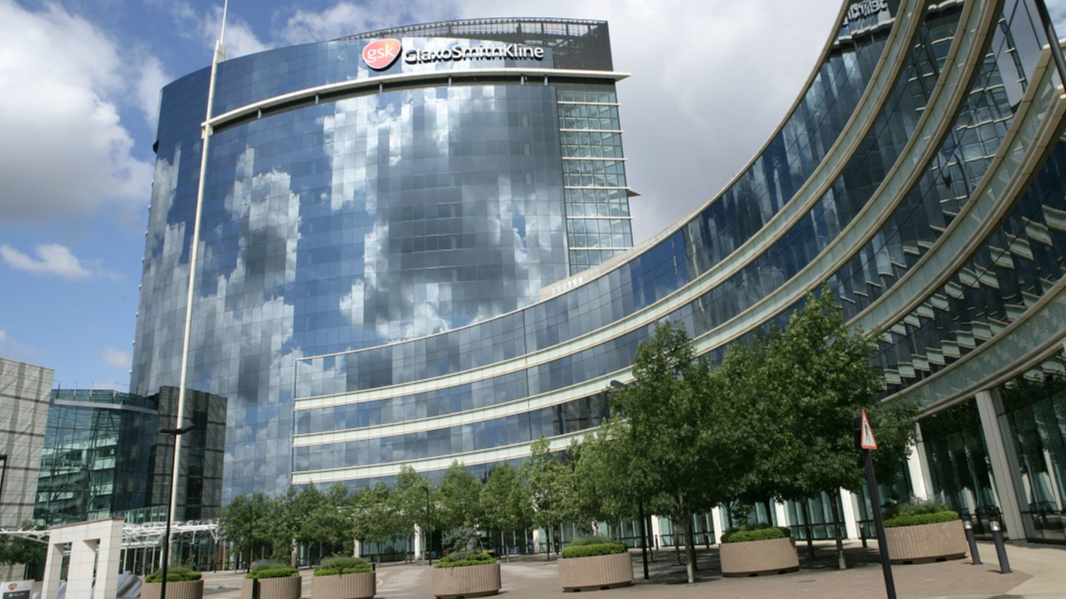
- GSK agrees £8bn takeover of US oncology specialist
4.55pm: FTSE closes lower
London's FTSE 100 closed lower on Tuesday, falling 1.4% or 146 points to 10,227, as losses in heavyweight healthcare stocks and Asia-exposed banks outweighed gains in housebuilders and consumer-focused shares.
Sentiment was supported by easing geopolitical tensions after Israel and Iran halted attacks, raising hopes for a potential U.S.-Iran peace track and helping to calm oil market concerns. However, stock-specific weakness kept pressure on the index.
GSK fell 2.7% after announcing its $10.6 billion acquisition of Nuvalent, while AstraZeneca slipped nearly 2% despite positive mid-stage trial results for its experimental obesity treatment.
4.18pm: Asia-focused lenders and miners lead London fall, techs hit in US
The London benchmark is off its low from just before the hour, which had extended to 100 points.
Asia-focused financials Standard Chartered (down 5.2%), HSBC and Prudential (both down 3.8%) are the biggest fallers.
Heavyweight miners are also big drags on the Footsie, with Glencore, Anglo American, Antofagasta and Fresnillo all lower, while oil majors BP and Shell are weaker too, after crude prices retreated.
Headlines and data from China often hit miners and the Asia-focused banks, but all I can see is news of President Xi returning from a trip to North Korea, while earlier trade data was strong.
BT, Babcock and technology-focused investment trust Polar Capital Technology Trust are also down more than 2%.
Across the Atlantic, the tech-heavy Nasdaq is down 1.4%, while the broader S&P 500 is down 0.8%, with the Dow a bit flatter.
3.42pm: Sudden sell-off
The FTSE 100 is on a slip-and-slide lower now, unable to gain traction as all but one of the index's largest dozen heavyweights is in the red.
Of that 12, HSBC, Shell, BP and Glencore are all down 2% or more.
US stocks have dived into the red too, with the Nasdaq falling 1.1%, the S&P down 0.6% and Dow dipping 0.2%.
In the background, oil prices have fallen further, with Brent down to just over $91 a barrel, 3.5% lower today and down from recent peaks above $97 in recent days.
This is in spite of Israel's chief of staff being reported as saying the recent attack on Iran was a "prelude to a stronger, more severe blow".
Bonds are not rising either. Peculiar. Gold is down 0.54%, silver 3.4%, but copper is up 1.1%.
The pound is up 0.5% versus the dollar, with the greenback weakening more broadly, with the DXY index down
2.56pm: Wall Street opens higher
US stocks continued their rebound in early trading on Wall St, with all three major indices rising around 0.7%.
The strongest gains on the S&P 500 came from semiconductor and technology names, with Lam Research, KLA and Applied Materials all up more than 6.5%, while consumer staples group JM Smucker joined the rally after reporting results.
On the Dow, Nike, American Express, Sherwin-Williams, Home Depot and Caterpillar among the biggest gainers as investors rotated back into cyclical and consumer-facing names after last week's sell-off.
1.48pm: China-focused banks hit FTSE
The FTSE's recuperation has taken a setback, with the index dragged down by China-focused named like Standard Chartered and HSBC, along with pharma and utilities.
Not clear what is alarming markets. All but two (Rolls and Unilever) of the index's 10 largest names are in the red this afternoon too.
In other news, the UK's Competition & Markets Authority has launched an investigation into Paramount's proposed $110 billion takeover of Warner Bros.
The CMA said a decision would be due by 7 August on whether to clear the deal or launch a more detailed 'phase two' investigation.
The tie-up, which would combine assets including Warner Bros, CNN and CBS, is already facing scrutiny on both sides of the Atlantic, with reports that several US states are preparing legal action to block the transaction.
Oil prices have come up a little, amidst reports of renwed fighting in the Middle East.
Lebanon said an Israeli airstrike hit the city of Tyre before an Israeli military warning.
UN secretary-general Antonio Guterres said on Tuesday he was “deeply alarmed” by the violence.
"All attacks must stop immediately. The ceasefires in Lebanon, Iran + Gaza must be fully respected,” he said in a social media post.
1.18pm: UBS view on AI trends
UBS argues last week's AI sell-off looked more like a positioning reset than a sign of weakening demand, noting that GPU prices continue to rise, supply constraints remain acute and AI server demand is holding up.
Chief investment officer Mark Haefele says he expects volatility to persist ahead of US inflation data out later this week and the Federal Reserve meeting next week.
But says heavy spending plans from companies such as Alphabet suggest the AI investment cycle remains intact and could broaden beyond chipmakers to benefit memory, optics and power management suppliers.
"Without taking any single-name views, we think this bout of volatility looks more like a reset in positioning than an end to the cycle," Haefele says.
"Near-term volatility in AI may stay elevated. Investors in tech now face a catalyst-heavy period, including US CPI data, the upcoming Fed meeting, and company updates from key foundries, AI labs, consumer tech producers, and memory makers."
He says the shift to agentic AI is "changing where bottlenecks sit in the AI supply chain, and widening the compute footprint required to deliver on cutting edge services" and thinks "this shift will benefit a broader set of hardware categories than the last phase of AI training and inferencing alone".
"Alongside higher CPU demand, we see the next leg of the cycle supporting demand for memory, optics, and select power management component makers.
"This next phase may not be as beneficial to prior AI market leaders, such as listed US megacap names, where compute spending demands continue to rise."
12.43pm: The benefits of Situational Awareness
A two-year hedge fund run by a former OpenAI researcher has grown to more than $20 billion in assets, overtaking Bill Ackman's Pershing Square and Dan Loeb’s Third Point, according to the Wall Street Journal.
Leopold Aschenbrenner's Situational Awareness has returned 270% this year and more than 1,000% since it launched with a few hundred million dollars.
It has seen a big jump from its early investment in Anthropic, which was made when the Claude AI company was valued at about $60 billion, with an upcoming IPO now estimated to be at a valuation close to $1 trillion.
The rise of the two-year-old fund is turning heads across Wall Street, not least because it has attracted backing from Jane Street, which rarely allocates money to outside managers, and because its 24-year-old, German-born founder had no professional investing experience before launching the firm.
Aschenbrenner graduated from Columbia University in 2021 and worked for around a year as a researcher in OpenAI's elite Superalignment team before starting his fund.
He was reportedly fired in April 2024 after raising internal security and espionage concerns and sharing related documentation. Here's his corporate mug-shot from Situational Awareness:
Aschenbrenner's success has also divided the AI safety community he emerged from, with some former colleagues arguing he turned warnings about existential AI risks into a pitch for investors, as Fortune puts it, while others believe his forecasts have simply proved prescient.
12.20pm: FTSE lagging, Wall Street futures green
The FTSE has slowly seen this morning's loss trimmed as the session has worn on, now down to less than 0.2%.
Mainland European markets are markedly more marvellous, with Milan's FTSE MIB leading with a 1.7% gain, and Madrid's IBEX up 1.3%.
The Euro Stoxx 600 is up 0.7%, with healthcare and consumer names out in front, Denmark's Zealand Pharma surging 12.9%, while flavourings groups Givaudan and Symrise added 6% after positive broker comments.
Advertising giant WPP rose 5.5% on a positive note from Berenberg, while semiconductor stocks were also in demand, with Infineon up 4.4% and BE Semiconductor advancing 3.9%.
US futures pointed to a firmer open after a mixed session overnight, with Nasdaq futures up 0.8%, S&P 500 futures ahead 0.4% and Dow Jones futures gaining 0.2%.
The Nasdaq would be building on the tech-led rebound yesterday, where the Composite index ended 0.9% higher, prompting hopes that last week's sell-off may prove to be a brief wobble rather than the start of a deeper correction.
11.47am: Ox Inst downgraded by Shore Cap
Shore Cap has downgraded Oxford Instruments despite annual results coming in ahead of expectations, with analyst Akhil Patel moving to 'hold' from 'buy'.
Patel says the results demonstrated the benefits of management's efforts to improve profitability and sharpen the group's strategic focus, with the strength of the order book supporting expectations for high-teen revenue growth and better margins in Advanced Technologies next year.
However, Shore Cap's positive recommendation was yanked, with the analyst arguing that the strong share price performance (+60% in the 12 months to yesterday) already reflected much of the operational progress, with the broker's target price of 3,300p retained.
With the shares down 5% to 2,916p that implies around 13% upside.
11.21am: FTSE trio joins banking-for-homeless scheme
Lloyds Banking, NatWest and Barclays have joined an expanded industry initiative designed to help people experiencing homelessness or housing instability gain access to bank accounts.
The programme, coordinated by UK Finance and housing charity Shelter, builds on Shelter's existing 'Breaking the Cycle' scheme developed with HSBC and will now also include Nationwide and Santander as well as the aforementioned Footsie-listed trio.
The initiative aims to help people who may not have the standard identification or proof of address normally required to open an account, a barrier that can prevent access to wages, benefits, housing and other essential services.
UK Finance said the pilot supports the government's financial inclusion strategy and is intended to improve access to banking services for financially excluded people.
Shelter said the original programme had already helped more than 7,000 people experiencing homelessness or housing instability to open bank accounts.
10.40am: Oil flows
UBS says oil and gas exports through the Strait of Hormuz remain severely disrupted after 100 days of conflict.
The June average is still in line with April-May at around three a day but still significantly lower than the pre-war daily average of nearly 50 crossings.
On a volume basis, exports averaged a million barrels or oil equiivalent a day and are at 1.2Mboe/d so far in June, close to the 1.3Mboe/d average in May.
Flows through the Bab-el-Mandeb Strait were close to average over the past four days, with fewer than two tankers a day crossing the waterway over the past four days compared with almost 50 a day in February.
Alternative export routes through Saudi Arabia's Yanbu and the UAE's Fujairah continue to absorb some of the lost volumes.
10.19am: FTSE hit by pharma and commodities
London blue-chips are down but most European markets are up, with Frankfurt's DAX up 0.5% and Paris, Madrid and others up 0.8% or more.
The FTSE's leading fallers are GSK (down 3.5%), Glencore (-2.2%), Standard Chartered (-2%), AtraZeneca (-1.85%) and BT Group (-1.7%).
BP and Shell are both down, 1.2% and 0.7%, which is another big weight on the index and helpoing explain the difference with mainland European peers.
Asian markets were even stronger this morning, with Korea's Kospi surging 8% on dip‑buying in the two AI hardware stocks Samsung and SK Hynix, following a rally overnight in US semiconductor stocks.
"Korea is insanely concentrated market with those two stocks making up about 40% of the index," notes Neil Wilson, market analyst at Saxo. China's Shenzhen market was up 3% and Japan's Nikkei 2% as "the good feeling rippled across Asian markets".
Oil prices have fallen further this morning, with Brent crude down 2% to $92.35 a barrel.
Wilson says: "President Donald Trump said negotiations would continue and by this morning was stating that talks towards a peace deal were in their 'final throes'."
Trump saod there are "ongoing negotiations in Iran and with Iran" and added that "we could have at least an idea by one or two days from now, but I think it’s going well".
This line from Trump, says Wilson, has been "strung out to us for weeks now so as ever it’s taken with a large dose of salt".
"Nevertheless, oil prices dipped, first after Israel and Iran appeared to stop shooting at each and then as Trump said talks were ongoing and close to an end."
9.43am: GSK deal bigger than investors probably expecting
Why is GSK down, some investors may be wondering.
There could be some concern about the size of the deal, which at $10.6 billion is substantially larger than management's previously indicated acquisition sweet spot and represents GSK's biggest takeover in more than a decade, despite analysts at UBS broadly backing the strategic rationale.
Overnight, multiple press sources reported that late-stage talks were taking place.
UBS analyst Matthew Weston says he would view a Nuvalent acquisition "as broadly in line with GSK's oncology strategy of targeting smaller subsets of patients with differentiated products but where the mode of action is already validated.
"We would expect investors may be surprised at the size of a potential acquisition >$9bn given management's previous commentary that $2-4 billion is their preferred deal size."
Offsetting this deal size, he says, is the fact that Nuvalent has two late-stage assets with validated pivotal data "which have the potential to contribute to sales and earnings trajectory pre-2030".
UBS's US biotech analysts forecast peak sales expectations for lead asset zidesamtinib in ROS-1 mutant lung cancer of $1.7 billion, versus the wider Wall Street consensus at $700 million.
9.20am: Retail gods smiling
Clive Black, retail sector guru at Shore Capital, says BRC data shows that "the retail gods decided to shine on the trade through the late May bank holiday to bring some welcome demand-led relief".
This was against a "weak backdrop, not helped by the cost worries associated with the Middle East conflict plus the ongoing dysfunctionality of the UK government".
With sales up 3.7% YoY in the month, Black says the industry will now be hoping that Thomas Tuchel and his England team can "sustain some external momentum so that one swallow a summer doth not make but some earnings lines have likely been bolstered".
He adds that forthcoming trading updates for the likes of Sainsbury and Tesco "will indicate whether wide initial FY27 guidance was a wise move, we sense so".
9.10am: Space funding boost for two investment funds
Shares in Seraphim Space Investment Trust and Molten Ventures have jumped around 13% and 9% respectively after satellite company ICEYE, which both hold in their portfolios, secured a valuation of more than €10 billion in a new funding round.
ICEYE, which provides space-based intelligence services to governments and defence customers, is the largest holding in Seraphim's portfolio, and will more than doubling its carrying value.
Molten Ventures said the funding would lift its net asset value from 760p to 877p.
8.37am: Bellway shares up
Bellway shares are up 1.8% after the trading update, despite saying sales had slowed further.
Analyst Sam Cullen at Peel Hunt seems to be reassured that the builder still expects operating profit to be within its previously guided range of £320-330 million for the 2026 financial year.
"In terms of forecasts, we expect no changes to consensus for FY26E, but for FY27-28E we expect the range to shift lower, as it looks the group will struggle to match this year’s result.
"This likely implies that consensus average PBT could fall by circa 10-15% for FY27–28E, although the extent of build cost inflation and the evolution of mortgage rates continue to make forecasting the next couple of years difficult."
Charlie Campbell at Stifel says: "We like the resilience that Bellway has demonstrated in trading and the levers management is pulling to improve returns, but valuation (0.6x book) is not yet compelling for us."
8.15am: FTSE 100 opens lower, GSK biggest faller
The FTSE 100 has opened 37 points lower at 10,336, with miners, software and defence companies a drag.
GSK is the leading faller, though, down 3% as investors don't seem to like the sound of it spending £8 billion on a US acquisition.
AstraZeneca is down 1.7% too.
Sage, RELX, Experian, Glencore, Babcock, Antofagasta, Frensillo are all down around 1% or more.
8am: Fever-Tree extends share buyback
Fevertree Drinks announced a £30 million buyback extension after saying trading has started positively in 2026.
The premium mixer maker said it remained on track to deliver adjusted revenue and EBITDA in line with market forecasts.
Chief executive Tim Warrillow said: "Notwithstanding the current uncertainty in the geopolitical backdrop, we are well hedged from a cost perspective and remain confident in achieving market expectations for both adjusted revenue and EBITDA."
7.52am: Bellway says sales softer but profits on track
Bellway has warned of a further slowdown in customer demand and renewed pressure on building material costs, but insisted that it remains on track to meet full-year profit guidance.
The housebuilder said trading improved at the start of the spring selling season compared with last autumn, but demand softened in April and May following a rise in mortgage rates.
Private reservations fell 6.2% to 151 per week in the period from 1 February to 29 May, down from the 0.66 rate detailed at its interims in March.
The overall reservation rate, including social housing, declined 5.1% to 186 per week. The cancellation rate remained low at 10%.
7.46am: UK retail sales rebound
UK retail sales last month were up 3.7% on last year, up from a 3.0% drop in April and March-April combo of 1.5% growth to account for a later Easter, according to the retail sales monitor from the BRC and KPMG.
Like-for-like sales rose 3.4%. Food sales increased 3.9% after decreasing 2.5% in April. Non-food sales were up 3.5%, against a decline of 3.3% in April.
"May’s heatwave drove a surge in outdoor and summer goods," says Helen Dickinson, BRC chief executive.
"Clothing and footwear returned to growth as shoppers snapped up summer essentials like sandals and sunglasses. There was also roaring trade in fans, lighter bedding, and outdoor toys, and food sales were lifted by bank holiday barbecues. As temperatures rose, many opted to shop online to avoid the heat, boosting online sales."
KPMG's Linda Ellett adds that some areas of clothing and footwear grew for the first time since the January sales.
Sarah Bradbury at IGD adds that "the outlook beyond summer is more uncertain due to rises in the energy price cap from July and the risk of further increases later in the year, alongside effects of the Middle East conflict expected to drive up food inflation, both risking a downturn in shopper confidence."
7.34am: GSK agrees £8bn oncology acquisition
GSK's new CEO Luke Miels has not wasted any time in setting out his stall as a dealmaker, with a deal struck to snap up US biotechnology company Nuvalent for £8 billion ($10.6 billion), adding "immediate" new sales growth opportunities, as well as a trio of advanced lung cancer drugs and other assets to boost its oncology pipeline.
The FTSE 100 pharma group said the deal would contribute to revenue growth from 2027 and be accretive to core operating profit in 2027 and core earnings per share in 2029, including synergies and reprioritisation.
Miels, who was promoted to CEO in January, said the acquisition "is a multi-product deal, consistent with our approach to acquire assets that have clinically proven targets and meaningfully address an efficacy and/or tolerability gap".
FTSE 100 pre-market open
Investors are not sure what to expect for London's blue-chips on Tuesday, though there should be a boost from a further easing in the oil price after Iran and Israel agreed to stop shooting at each other for now.
FTSE 100 futures are essentially flat, down less than three points, after yesterday the UK benchmark extended its winning run to a third day, though with a gain of only five points to 10,373.20.
Overnight, Wall Street stocks clawed back some ground from big losses on Friday, powered by the tech sector as the Nasdaq climbed 0.9%, the S&P 500 gained 0.3%, but the Dow Jones slipped 0.2%.
Brent crude oil is down 1.3% to just over $93 a barrel this morning, while Asian stocks are mostly higher, led by Korea's KOSPI and Japan's Nikkei, up 7.6% and 2% respectively. Chinese and Hong Kong benchmarks are just above flat.
OpenAI confidentially filed for an IPO overnight, with the ChatGPT developer reported to be looking at a potential listing in the autumn. Following upcoming floats from SpaceX and Anthropic.
"The major question yesterday," says market analyst Ipek Ozkardeskaya at Swissquote, "was whether the tech rout that started on Friday, on the back of stronger-than-expected US jobs data and a few other reports suggesting that new technologies could reduce the need for DRAM memory while AI safeguards could slow adoption, would mark the beginning of a deeper – and much-needed – correction, or just a blip.
"The early answer is: it could be another blip."
But she notes that the latest energy market data warns that global oil reserves have now dropped to operational stress levels.
"Pricing across energy and risk markets is largely ignoring the energy crisis. The risk is that the rally stops when there is no more fuel."


