
As the US scrambles to rebuild domestic supply chains for critical minerals tied to defence and industrial manufacturing, projects once considered niche are rapidly moving into strategic focus.
It's a shift that is reshaping interest in commodities like antimony and tungsten — both heavily dominated by Chinese processing and both increasingly viewed as essential to Western supply security. For Resolution Minerals Ltd (ASX:RML, OTCQB:RLMLF, FRA:NC3), it has created an opening to reposition its Horse Heaven project in Idaho around a much bigger geopolitical theme.
That positioning was on display this month when Resolution presented at the Defense, Innovation & Infrastructure Forum at Mar-a-Lago in Florida, reflecting the increasingly political dimension of critical minerals supply chains in the US, and how sharply the narrative around these commodities has shifted.
Supply chain security reshapes the sector
Antimony and tungsten — once niche corners of the resources market — are increasingly being discussed alongside national security, defence manufacturing and Western supply chain independence. It’s been a particularly important shift for antimony.
China still controls more than 80% of global antimony processing capacity, while the US remains effectively import dependent for a metal used in ammunition, semiconductors, flame retardants, batteries and a range of military and industrial systems. Resolution argues the issue is no longer just access to raw material, but the lack of Western refining and downstream processing capability needed to turn antimony into usable end products for defence and manufacturing supply chains.
That dynamic is reshaping how projects like Horse Heaven are being viewed. Rather than simply another exploration play, the Idaho project is increasingly being positioned around the broader US push to rebuild domestic critical minerals production and processing capacity at a time of rising geopolitical and supply chain tensions.
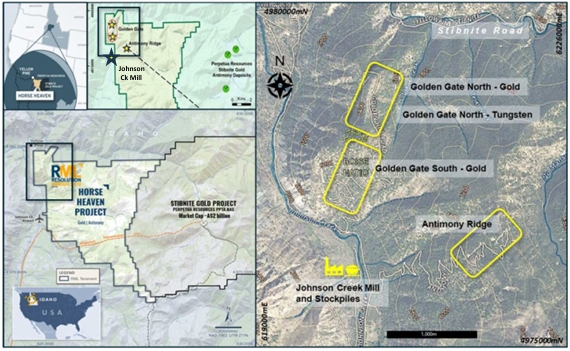
Horse Heaven Project: Antimony Ridge/Golden Gate. Three projects, one property — antimony, tungsten, gold (Source: Resolution Minerals)
Antimony Ridge moves into focus
The centrepiece of the strategy is Antimony Ridge, a historically mined antimony system adjacent to Perpetua Resources’ permitted Stibnite Gold Project in Idaho — a 6-million-ounce gold project that also hosts one of the largest known antimony resources in the United States.
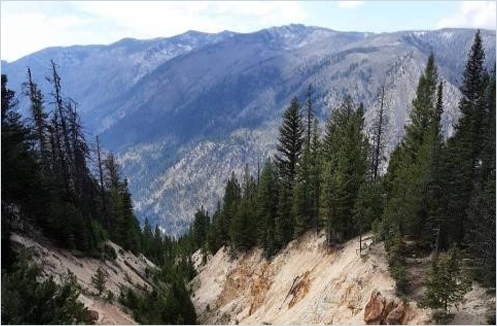
Antimony Ridge
Resolution notes that the project was historically mined during World War I, World War II and the Korean War as part of US military supply chains, with around 3,000 feet of historical open pits already developed across the ridge.
More recently, exploration work has started to highlight just how high-grade parts of the system may be.
The company has reported rock chip samples grading between 30% and 50% antimony, alongside silver grades reaching as high as 1,420 g/t and associated gold mineralisation.
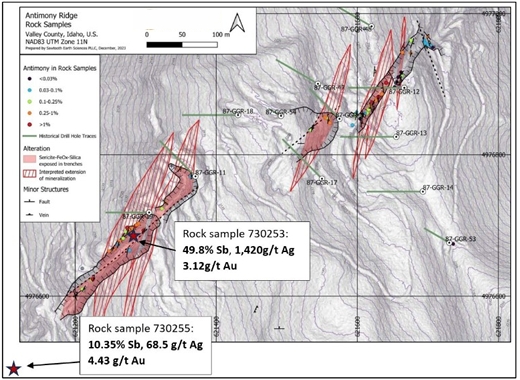
Resolution believes those high-grade stibnite veins sit inside a much broader lower-grade halo system spread across an area roughly 1,000 metres by 700 metres and extending about 250 metres vertically.
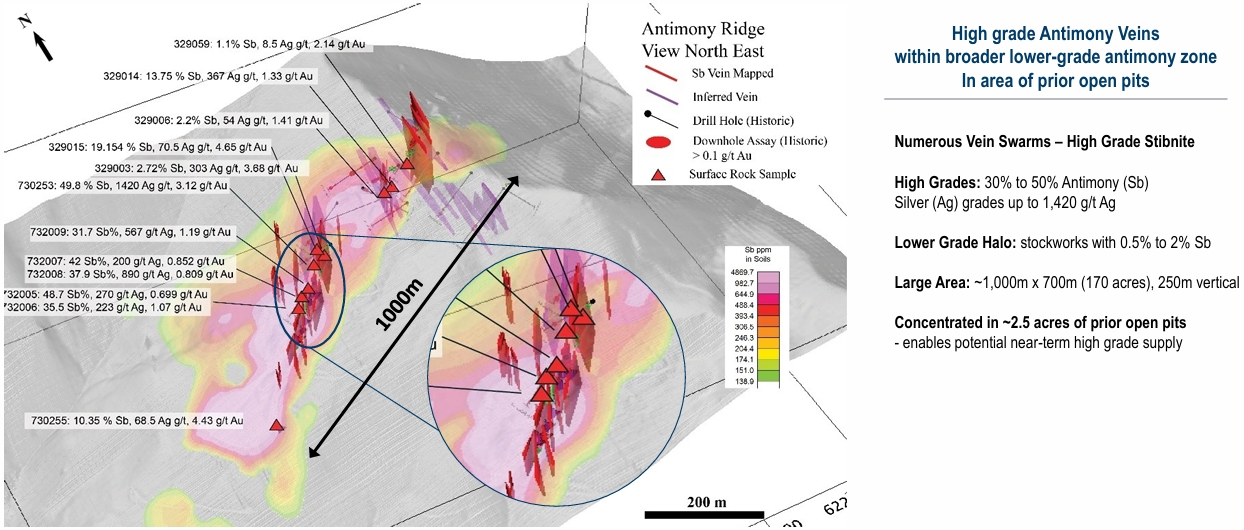
Antimony Ridge: Potential size — high-grade veins
Building a domestic processing angle
The company’s recent metallurgy work has also added another layer to the story.
Recent test work produced antimony trioxide grading 99.4 weight per cent, while management is now targeting a hydrometallurgical pilot plant in 2026 and a potential commercial plant in 2027.
That processing angle is becoming increasingly central to the investment case.
While antimony prices and supply constraints have strengthened the resource opportunity itself, Resolution argues the bigger opportunity may lie not just in mining antimony, but in helping rebuild domestic US processing capability for strategic metals.
The project has also received FAST-41 transparency coverage through the US Federal Permitting Improvement Steering Council — a framework designed to help accelerate permitting for strategically important infrastructure and resource projects.
For a junior explorer, that kind of regulatory positioning is unusual, and reflects how much the US critical minerals conversation has accelerated over the past two years.
Golden Gate builds a larger gold story
While antimony currently dominates the macro narrative, Resolution’s broader Horse Heaven land package also contains a sizeable gold and tungsten opportunity at Golden Gate.
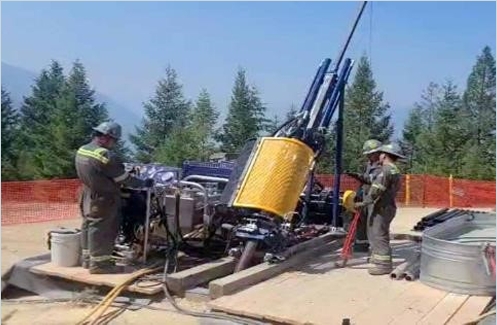
Golden Gate
The company controls 14,580 acres of federal mining claims in Valley County, Idaho, immediately adjoining Perpetua’s multimillion-ounce Stibnite project, with Resolution arguing the systems share similar intrusion-related geological characteristics.
Recent drilling at Golden Gate has already started to build a larger gold exploration story.
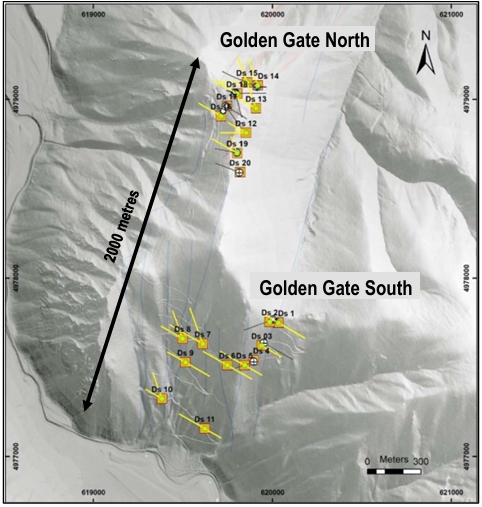
A 2025 drill campaign returned long mineralised intercepts including:
- 253 metres at 1.5 g/t gold from surface;
- 265.2 metres at 0.60 g/t gold from surface; and
- 197.5 metres at 1.26 g/t gold from 34 metres.
Several holes ended in mineralisation, while the company says the broader gold system now extends more than 3 kilometres and remains open in multiple directions and at depth.
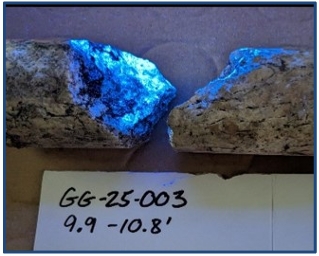
Photo of drill core HHGG25-003 (9.9ft to 10.8 ft downhole depth) showing an oxidised manganese-quartz mineralised vein cross-cutting altered quartz-feldspar intrusive, with 2% scheelite estimated of core section.
Resolution is now preparing a much larger 2026 drilling campaign comprising up to 13,700 metres across as many as 45 holes, with maiden resource work targeted for late 2026 or early 2027.
Tungsten strengthens the strategic case
The tungsten component adds another strategic dimension.
Golden Gate historically produced tungsten intermittently in the 1950s and from the 1970s to 1980, reportedly grading between roughly 1.5% and 2% WO3.
Resolution has also acquired the historic Johnson Creek processing mill and surrounding private land, while reassessing historical stockpiles and underground workings.
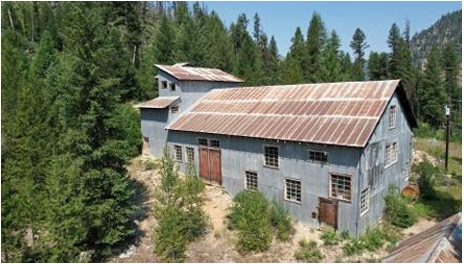
Johnson Creek tungsten and antimony mill
Recent work identified scheelite mineralisation in drilling, and the company plans additional tungsten-focused drilling across both Golden Gate North and Golden Gate South this year.
Like antimony, tungsten is increasingly being viewed through a strategic lens due to its use in defence systems, aerospace, industrial manufacturing and high-performance alloys.
A broader US critical minerals narrative
Resolution’s messaging at the Mar-a-Lago forum reflects a much broader strategic pitch centred on US domestic critical minerals security and industrial capability, rather than simply advancing a conventional exploration project.
That includes an intended Nasdaq listing alongside its ASX presence, as well as growing emphasis on US-facing management, processing capability and domestic supply chain positioning.
The management team itself reflects that shift.
Recent additions and advisers include executives involved in North American lithium mine restarts, rare earths processing and large-scale project financing, alongside technical staff with experience at Perpetua’s Stibnite project.
Resolution is also relatively well funded for an explorer at this stage, reporting A$28.2 million in cash following a recent $20 million placement, with no debt.
The near-term focus now appears relatively clear:
- fast-tracking antimony development studies and metallurgy;
- expanding gold drilling at Golden Gate;
- reassessing tungsten potential; and
- progressing permitting pathways tied to potential domestic processing.
With antimony and tungsten now attracting growing strategic attention from governments and defence-linked supply chains, Resolution is attempting to advance Horse Heaven at a time when Western markets are actively searching for new domestic sources of critical minerals and processing capacity.
The coming drilling, metallurgy and permitting milestones will likely shape how large a role the project can ultimately play in that shift.
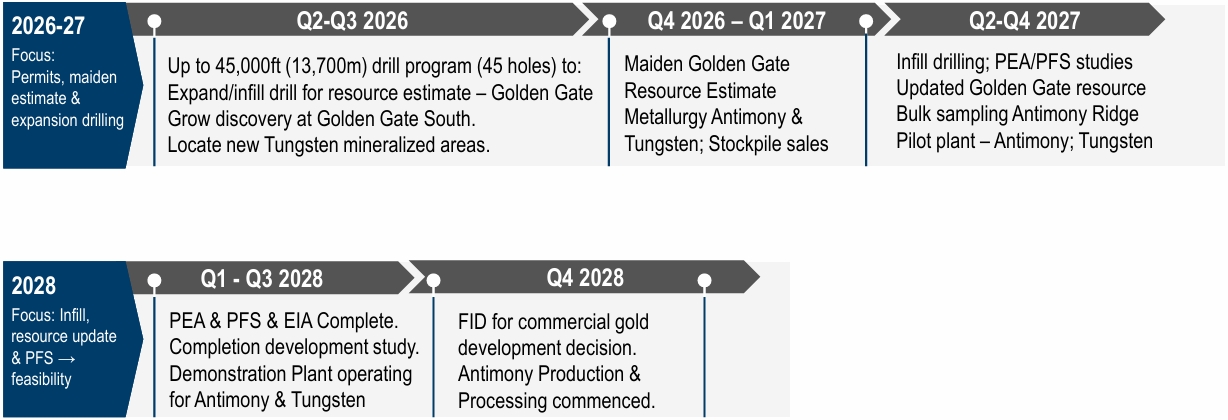
Horse Heaven: Action Plan