
- FTSE 100 closes at 7,243
- US markets ahead
- Prince Charles delivers Queen's speech
4.55pm: FTSE closes ahead
FTSE 100 closed higher on Tuesday but the backdrop to UK markets is still one dominated by fears over growth and the economy.
Britain's blue-chip benchmark finished the day around 26 points to the good, or 0.37% up, at 7,243.
"Stomach-churning volatility continues to dominate financial markets," noted Chris Beauchamp, the chief market analyst at online trading group IG.
"After the sharp falls of last Friday and yesterday, some cautious buying has come in, but it looks like the best that they buyers can muster is a holding action for now.
"Comments from the Fed’s Williams that 50 basis point rises makes sense at the next two meetings provided some comfort, but it certainly isn’t clear that the see-saw price action of the last 24 hours is going to resolve into even a short-term market low," he added.
3.45pm: Bitcoin dips
Bitcoin so far this year has failed to live up to its status as ‘digital gold’, let alone as a safe haven during times of economic uncertainty, and has briefly dipped below US$30,000 for the first time in nearly a year.
Currently, the largest coin by market cap is trading at US$32,000, but analysts fear that the coin could continue to plunge further amid the backdrop of global uncertainty.
Flirting with the US$30,000, the token finds itself at an important part of its cycle. (Read more)
3.10pm: EV battery shortage on the horizon
There could be a shortage of electric vehicle batteries as soon as 2025, according to the chief executive of Stellantis.
Speaking at a car industry conference, Carlos Tavares, CEO of one of the largest car makers, said “I can anticipate that we will have around 2025, 2026, a short supply of batteries, and if there is no short supply of batteries then there will be a significant dependence of the western world vis-a-vis Asia.”
He believes production may not match demand, despite investments in gigafactories, notably by Tesla and Elon Musk, across the globe.
2.40pm: Wall Street opens higher
US stocks opened higher, meeting analysts’ pre-market expectations as they look to recover from major losses incurred yesterday.
The Dow Jones index was up 1.24% to 32,645 points, while the S&P 500 rallied 1.47% in early trading to reach 4,049.
Investors will be hoping the tech-laden Nasdaq can offset some major losses made not just yesterday but the year so far, with the index down 26% in the first five months of 2022.
Currently, it is up nearly 2% to 11,855 points.
2.18pm: Hay fever tablet shortage
High street chains Boots and Superdrug claim they have run out of some hay fever medicines, with the producer GlaxoSmithKline blaming temporary supply chain issues.
Piriton and Piriteze tablets, produced by the pharma company, are out of stock due to an industry-wide shortage of chlorphenamine maleate, the active ingredient in the medication.
Boots said four of its 90 hay fever products were affected by the shortage, the Piriton tablets as well as its own brand version.
However, the products are anticipated to be back in healthy supply within the next few weeks, a Boots spokesperson told the Guardian.
Currently, there is no cause for concern among members of the public plagued by the allergy, with The Royal Pharmaceutical Society adding there are plenty of other hay fever medicines available.
1.50pm: Peloton's falling behind
Peloton is the perfect example of pandemic winners tumbling in the post pandemic period.
The home workout machine posted deeper losses than expected, with revenue estimates for the full-year down to US$3.7bn, despite being US$5.4bn at the end of the previous financial year.
Michael Hewson, a chief market analyst at CMC Markets UK said “Peloton’s biggest problem is its inventory, it simply has too many products it can’t shift, with little sign of a demand pickup any time soon.”
“Its bikes and treadmills are still very expensive even with the recent price cuts, and with inflation still rising consumers are going to be even more price sensitive than they are now.”
“This high level of inventory is a problem for a company with not much in the way of cash and could see it become the target of renewed takeover interest in the coming weeks, even with the long-term funding deal of $750m it has just agreed with JPMorgan and Goldman Sachs (NYSE:GS).”
“There was some interest a few months ago, with names like Apple, Nike and Amazon getting bandied about, and with the shares even lower now than they were then there could well be renewed interest at a much lower price.”
“In short, it’s been a horrible 18 months for Peloton, going from the yellow jersey pandemic leader to the lantern rouge, or red lantern position, sliding ignominiously to the rear of the pack, as we look to trade at new record lows.”
1.15pm: Queen's speech promises to tackle cost-of-living
More on today’s Queen’s speech from Becky O’Connor, head of pensions and savings at interactive investor.
“Tackling the cost-of-living crisis was rightly among the first priorities laid out in the Queen’s Speech – the number of people struggling with covering their essentials, a large proportion of whom are pensioners, grows by the day.
“As well as making it harder to afford the cost of living, inflation is eating away at the pension pot valuations of millions of retired people.”
“Efforts to bring inflation down as soon as possible are vital for this group, who may be worried that the current market conditions mean their pension pots will not last.”
“The plan to reform and cut taxes will give those workers currently paying the highest tax rates some hope that this extra burden from taxation will not last forever.”
“Reducing the tax burden and tackling inflation could mean that people building up a pension feel able to start thinking about their future financial security a bit more, and maybe increase their contributions, rather than continuing to put the future on the backburner, in order to deal with the day to day.”
1.03pm: US preview
US markets are expected to open higher, recovering from the worst day for global stocks since June 2020, as bargain hunters take advantage of the selloff.
Futures for the Dow Jones Industrial Average gained 0.65% in Tuesday's pre-market trading, while those for the broader S&P 500 index rose 0.77% and the Nasdaq added 1.38%.
Markets fell sharply on Monday as inflation, rising interest rates, recessionary fears and the continued impact of China’s pandemic restrictions and the war in Ukraine weighed on the minds of investors.
Tech stocks were the worst hit, pushing the Nasdaq 4.3% lower to a fresh 2022 low of 11,623. The S&P 500 shed 3.2% to 3,991, below the psychological 4,000 level, while the Dow closed 2% lower at 32,246.
While Wall Steet sank the most in two years, Neil Wilson, chief market analyst at Markets.com, pointed out that Bitcoin briefly sank under $30,000, MicroStrategy dived 25%, Tesla was off 9%, Coinbase fell 20% and Cathie Wood’s ARKK exchange-traded fund (ETF) declined almost 10% amid a total rout of the tech sector.
“The wheels off, at least certainly for a lot of the quack investments, crypto shills and the rest of those who mistook a free-money, debt-fuelled momentum bubble for real hard cash,” Wilson said. “Yesterday was carnage, but was it capitulation? Stock markets in Europe and US futures are attempting to rally this morning but we still question whether the bottom is in. (It's) likely to be a short-covering rally for now as I feel we are not at max fear levels yet.”
Wilson noted that commodities weren’t spared either, with gold tumbling to $1,852 and remaining under pressure Tuesday morning. Brent Crude Oil (LSE:BRENT) (Brent Crude Oil (LSE:BRENT)) was steady at around $105 a barrel after deciding close to 6% on Monday.
"It was the worst day for global stocks since June 2020," Wilson added. "The difference between then and today is the Fed no longer has the market’s back and there is not a few trillion in stimulus cheques incoming. And the Fed won’t blink unless there is a top in inflation – CPI data tomorrow will be watched carefully.”
12.30pm: Housebuilders still on top
London's blue-chip index has retreated slightly from some of its earlier gains, currently up 36 points to 7,253.
Housebuilders Barratt, Persimmon and Taylor Wimpey continue to be some of the index's largest risers.
Oil and gas companies Shell and BP are some of the fallers after fresh claims of a windfall tax by Tesco's chairman.
11.53am: Queen's speech
In a historic moment, Prince Charles delivered today’s Queen's speech in Parliament, with Queen Elizabeth II missing it only for the third time in her reign due to mobility problems.
The eventual heir to the throne said the Queen’s government’s priority is to strengthen and grow the economy while easing the cost of living burden on families.
“Her Majesty’s Government will drive economic growth to improve living standards and fund sustainable investment in public services,” Prince Charles said.
“This will be underpinned by a responsible approach to the public finances, reducing debt while reforming and cutting taxes.”
“Her Majesty’s Ministers will support the Bank of England to return inflation to its target.”
Her Majesty also pledges to “champion international trade, delivering jobs across the country and growing the economy,” as well as “encourage agricultural and scientific innovation at home.”
Legislation to strengthen the financial services industry will also be supported, as well as establishing the UK Infrastructure Bank in legislation to help economic growth and deliver on net zero targets.
11.43am: Retailers fear impact of inflation
Retailers fear that higher inflation and falling incomes could plunge them into collapse after data showed UK retail sales fell in April.
Research from the trade association British Retail Consortium and KPMG found retail sales were down 0.3% in April, compared to the three months prior, which saw average growth of 3.2%.
Over a 12 month period, the average is 6.4%, which would suggest that sales are down for the first time in a year.
Big ticket items such as electrical goods and furniture were hit hardest, with those products impacted further by production and manufacturing issues in China.
“Against a backdrop of falling consumer confidence, the retail sector has a bumpy time ahead as they face spiralling cost pressures from all directions,” said Paul Martin, head of UK retail at KPMG in the Evening Standard.
“The longer we see high inflation and real household incomes falling, the more likely it is that consumers will change their spending behaviour, prompting a decline in the health of the retail sector and possibly more casualties on the high street.”
Footsie constituents Burberry, JD Sports, Tesco and AB Foods will likely feel the brunt as consumers become increasingly wary of what to spend their money on.
11.14am: Energy windfall tax
Tesco’s chairman John Allan reignited calls for a windfall tax as British Gas owner Centrica expects annual profits to hit the top of end of market expectations.
Allan told BBC Radio 4 that he hopes today’s Queen’s Speech will include plans to assist people in need, advocating that oil and gas companies pay a tax to subsidise rising energy bills.
“I think there’s an overwhelming case for a windfall tax on profits from those energy producers, fed back to those most in need of help with energy prices,” Allan.
“I think that would be the single biggest thing that could be done.”
Tesco chairman John Allan on @BBCr4today calling for a windfall tax on energy firms to ease cost-of-living crisis...
— Hannah Uttley (@huttleyjourno) May 10, 2022
10.47am: Bargain hunting
After the shake-out comes the bargain-hunting …
The FTSE 100 was up 66 points (0.9%) at 7,283 as the “sell everything” mood abated, at least for now.
“Yesterday was carnage, but was it capitulation? Stock markets in Europe and US futures are attempting to rally this morning but we still question whether the bottom is in...likely to be a short-covering rally for now as I feel we are not at max fear levels yet,” suggested Neil Wilson at Markets.com.
The FTSE 250 was up by a similar percentage to its bigger brother – up 180 points (0.9%) at 19,487, led by Centrica PLC (LSE:CNA), which was up 4.8% after a profits upgrade.
#Centrica delivers strong update, expects FY earnings at the top end of expectations. Also trying to mitigate bad PR by showing how much it is helping customers who are struggling
I doubt that will stop it being Mr Burns'd by the public, joining others such as #Shell and #BP
— James Brumby (@JamesAtLangton) May 10, 2022
Fellow mid-cap Future PLC (LSE:FUTR) was 1.6% firmer after it said it had acquired WhoWhatWear, a digital-only women's lifestyle publisher based in the US.
10.00am: Quick snapshot
FTSE 100 added 56 points at 7,272 in spite of more heavy losses on Wall Street overnight. Melrose Industries is top, boosted by a note by JP Morgan which believes the corporate buy, improve and sell specialist has near 50% upside.
Centrica expects full-year adjusted earnings per share to be around the top of the range of forecasts. The British Gas owner said it had delivered a strong operational performance in the first four months of 2022.
Sales of used pure electric cars reached record numbers in the first three months of the year in the UK. The market share for EVs remains modest at just 3.6%.
Wizz Air has signed a contract with Saudi Arabia to "explore airline market development opportunities" in the kingdom. Saudi Arabia has an ambitious vision to triple airline passenger traffic by 2030 as part of its Vision 2030 programme.
Seeing Machines has won its first contract with a Japanese carmaker for driver monitoring technology. Worth A$$21mln, production will start in 2025 and takes the total number of contracts with vehicle makers globally to nine.
Maxcyte raised guidance after a strong start to the year that saw the cell engineering specialist’s revenues increase by 78% in the first quarter. It expects top-line growth of at least 25% from the core business, while milestone income from licensing agreements is set to be in the order of US$4mln.
Technology Minerals' associate Recyclus has been granted an environmental permit at its lead-acid battery recycling plant in Tipton, West Midlands. "The granting of the EA permit is a crucial step forward,” said chairman Robin Brundle.
9.35am: UK used car sales climb
The UK used car market vroomed higher in the first quarter, with record sales of battery electric vehicles, but growth has started to slow.
Used car sales grew 5.1% in the first three months of 2022, according to new industry data, with 1,774,351 cars changing hands.
However, sales in March fell almost 7%, following growth of close to 18% in January and more than 7% in February.
Transactions involving battery EVs more than doubled, with the market up 120.2% in the quarter, the Society of Motor Manufacturers and Traders (SMMT) said.
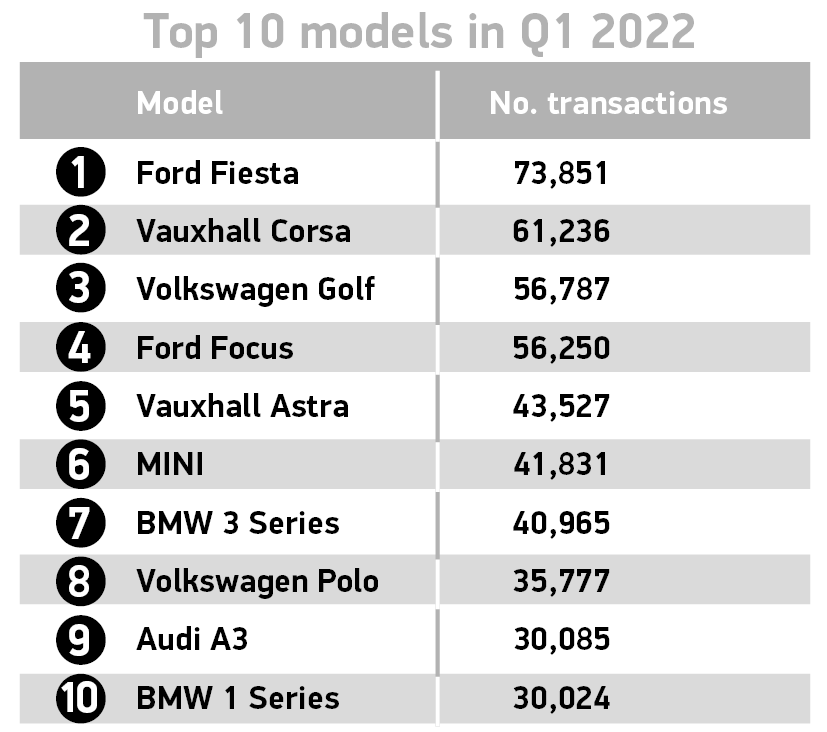
The Ford Fiesta and Vauxhall Corsa were the top models in the quarter.
8.50am: Rebounding stocks
Rebounding stocks are leading the Footsie risers, including GKN owner Melrose Industries PLC (LSE:MRO, OTC:MLSPF), industrial software company AVEVA Group PLC and paper and box makers such as Mondi and Smurfit Kappa.
Cigarette makers Imperial Brands PLC (LSE:IMB) and British Tobacco PLC were both higher on news that rival Philip Morris is in talks to buy US$11.5bn peer Swedish Match.
Publisher Future PLC (LSE:FUTR) was up more than 1% after buying US fashion website WhoWhatWear "to bolster our women's lifestyle scale and reach".
Top of the FTSE 250 leaderboard is British Gas owner Centrica PLC (LSE:CNA) after it gave a bullish outlook for full-year earnings.
Some US focused stocks are in the red, including Baillie Gifford US Growth Trust, after the 4% sell-off on the Nasdaq to a 19-month low, with tech stocks hit particularly hard, including Tesla shedding more than 9% and Uber declining 11.5%.
Over the past three days, Apple has lost US$220bn of market cap and Tesla has pushed back below the $1 trillion valuation mark.
"This sense of bearishness is preventing opportunistic investors from scooping up discounted stocks at cheaper prices on the expectation that there is likely to be more pain to come. However this morning it looks like there could be some relief for the markets, suggesting yesterday’s sell-off was somewhat overdone," said Victoria Scholar, head of investment at Interactive Investor.
In Europe, Scholar said markets are attempting to regain some ground after Monday’s drop with technology, which was hit hardest yesterday, leading the gains, though gains on the FTSE 100 are more tempered than those on the continent.
"The fact that inflation is marching higher, the cheap money era is ending, China is facing an economic slowdown and the war in Ukraine endures are all coming together to provide a daunting reality check that has contributed to the more than 100% surge in the VIX volatility index since the January low.”
8.30am: FTSE rebounds, a bit
London’s blue-chip index opened higher than predicted, climbing 54 points to 7,269 to recoup a small portion of the losses from yesterday.
This is despite the economic outlook remaining gloomy, said Naeem Aslam, a market analyst at Avatrade.
“Dark economic outlook, soaring inflation, and fear of stagflation are driving the current momentum in the global equity market.”
“The US equity indices hit their lowest level in thirteen months yesterday. Despite this weakness which represents an opportunity for bargain hunters, some have doubts about their participation in the markets today as they believe that the activity may not last for long.”
“Basically, equity traders are also feeling uncomfortable about the Fed's warning of worsening liquidity conditions across key financial markets due to the rising risk factors such as stagflation.”
“However, it is important to state that if the next inflation reading shows that it has reached its optimum level, then it is by no means exaggeration that the Fed's hawkish stance has peaked as well.”
“And this means that the current fear about the Fed's hawkish monetary policy is only creating excessive fear among traders. Hence, the existing sell-off could be an opportunity for traders and investors.”
6.44am: Market preview
The FTSE 100 is being called marginally higher on Tuesday despite Wall Street stocks tumbling further overnight.
London’s blue-chip share index is heading for a 17-point gain, according to the IG spread-betting platform, after falling 2.3% at the start of the week to 7,216.6.
Overnight, tech and other growth stocks, as collected on the Nasdaq and the Russell 2000 indices, fell over 4% to levels last seen in late 2020.
The S&P 500 index gave up 3.2% and the Dow Jones dropped 2%.
The US dollar continued to gain ground, making a new 20-year high, though it was outperformed by the Japanese yen.
Oil prices also reversed course, with Brent crude reversing all of the previous week’s gains in a single day, sliding 6.5% as the EU fails to agree on a ban on Russian oil and worries increase about demand from China as pandemic lockdown rules were tightened.
“For a good part of this year the rise in US bond yields has helped put downward pressure on stock markets over concerns that higher rates would tighten financial conditions, as well as putting upward pressure on real yields,” said market analyst Michael Hewson at CMC Markets.
“Yesterday we saw both yields and stocks fall heavily in unison in a move that could be being driven by a fear that the global economy is heading for a sharp slowdown, stagflation or even recession.
“The price action yesterday shows that markets are becoming more concerned about one or all of these scenarios, than they are about rate rises, on the basis that any coming rate hikes could well soon be reversed by rate cuts.”
Around the markets
Pound up 0.2% to US$1.2366
Oil down 0.75% to US$105.14 per barrel of Brent crude
Gold up 0.5% to US$1864
Bitcoin down 4.7% to US$31,915.3
6.50am: Early Markets - Asia / Australia
Shares in the Asia Pacific were mostly lower on Tuesday following a heavy selloff overnight on Wall Street that saw the tech-heavy Nasdaq Composite tumble 4.3%.
Japan's Nikkei 225 fell 0.29% and South Korea’s Kospi slipped 0.37%.
The Shanghai Composite in China gained 1.07% while Hong Kong’s Hang Seng index declined 1.88% after returning to trade following a holiday on Monday.
Australia’s S&P/ASX200 tumbled 1.16% as the Australian dollar sunk to its lowest level in nearly two years, hitting 69.45 US cents.
The US dollar index hovered near a 20-year high as it continues to rally on its safe-haven appeal.