
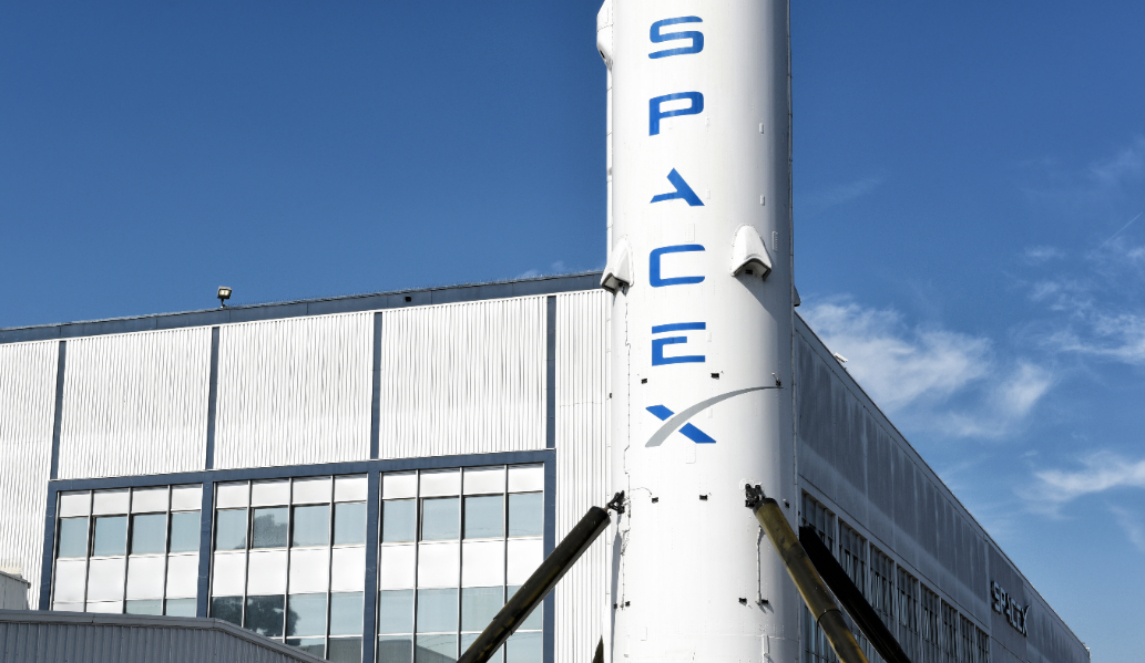
Results land on Tuesday, with the first insider lock-up expiring on Thursday and the shares below their float price
SpaceX Corp (NASDAQ:SPCX) will publish its first set of results as a listed company after the closing bell in New York on Tuesday, two days before the first tranche of insider stock becomes eligible for sale.
Analysts expect second-quarter revenue of about $6.9 billion, a rise of roughly 68% on the same period last year, and a loss of between $0.23 and $0.35 a share.
The company lost $4.9 billion in 2025, and in the first quarter of this year the net loss widened to $4.2 billion from $528 million, on revenue of $4.6 billion.
Nobody expects a profit, which leaves the market focused on the timing and shape of the losses rather than their existence.
The larger event arrives on Thursday, when roughly 911.5 million shares held by early backers and employees become tradeable for the first time.
That is about 20% of restricted insider holdings, worth close to $100 billion at current prices, and comfortably more than the $75 billion raised in the June listing.
Further tranches unlock on a rolling schedule through the autumn, with a 28% release scheduled two days after third-quarter results and the remainder freed by December. Elon Musk's own holding stays locked until June next year.
Morgan Stanley (NYSE:MS) has described the next few days as the most dangerous phase since the flotation, given that the results and the unlock fall within 48 hours of one another.
The bank retains an overweight rating and a $300 price target, on the argument that the market is underestimating the artificial intelligence business.
The shares closed at $108.37 on Friday, against an offer price of $135 and a post-listing peak of $225.64, and short interest stands at around 219 million shares, roughly a third of the free float.
Options markets are pricing a move of 14% to 15% in either direction after the numbers.
Four disclosures matter most.
Starlink profitability is the first, after the satellite broadband arm ended March with 10.3 million subscribers and $3.3 billion of quarterly revenue, around 70% of the group total.
The second is cash generation from Falcon 9 launches, the reliable engine funding everything else.
The third is the scale of spending on computing infrastructure, where estimates put total capital expenditure near $13 billion for the quarter.
The fourth is Starship, where a launch abort on 16 July, followed by a rare Falcon 9 abort four days later, has sharpened questions about execution.


