
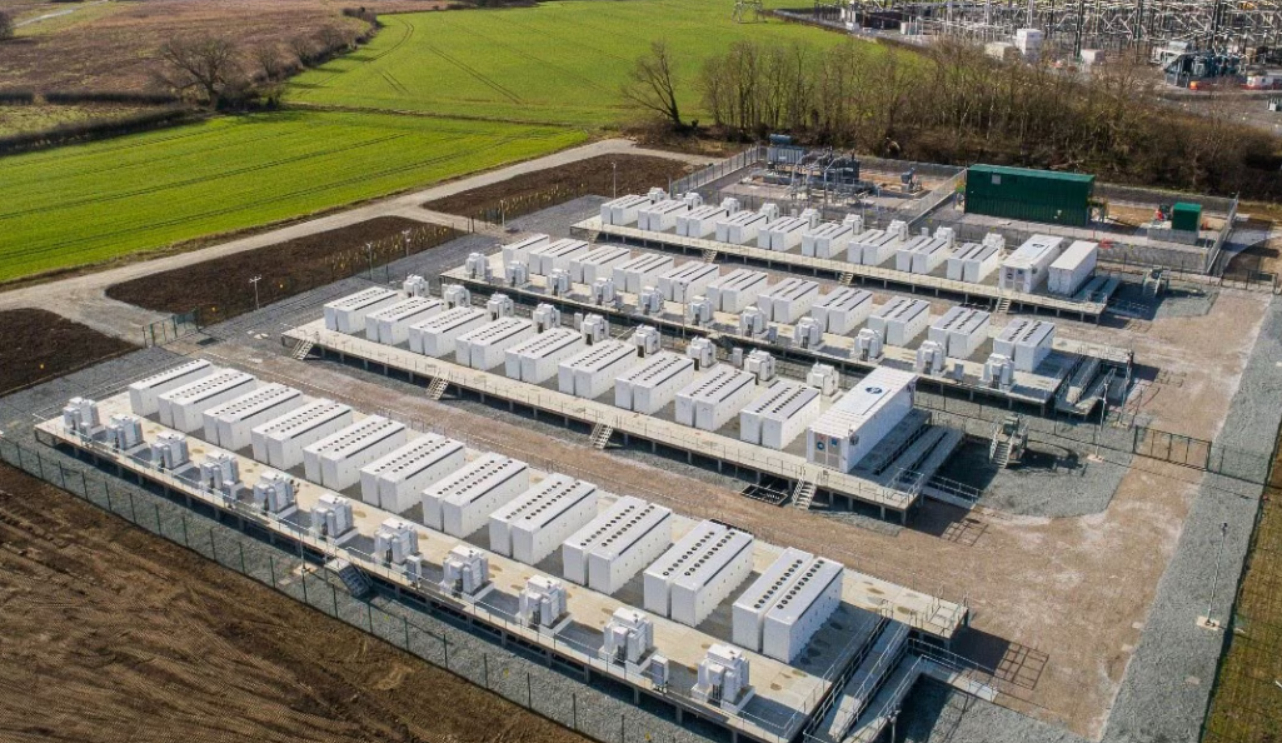
Britain's battery storage sector is still struggling to capture the full benefits of improving power market conditions, with technical issues continuing to limit operators' participation in the electricity balancing mechanism, according to analysts at Jefferies.
Industry data from Modo Energy showed benchmark battery revenues strengthened in the second quarter, with one-hour batteries generating about £46,000 per megawatt a year, up from £39,900 in the first quarter. Revenues for two-hour systems also improved, rising to about £70,700 per megawatt a year from £65,500.
The listed battery funds have had a mixed year. Shares in Gore Street Energy Storage Fund PLC (LSE:GSF) are down about 12% so far in 2026, while Gresham House Energy Storage Fund PLC (LSE:GRID) has risen more than 14%.
However, Jefferies highlighted what it described as a more important structural issue.
While battery-specific skip rates have broadly declined since 2024, batteries' skipped volume as a share of total in-merit volume has increased.
The broker said this suggested there remain "many technology-specific issues that prevent batteries from fully participating in the balancing mechanism".
The National Energy System Operator uses the balancing mechanism to match electricity supply and demand in real time and can be an important source of revenue for battery operators. Skipped volumes mean batteries are being passed over even when they are available and competitively priced.
Jefferies said new parameters introduced under the GC0166 grid code reforms, which allow storage assets to better reflect their deliverable volumes, could eventually improve participation.
But analysts cautioned that it is "too early to observe the impact of the implementation".
They pointed to a longer-term opportunity, noting that 11 of the 16 projects being considered by Ofgem under its long-duration electricity storage regime are lithium-ion battery schemes, underlining the growing role batteries are expected to play in the UK's energy system.
As well as lithium-ion batteries, one vanadium redox flow battery project was provisionally selected.


