
Strategic Elements Ltd (ASX:SOR) has been chalking various milestones over the past year as it moves forward with its autonomous technologies and robotics for security and defence resources.
It is now looking at data-related technology acquisition or development as its next potential area of venture generation.
The company is involved in development technologies in four of the largest megatrends – automation and robotics, computer memory and storage, renewable energy technologies and data.
It generates 100%-owned ventures by combining teams of leading scientists or innovators, operating very differently from a typical venture fund.
Registered as a Pooled Development Fund with the mandate to back local innovation by the Australian Federal Government, it has access to more than $50 million worth of institutional technical infrastructure and equipment, government grants and R&D cashback, which significantly reduces upfront expenditure.
Autonomous Security Vehicles
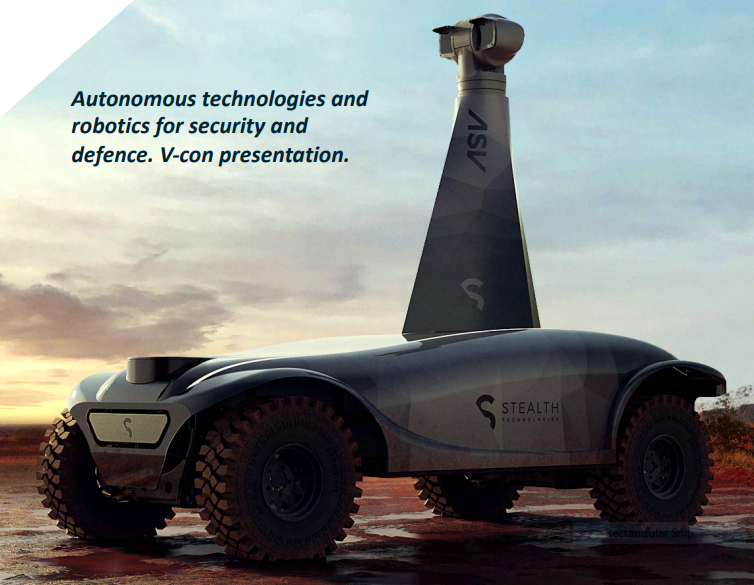
Strategic Elements subsidiary Stealth Technologies has been in collaboration with US giant Honeywell International Inc (NASDAQ:HON) (LON:HON) (FRA:ALD) to build autonomous security vehicles (ASV) for the Correctional Justice sector, namely prisons.
Real-time integration has been completed with Honeywell (NYSE:HON) Enterprise Buildings Integrator (EBI) software, and thousands of EBI systems have been deployed globally.
Stealth and Honeywell (NYSE:HON) have built and deployed an ASV for the WA Department of Justice at the Eastern Goldfields Regional Prison – the first ‘automated perimeter security solution’ of its kind anywhere in the world.
The vehicle successfully passed Site Acceptance Testing in May 2021, completing full testing and surveillance missions.
Further potential facilities and deployments of the perimeter security testing-focused ASV can now be pursued.
The initial Honeywell collaboration agreement term concluded in April 2021 and discussions on a further agreement are ongoing.
Under the collaboration, Stealth provided Honeywell with exclusivity for the correctional justice sector but it is free to market independently to sectors such as transport, energy, defence, government and utilities providing critical services.
The company is investigating multiple potential use cases for both the ASV and the AxV Platform (autonomous mobile robotics) with third parties in non-correctional sectors.
The global perimeter security market is forecast to grow quickly at CAGR of 12.0% over the forecast period 2020-2026, reaching US$282.26 billion by 2025.
It is conducting a feasibility and scoping study to integrate DST Group-developed search algorithms for locating chemical, biological, radiological and nuclear (CBRN) sources within a geographic area, into a UAV (drone) that is autonomously launched and landed by a Stealth autonomous UGV (ground vehicle).
This is scheduled to be completed by June 30, 2021.
Other key collaborations
In addition with Honeywell, Stealth Technologies has a number of other key technical collaborations.
They include:
➢ Working with Planck AeroSystems, a world leader in autonomous drone launch and land technologies to allow autonomous drones to launch and land autonomous surveillance flights from a moving ASV platform.
➢ Working with the Australian Federal Government Agency for Scientific Research, CSIRO to enable ‘robot perception’, allowing the ASV to perceive, comprehend and reason about the surrounding environment, using the Wildcat SLAM technology, which won the DARPA Subterranean Challenge.
The technology allows robot teaming and autonomy for robotic vehicles in GPS-denied environments.
➢ Working with the University of Western Australia’s experienced automotive and robotics expert - Professor Thomas Bräunl on the Renewable Energy Vehicle Project.
Moisture-powered self-charging battery
The company has also reached several critical new development milestones for its moisture-powered self-charging battery.
Recent engineering success has accelerated its demonstration of its battery ink technology powering an electronic device equipped with multiple sensors and Bluetooth low energy communication.
The company has also progressed the development of its prototype battery pack producing over a milliamp of electrical current solely from moisture (humidity), which it expects to achieve in quarter three.
Strategic Elements managing director Charles Murphy said: “Bringing forward the milliamp demonstration milestone is a highly ambitious goal that will establish the battery ink as a leading printable battery technology if it can be achieved.
“Just as important in the near term is developing an ink that is able to be screen printed as this would open new avenues to potentially scaling the technology rapidly and significantly.”
Screen printable battery ink prototype
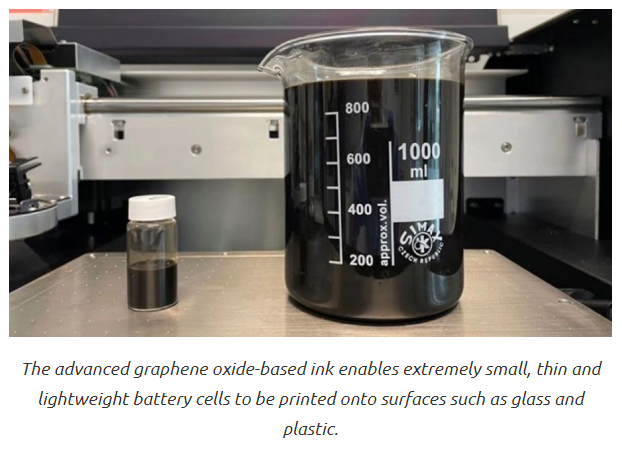
Strategic Elements is aiming to develop a screen printable battery ink prototype in the second quarter of 2021.
It is integrating significant existing ink formulation and printed electronics intellectual property from its Nanocube Memory Ink technology with an advanced graphene oxide material – which enables extremely small, thin and lightweight battery cells to be printed onto surfaces such as glass and plastic.
Strategic Elements is also developing its capability to scale down the battery ink cells in size - leading to increased density of power output.
The recent materials engineering success has further enhanced the potential for an ongoing substantial increase in power output and if a screen printable battery ink is successfully produced in the second quarter, the company will proceed to investigate pathways to generating a significantly larger amount of power output than has been contemplated to date.
Raising funds
Strategic Elements strengthened its books through a successful $3 million placement to institutional investors to advance its existing 100%-owned businesses and fund new potential opportunities.
The company will also issue 3 million unlisted options for nil consideration with an exercise price of $0.40 and an expiry date of April 23, 2023.
Turning brain-inspired hardware to robotics
Strategic Elements is also progressing its proof-of-concept work, with early-stage results showing that in the case of computer vision, the technology uses less power to operate than the human brain and can use multiple resistance states with the potential capacity to process multiple points of data.
Recent work has highlighted its printable neuromorphic technology’s potential for data processing and self-learning in soft robotics, as well as other signal processing applications such as computer vision applications.
This printable neuromorphic hardware is being developed from the company’s Nanocube Memory Ink technology and conducted in the Nanoionics laboratory at the University of New South Wales (UNSW).
The company will assess a potential program of work between the computer vision and robotics team at Stealth Technologies and the materials team at the UNSW to develop a prototype application.
Weed detection device
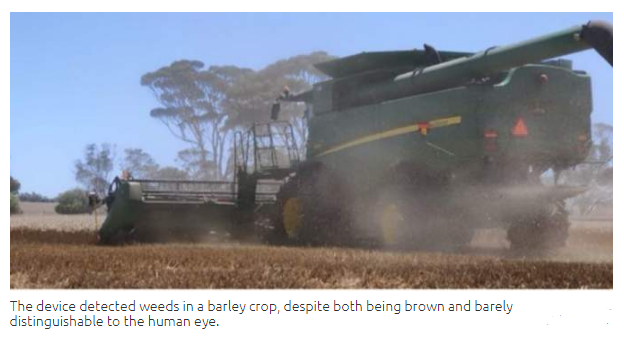
It has also demonstrated the potential of its AxV for use in the multi-billion-dollar global agriculture sector through collaboration with the Australian Herbicide Resistance Initiative and the University of Western Australia School of Agriculture and Environment.
Stealth filed patent protection covering a weed detection device, including the arrangement of sensors on a moving vehicle platform, algorithms, methods of weed detection, and software to process crop data from a moving vehicle to estimate locations of weeds.
Further optimisation and engineering leading to an expanded technology demonstration across multiple potential end-user reference sites will be conducted.
Strategic Elements’ Murphy said: “Our commercialisation strategy is to collaborate closely with end-users to solve a real, existing problem with automation.
“From an Australian domestic market context, other sectors like logistics and mining also have attractive opportunities and we are very active in seeking the right partners with which to collaborate.”
On a limited data set, the technology was able to detect 100% of weeds with a height threshold of 20cm above crop canopy and distinguish weeds from barley crop, notwithstanding both are brown and barely distinguishable to the human eye.
Currently available technologies using computer vision solutions are unable to replicate these results.
In Australian cropping systems alone, the estimated cost of weeds is A$3.3 billion annually and in the US, it is estimated at US$34.5 billion.
The value proposition for Stealth is to deploy this technology to farms globally, where large-scale crop farming exists.
Further work to optimise the weed detection technology for different environments, crop types and deployment scenarios will be carried out in the second quarter.
In the third and fourth quarters, the company will advance the technology into a versatile and easy-to-use package that can be installed by farmers onto a wider range of farm equipment – from combine harvesters to sprayers and other farm equipment.
Demonstration scale-up – increasing end-user reference sites at multiple sites and in different environments will take place in the third and fourth quarters.
A program is being developed to deploy the weed detection technology to at least 10 potential end customer reference sites in the November 2021 harvest.