
Two of healthcare’s most pressing challenges - the growing prevalence of diabetes and rising antibiotic resistance - are converging in diabetic foot infections, where slow-healing wounds can develop into serious infections, hospitalisation and amputation.
The International Diabetes Federation estimates that 589 million adults were living with diabetes in 2024, with the number forecast to reach 853 million by 2050.
At the same time, the World Health Organisation describes antimicrobial resistance as a growing threat that is reducing the effectiveness of life-saving treatments and increasing the risks associated with common infections and routine medical procedures.
Diabetic foot disease sits squarely at the intersection of these trends. A 2023 JAMA review estimated that diabetic foot ulcers affect 18.6 million people worldwide each year, with 50% to 60% becoming infected. Around 20% of moderate to severe infections result in lower-limb amputation.
Recce Pharmaceuticals Ltd (ASX:RCE, OTC:RECEF) is advancing its lead anti-infective asset, RECCE® 327, or R327, through two Phase 3 diabetic foot infection trials to mitigate against this issues.
Phase 3 program takes centre stage
Patient dosing is underway in Australia and Indonesia using R327 Gel, or R327G, a topical formulation being developed to treat diabetic foot infections.
Recce says its anti-infective technology is designed to act faster than traditional antibiotics while retaining activity against multidrug-resistant bacteria.
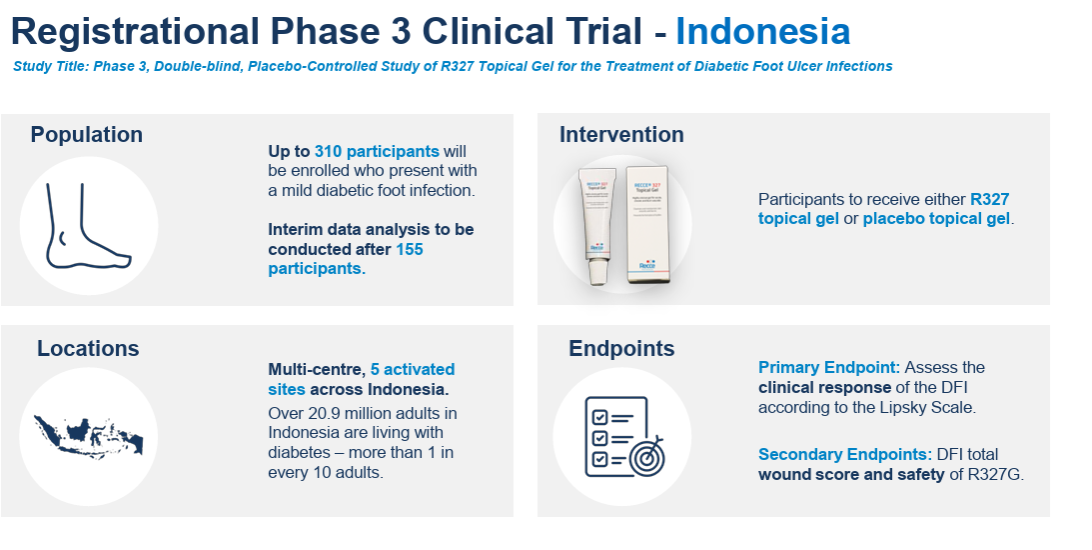
The most advanced near-term catalyst is the company’s registrational Phase 3 trial in Indonesia, a double-blind, placebo-controlled study across five activated sites.
Up to 310 patients presenting with mild diabetic foot infections are expected to participate, with an interim analysis planned after the first 155 patients.
Participants receive either R327 topical gel or placebo topical gel. The primary endpoint measures clinical response using the Lipsky Scale, while secondary endpoints assess total wound score and the safety of R327G.
Recce expects the interim data readout during the September quarter of 2026 and is targeting commercialisation from 2027, subject to successful clinical and regulatory outcomes.
Australian trial provides active comparison
Recce’s Australian Phase 3 study provides a complementary source of clinical evidence by comparing R327G with existing antibiotic treatments.
Following approval of a protocol amendment by a Human Research Ethics Committee, the study has adopted a randomised, active-controlled, non-inferiority design that also includes a superiority analysis.
Patients are randomised between R327G and one of four physician-selected comparator antibiotics. The trial will enrol 208 participants, with an interim analysis planned after 104 patients.
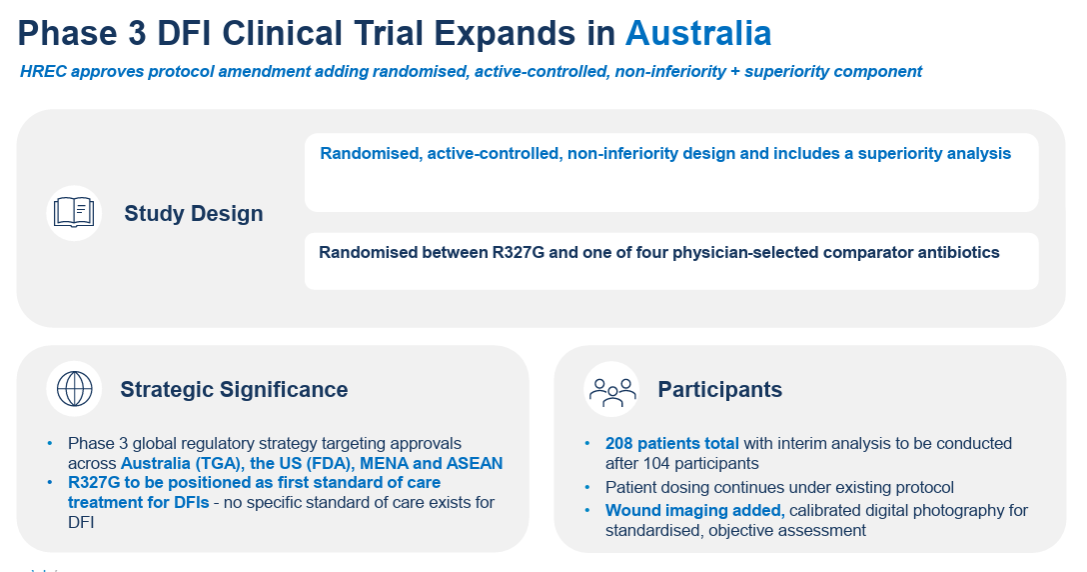
Calibrated digital wound photography has also been added to provide a more standardised and objective method of assessing treatment response.
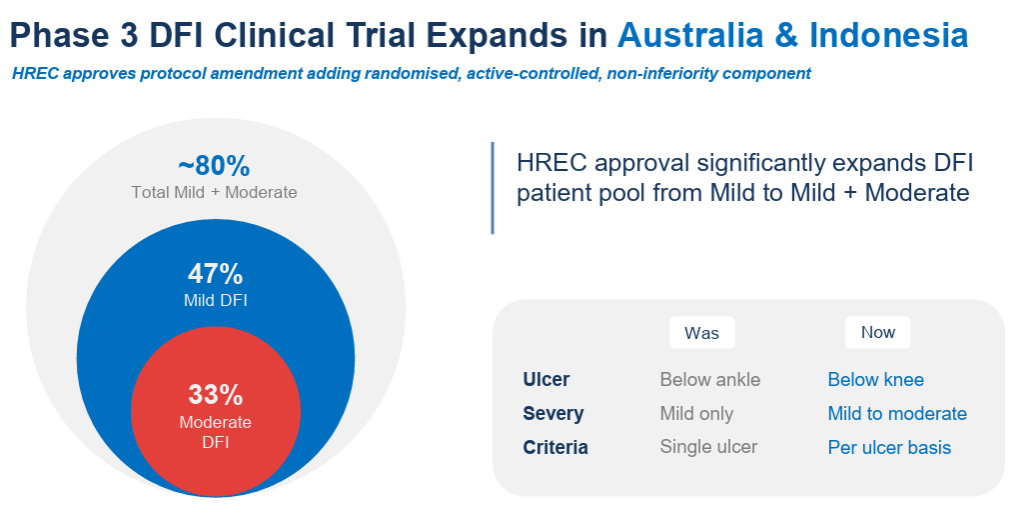
Importantly, the amendment expands the eligible population from patients with mild infections to those with mild or moderate infections. Recce estimates these two groups represent about 80% of diabetic foot infection cases, materially increasing the potential recruitment pool.
Together, the two studies provide different but potentially complementary evidence. Indonesia tests the topical gel in a placebo-controlled setting, while Australia assesses how R327G performs against physician-selected antibiotics.
Large markets guide regional strategy
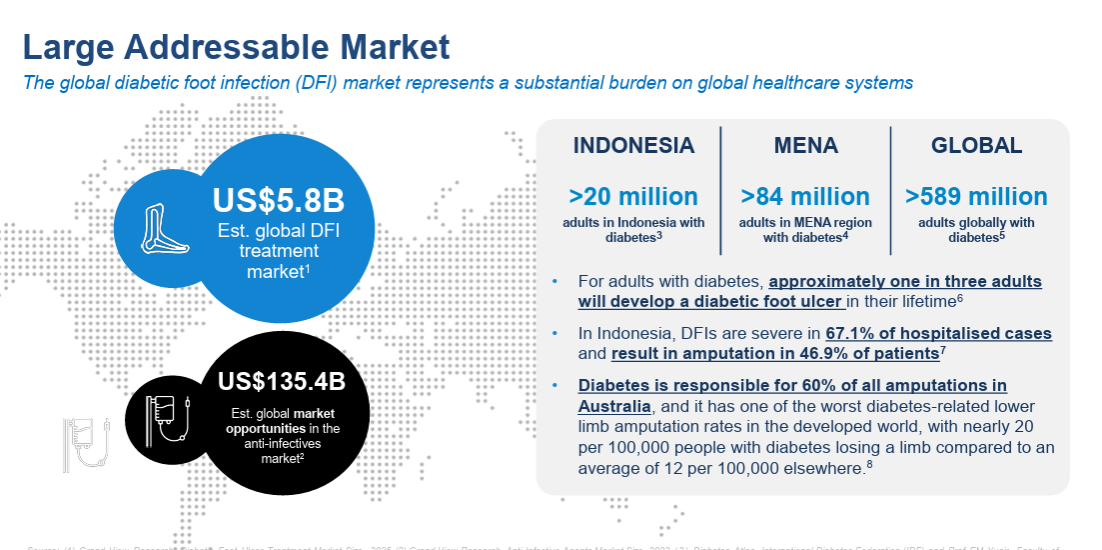
The regions selected for development reflect the scale of the underlying diabetes burden.
IDF data indicate that Indonesia has more than 20 million adults living with diabetes, while the Middle East and North Africa region has around 85 million.
Recce’s presentation cites third-party estimates valuing the global diabetic foot infection treatment market at US$5.8 billion and the broader anti-infectives market at US$135.4 billion.
Indonesia offers a potential entry point into the wider ASEAN market, while Recce is also laying commercial foundations in the Middle East.
The company has signed a non-binding term sheet with an unnamed Middle Eastern pharmaceutical group covering a proposed 10-year exclusive, multi-country licensing agreement.
A definitive agreement could provide Recce with access to established regional regulatory, distribution and commercial infrastructure. However, the arrangement remains non-binding and the presentation does not disclose its potential financial terms.
Regulatory positioning supports development
R327 has received Qualified Infectious Disease Product designation from the US Food and Drug Administration.
Under FDA guidance, an approved QIDP may receive a five-year extension to any applicable regulatory exclusivity, subject to statutory conditions. The first application for the designated product and indication also receives priority review, while fast-track designation is available upon request.
These incentives do not guarantee approval, but they can shorten regulatory review and strengthen the commercial protection available following a successful development program.
R327 has also been included in the WHO’s monitoring of antibacterial products in clinical development.
Diabetic foot infections open broader pipeline
While diabetic foot infections represent Recce’s first prospective commercial pathway, the company is developing R327 across several formulations and indications.
Its intravenous program has completed Phase 1 testing, which Recce says demonstrated the treatment was safe and well tolerated. The development roadmap envisages potential Phase 2 studies as the next stage.
An inhaled formulation is also in preclinical development for serious lung infections, including hospital-acquired pneumonia and ventilator-associated pneumonia.
Separately, agreements with the US Defense Burn Research Program and the US Army Medical Research Institute of Infectious Diseases are supporting evaluation of the platform for burn wound infections.

The broader strategy is built around obtaining the first approval in diabetic foot infections and using the clinical, regulatory and manufacturing progress from that program to support expansion into additional applications.
Next steps
The immediate milestone is the interim analysis from the Indonesian Phase 3 trial after 155 participants, which Recce has targeted for the September quarter of 2026.
Patient enrolment and dosing will continue in the expanded Australian study, with its own interim analysis planned after 104 participants.
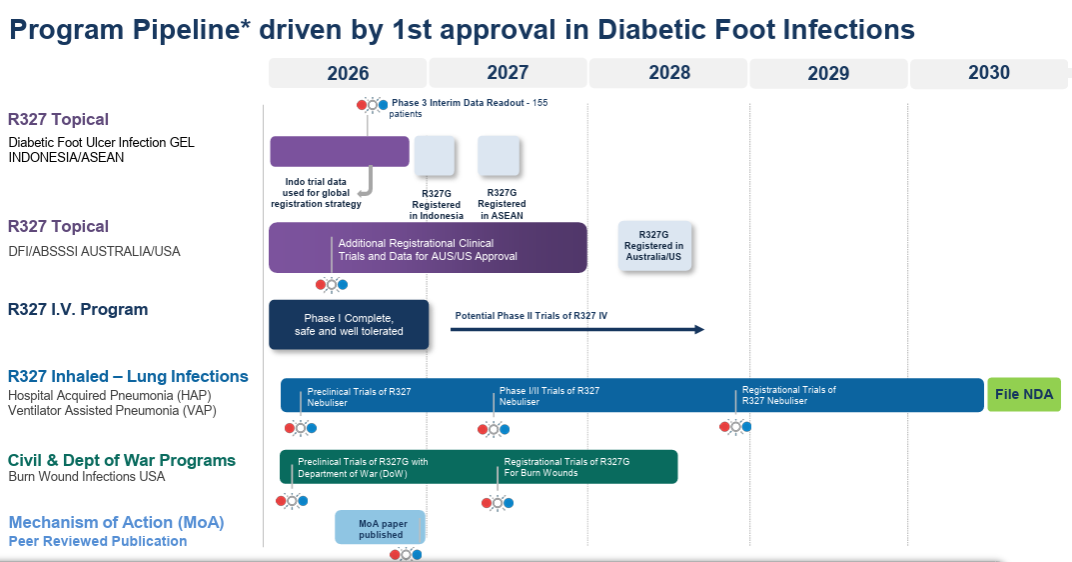
Beyond the clinical readouts, investors will be watching for progress towards Indonesian and ASEAN registration, additional data supporting Australian and US approval pathways, and the conversion of the Middle Eastern term sheet into a binding licensing agreement.
Recce also plans to advance its intravenous, inhaled and burn wound programs, although the timing of these activities depends on funding, clinical outcomes and regulatory feedback.
The decisive near-term test will be whether the Phase 3 data demonstrate that R327G can deliver a clinically meaningful and safe treatment response in diabetic foot infections - potentially providing the foundation for Recce’s first regulatory approval and the wider development of its anti-infective platform.