
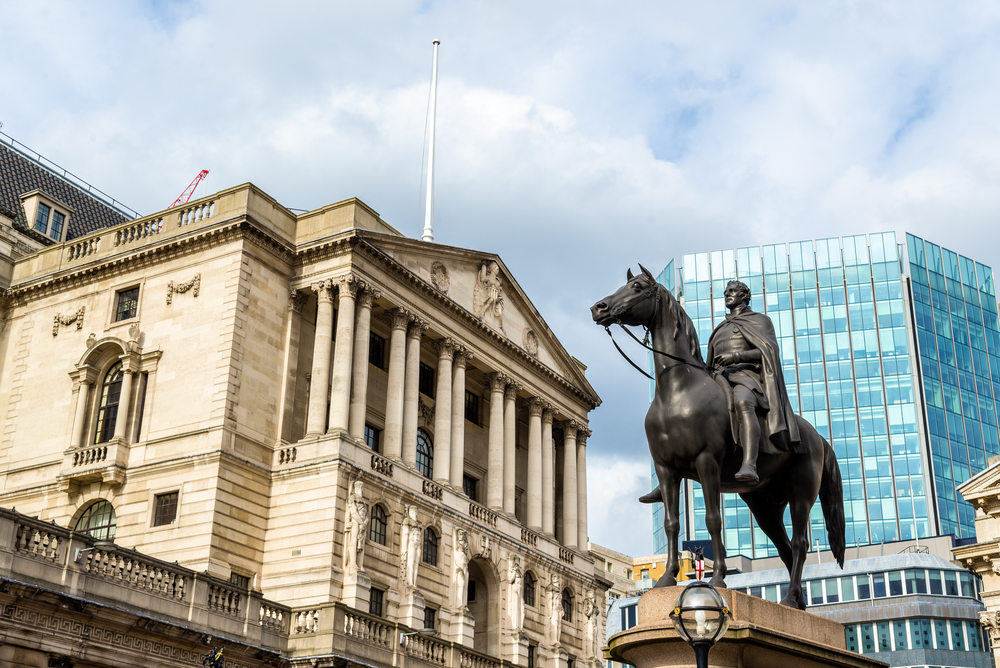
The Bank of England held interest rates at 3.75% but three policymakers voted for an increase as renewed tensions in the Middle East raised the risk of another inflation shock.
A majority of six members of the Bank's monetary policy committee voted to leave borrowing costs unchanged for a fifth consecutive meeting, with Catherine Mann joining Megan Greene and Huw Pill in calling for higher rates, compared with a 7-2 split at the previous meeting.
UK inflation has fallen to 2.6%, although the Bank expects it to rise to 3.2% in the autumn as higher energy costs feed through to household bills and the wider economy.
The Bank said crude and refined energy prices remained "volatile and higher than pre-conflict", although there was little evidence so far of higher prices feeding into wage demands and domestic inflation.
"The Committee judges that the risks to the inflation outlook are tilted to the upside," the Bank said. It added that it "stands ready to act as necessary" to keep inflation on course to return sustainably to its 2% target.
Economist Rob Wood at Pantheon Macroeconomics said investors should "ignore the vote surprise", arguing that the Bank's guidance was "slightly less hawkish" and that swing voters appeared happy to wait.
He expects rates to remain at 3.75% until the end of 2027, although Wood said the risk of an increase was "much larger than for a cut" because of the threat from energy prices.
With Middle East tensions having become "more febrile", Alpesh Paleja, economist at the CBI, said the Bank was likely to await greater clarity about energy markets and the new chancellor's autumn Budget.
Scott Gardner at JP Morgan said the inflationary effect of the US-Iran conflict had so far proved less severe than initially feared. Markets are nevertheless pricing in one or two rate increases this year.
Raj Badiani at S&P Global Market Intelligence said the intermittent ceasefire had reduced some of the global energy shock. However, he saw a "meaningful probability" of an increase in September or November.


