
- FTSE 100 up 14 points at 10,665
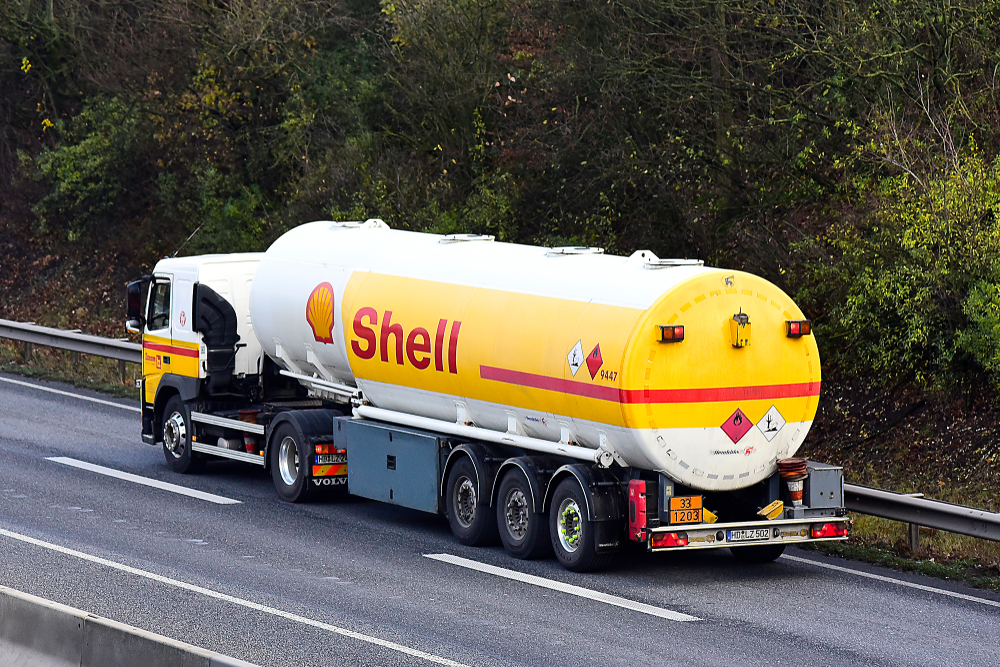
- Shell climbs on trading update
- Samsung falls despite strong results
5.15pm: Tech sell-off
As the FTSE 100 finished the day higher, up 14 points at 10,665 points, US stocks came under pressure, led by a sell-off in tech names.
“Asian and US technology stocks came under heavy selling pressure as investors questioned the sustainability of the AI-driven chip boom, despite Samsung Electronics (KRX:005930, LSE:BC94) forecasting a 19-fold jump in second-quarter operating profit that beat expectations,” IG chief technical analyst Axel Rudolph said.
“In the US, the Nasdaq 100 fell by over 2% as semiconductor stocks retreated, although the Dow Jones briefly rose to another record high as investors rotated into banks and healthcare stocks.”
4.19pm: Split decision for heavyweights
After dabbling with a 90-plus gain in mid-afternoon, Tuesday's session is now set for a modest move higher.
Top risers are led by consumer names, but there are some sizeable moves among the index's biggest constituents.
Shell is up 3.3% and BP 1.7% as oil prices advanced, while AstraZeneca has added 2.2%, Unilever 3.2% and RELX 3%.
At the other end of the index, Rolls-Royce and BAE 3.7% and 2.4%, with the biggest fallers including miners Anglo American and Antofagasta, both losing over 4%, while Rio Tinto is off 2.8%.
Banks were also weaker, with Barclays down 2.1%, Standard Chartered off 1.1%, NatWest down 1.0%, HSBC losing 0.7% and Lloyds easing 0.5%.
3.34pm: Tax rises likely to be coming
With a change in 10 Downing Street either this month or next, even the right-wing Telegraph is admitting that tax rises are likely to be needed by Andy Burnham or whoever becomes the next PM.
The former Greater Manchester mayor is apparently keeping the door open to tax rises if he becomes the next leader, according to Westminster reports.
An analysis in the Telegraph today argues the new Makerfield MP has "room within that manifesto for movement on tax" despite pledging to stick to Labour's election commitments.
Options could include higher business rates for warehouses, changes to wealth and property taxes, or devolving more tax powers to local authorities, although Burnham has yet to set out detailed proposals.
In a separate column entitled 'It’s painful to say, but an income tax raid is Burnham’s best option', the paper argues that if Burnham needs to raise taxes to fund higher spending while sticking to Labour's fiscal rules, increasing income tax would be less damaging than further levies on businesses or wealth.
An income tax rise would spread the burden more widely, the line goes, with an acknowledgement that it would break Labour's manifesto pledge and add to cost of living pressures.
Elsewhere, the Times focuses on one aspect of the OBR report: the watchdog's warning for Burnham of the cost of the pensions 'triple lock'.
Under the policy, the UK's state pension rises each year by whichever is highest out of inflation, wage growth or 2.5%.
The OBR warned that it will add billions to public spending, forcing state pension costs to almost double as a share of the economy by the 2070s.
Pension spending is projected to rise from 5% of GDP to around 9% by 2075, under the report's baseline scenario, with the triple lock estimated to account for about a third of this rise.
With national debt currently at of 95% of GDP, just maintaining it at this level would require tax rises and spending cuts “equivalent to total onshore corporation tax receipts", the OBR said, calculating that will be just over £101 billion in the current year.
2.50pm: Mixed start on Wall Street
It's an uneven open for Wall Street, with a sell-off in AI and semiconductor stocks sendring the Nasdaq sliding 1%
The Dow Jones edged 0.1% higher to 53,098, while the S&P 500 is in the middle, down 0.3%.
Chipmakers led the Nasdaq declines, with Applied Materials down 7.9%, Lam Research falling 7.3%, followed by Intel, AMD and Micron. Nvidia slipped 1.5% after the sector was rattled by Samsung's post-earnings sell-off.
The Dow was supported by defensive stocks, with Johnson & Johnson (NYSE:JNJ), Salesforce, Chevron and Procter & Gamble all advancing over 2.5%.
1.42pm: Unilever, Burberry and Diageo leaders
Many of the top risers on the FTSE are several consumer-focused names: Unilever, Diageo, Burberry, Primark owner AB Foods, Reckitt Benckiser, Haleon and Tesco.
On Diageo, a long-awaited strategy update from new(ish) boss Dave Lewis is unlikely to remove investor concerns over its biggest market, according to UBS analyst Sanjeet Aujla.
Expectations for a recovery in US spirits remain "too high", he says. "Diageo has lost competitiveness in a deteriorating category."
Despite price cuts, the outcome so far is "still far from stabilising".
1.01pm: OBR warning for Burnham
The Office for Budget Responsibility has warned the potential new government led by Andy Burnham that early action should be taken to prevent debt from moving onto an "unsustainable and ever-rising path".
In its new fiscal risks and sustainability report, most of the OBR's forecast scenarios show that public finances will eventually become unsustainable, with UK public debt potentially swelling to three times the size of the economy if not addressed by governments.
"We stress that it is not plausible that the UK, or any other country, could remain on any of the unsustainable paths set out in these scenarios, because they imply that debt will ultimately grow explosively.
"It is almost certain that future governments would have to take action before this happens to adjust the fiscal stance to keep debt at sustainable levels.
"The scenarios should not be seen as forecasts of the evolution of debt far into the future, but rather as an illustration of the long-term pressures on the public finances and of the scale of changes in tax or spending policy that would need to be made at some point to maintain fiscal sustainability."
The public spending watchdog said these unsustainable fiscal outcomes "are today’s challenge not tomorrow’s" as "governments will have to adjust fiscal policy beyond the consolidation planned over the next five years to keep debt at levels that is sustainable".
12.45pm: UK financial sector resilient, but vulnerabilities remain
The BoE's Financial Policy Committee has also released its financial stability report today.
Overall, it found vulnerabilities remain in risky asset valuations, sovereign debt markets, and risky credit markets, including in private credit, all of which were previously highlighted by the committee, "and some have become more pronounced" since the December report.
"Notably, there has been a substantial increase in the use of leverage in equity markets."
While the war in the Middle East has affected the global risk environment, the UK financial system is seen as having "remained resilient and has continued to support the UK real economy".
AI capabilities, particularly in 'frontier AI' are seen to "have increased financial stability risks related to cyber and operational resilience", the report said.
12.33pm: Bank buffers announcement
Bank shares are down after an announcement from the Bank of England, despite the Prudential Regulation Authority taking steps towards making it easier for lenders to use their capital buffers during periods of financial stress.
The regulator said it was clarifying that it could release the 'other systemically important institution' (O-SII) buffers in the event of systemic stress, using existing powers to reduce the requirement, potentially to zero.
The PRA says its intention is "to support banks’ use of buffers to absorb losses in stress periods while reducing banks’ incentives to take defensive actions – such as restricting lending to creditworthy households and businesses. These actions by banks can amplify adverse shocks to the real economy and, in turn, affect their safety and soundness.".
Barclays shares down 1.7%, NatWest losing 0.8%, Lloyds falling 0.5%, HSBC down 0.5% and Standard Chartered easing 0.4%.
11.50am: LSEG up on UBS note
London Stock Exchange Group shares have been boosted by a note from UBS ahead of interim results, with analyst Michael Werner arguing recent share price weakness has created an attractive entry point
Reiterating a £117 price target, he points out that the stock, down 13% over the past month, is trading near a 14-year valuation low despite forecasting annual EPS growth of around 14-15% through 2028.
Werner believes investors are assigning almost no value to LSEG's Data & Analytics business and said updates on monetising its AI-focused MCP server could be the key catalyst for the shares at the half-year results.
11.25am: Coffee and cocoa highs
Coffee prices are down a little today after last night saw their biggest jump this century and highest price this year.
Coffee and cocoa prices both jump on El Niño concerns, with Hormuz tensions "adding a modest risk premium", according to Ole Hansen, commodities strategist at Saxo.
Arabica coffee futures surged as much as 19% on Monday, the steepest one-day rise in 26 years, he says, as El Niño-related weather concerns extended a one-month rally that has lifted prices by 45%.
"Widespread expectations of a bumper crop in top producer Brazil have been tempered by poor weather that has delayed harvesting, prompting some growers to hold back sales in anticipation of higher prices."
Cocoa futures jumped 13% to their highest since January as heavy rains across key West African growing regions added to supply concerns, which Hansens has squeezed funds holding sizeable short positions.
Among other agricultural commodities, he flags that a bullish USDA report has supported grains.
In hard commodities, liquidation has slowed, with broad selling easing, "with bottom-fishing emerging in precious metals while bearish Brent positioning raised short-covering risks".
11.57am: Keller killing it in America
Shares in Keller have jumped 16% after the ground engineering company said profits would come in materially ahead of expectations.
The gains followed an unscheduled trading update pointing to stronger-than-forecast performance, driven largely by North America.
Analyst Joe Brent at Panmure Liberum responded by lifting his forecasts and share price target, saying the update indicates accelerating momentum and North America materially ahead of expectations.
"We increase both FY 26 and FY 27 FD EPS by 8% due to higher NA sales... NA has benefitted from record volumes, particularly from infrastructure projects and data centres, despite weakness in Miami Foundations."
10.37am: FTSE 'could see highs soon'
The FTSE 100 is "defying the tech gloom" and flirting with the 10,700 area but struggling to break out, says market analyst Neil Wilson at Saxo.
"A clear move here could see the all-time highs hit again and 11k taken out on a fresh momentum drive – the index has been a bit of a coiled spring the last four months and looks ready to break out."
Shell is one of the driving forces after an upbeat trading update.
Later on the Bank of England publishes its financial stability report with governor Andrew Bailey due to speak.
9.55am: Young's continues momentum, helped by World Cup
Young's has raised a glass to the warm weather and the World Cup, helping lift sales across its pub estate in the first quarter of its financial year.
Ahead of the pub operator's AGM it revealed revenue for the 14 weeks to 6 July rose 5.5% on a like-for-like basis.
CEO Simon Dodd says the group's pubs performance "was supported by favourable weather, a busy summer of sport, with England’s success in the World Cup so far a welcome boost".
Analyst John Cahill at Stifel says the update showed "the trading momentum that was apparent in the previous financial year has continued".
Noting that Young's shares have recovered from the lows of late 2025 and outperforming peer Fuller's, he adds: "We believe Young's outperformance has been driven by strong financial results for the year to end-March, and also the completion of the transfer of the shares to the Main Market of the stock exchange during the period."
"However, the shares are nonetheless trading at only c.7x EBITDA, well below the long-run average of around 10x, with the wider pub sector having de-rated following a number of cost headwinds that had put margins under pressure (notably the National Living Wage and employers' NI increase).
"However, the impact is now behind the sector, and Young's has proven it is able to grow earnings even under those most challenging conditions."
9.27am: London stands 'largely exempt' from AI trade
The FTSE 100 is up 64 points at 10,715.5 now. Consumer-facing names are leading the risers, with Burberry top of the list, up 3.4%, with Diageo, Unilever and Reckitt not far behind. A rise of 3.1% from Shell, the index's third-largest name, is also providing a big bit of oomph.
Market analyst Richard Hunter at Interactive Investor says "defensives" such as RELX, Reckitt Benckiser and Unilever, the latter boosted by two broker upgrades, are the key this morning.
Weakness among mining stocks as well as the likes of Polar Capital Tech are still acting as a bit of a brake, which Hunter says is "reflecting a more risk-off approach and a reaction to the tech weakness" that has hit the Korean market.
"The UK market is largely exempt from the tribulations of the AI trade outlook, and the FTSE100 has tended to be the source of some support during times of higher volatility in that space this year."
By the same token, he says the London index has "struggled to find a new positive catalyst to enable to recapture its record high in February, when its selection of strong, stable and developed companies attracted global inflows. Nonetheless, the index has added 7.4% so far this year which, coupled with an average dividend yield of 3% gives an aura of reliability as opposed to runaway optimism."
8.53am: Capita tumbles
Capita shares have tumbled almost 16% after the outsourcer's apology over delays in administering the Civil Service Pension Scheme.
Analyst Christopher Bamberry at Peel Hunt notes that the company failed to meet the 30 June deadline for a complete return to standard contractually required levels.
From the Paymaster General's statement yesterday, he also notes that the Cabinet Office has surged 140-plus officials to make progress and will recover the associated costs directly from Capita.
The government has withheld £9.9 million of payments and the pension scheme is now seen as a prime candidate for 'insourcing' in the future, though if it were terminated straightaway, it would cause severe disruption.
He notes that Capita is assessing the implications of the matters contained in the statement and, if required, will update the market as soon as it is able to do so.
8.39am: Shell sells South Africa petrol stations
There's more news on Shell this morning. In a separate statement from UAE's ADNOC Distribution, it was revealed that the UK oil colossus had also struck a deal to sell its downstream business in South Africa.
The deal is for an enterprise value of $1 billion prior to adjustment for net debt and working capital.
The deal includes 580 fuel stations, wholesale fuel, aviation and lubricants operations, with ADNOC planning to retain the Shell brand under a long-term licensing agreement.
8.15am: Shell leads FTSE higher at open
The FTSE 100 has climbed 28 points to 10,679.5 in opening Tuesday trades, helped by a strong start from Shell.
Following its pre-results update and with oil prices inching higher, the oil giant's shares are up 1.8%. BP's are up 1% too.
RELX, LSEG, Rentokil and Experian are the early leaders.
Fallers are dominated by miners, with Antofagasta, Anglo American, Fresnillo and Rio Tinto all down between 3% and 2%, followed not far behind by Glencore and Endeavour.
Polar Cap Tech Trust is leading the decline, down 3.3%. I suspect it may be a Samsung investor. (Update: Yes it does, a top 10 holding at 2.8% of total assets.)
7.47am: Shell gives pre-results update
Shell says stronger trading in its integrated gas business and improved refining margins should support second-quarter performance, although production has been hit by disruption to output from Qatar following the Iran war.
Ahead of second-quarter results on 30 July, the oil major said integrated gas production is expected to be 610,000-650,000 barrels of oil equivalent a day in the second quarter, down from 909,000 in the first quarter, reflecting the impact on Qatari volumes.
Trading and optimisation earnings in integrated gas are expected to be "significantly higher" than in the first quarter.
7.31am: Capita 'sorry' after Paymaster General's stinging rebuke
Capita has apologised for delays in administering the Civil Service Pension Scheme after the government criticised its performance, saying it is assessing the implications of the issue ahead of a trading update later this week.
The outsourcer was responding to a ministerial statement made on Monday by the Paymaster General regarding its contract to administer the scheme.
In a highly critical update to Parliament yesterday, Paymaster General Nick Thomas-Symonds said Capita had been "completely unprepared" for taking over the contract and that its systems were "overwhelmed", leaving a backlog that peaked at 120,000 unresolved cases.
FTSE 100 Live pre-open
London's blue-chips have been called slightly higher on Tuesday, though many investors' attention will be more focused on the tech trade after Samsung delivered better results than expected but saw its shares tank.
The FTSE 100 was up around seven points on the futures market, chipping away at a 27-point decline yesterday when it closed at 10,651.77.
Overnight, the tech-powered Nasdaq led the gains on Wall Street, though it was the Dow Jones breaking records, closing up 0.3% above 53,000 points for the first time at 53,055. The Nasdaq finished up 1.15% and the S&P 500 added 0.7%.
In the early hours of this morning, South Korea's Kospi closed down 4.6%, having set off the automatic circuit breaker with an 8% plunge earlier in the session as Samsung fell around 9% at one point before closing 6.45% lower.
This was despite the tech giant's quarterly operating profit surging 19-fold year-on-year, with profit margins for its memory chip business at around 80% thanks to booming AI demand.
"How did this happen despite a decent earnings beat? The answer is that the real expectation—the so-called whisper number—was even higher than what analysts had pencilled in," says market analyst Ipek Ozkardeskaya at Swissquote.
When these unofficial earnings targets circulate among investors, traders and portfolio managers ahead of a company's results, "companies can beat analysts' estimates and still see their shares tumble simply because they failed to meet what the market had quietly convinced itself was achievable".
Elsewhere, commodity prices are moving, with oil prices creeping up, with Brent climbing 1.1% to $72.78 a barrel, while gold and silver are down 0.9% and 1.9%, with copper prices off 0.4%.
UK house prices edged up 0.2% in June from May, reversing May's 0.2% decline, while annual growth accelerated slightly to 0.6% from 0.5%, according to the renamed Lloyds house price index (formerly under its Halifax brand).


