
- FTSE 100 up 74 points to 10,437
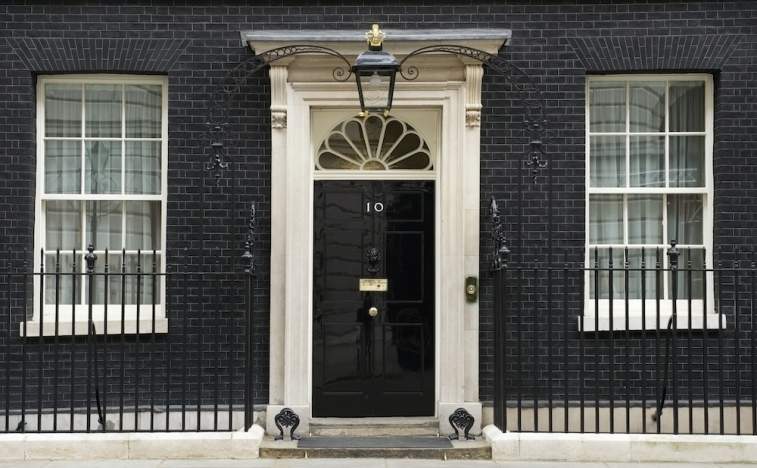
- Keir Starmer resigns as PM
- Andy Burnham could be in No 10 next month
- easyJet suitor Castlelake goes public with offer
5.30pm: Stocks gain on Starmer’s departure
The FTSE 100 finished Monday’s session up 74 points at 10,437, with investors positively receiving the news that PM Keir Starmer will step down.
“Clearly prime ministerial resignations are good for the FTSE 100. The index is enjoying that rarest of sessions at present, where it outperforms US tech stocks,” IG chief market analyst Chris Beauchamp said.
“The signs are now that the successor to Keir Starmer will be in power in less than a month, which at least minimises the uncertainty for investors.”
4.13pm: Banks lead UK index higher in afternoon trade
High street banks are leading the gains for the Footsie as we head towards the close.
NatWest is up over 4%, with Barclays and Lloyds both up around 3.8%.
Precious metals miner Fresnillo is not far behind, up 3.5%. "The metal continues to be impacted by ongoing peace negotiations between the US and Iran," says analyst John Meyer at SP Angel. "Signs of peace talk breakdowns are triggering a sell-off in gold, with reports of easing tensions then supporting prices."
Meyer says he believes a concrete peace deal between US and Iran "will be the key to resuming gold’s bull run".
Premier Inn owner Whitbread and retailer Marks & Spencer are next, both up over 3%, followed by names including Standard Life and IAG, both boosted by broker comments today, from JP Morgan and from Deutsche respectively.
Barratt Redrow, BAT, Legal & General, Standard Chartered and Aberdeen Group are all up 2% or more.
At the wrong end of the scale, the biggest faller is still Babcock International, now down 6.4%.
Burberry Group and LSEG are both down almost 3%, while RELX, BAE Systems and Experian are also down 2-1.8%.
3.40pm: Lloyds and Shawbrook eye Aldermore takeover
Lloyds Banking Group and Shawbrook Group are exploring a potential takeover of challenger bank Aldermore, according to a report from Sky.
It comes amidst a growing wave of consolidation across Britain's banking and financial services sector, including Santander UK's agreement to acquire TSB and NatWest's £2.7 billion purchase of Evelyn Partners' wealth management arm.
Sky News scopps machine Mark Kleinman says Lloyds has begun preparations for a possible offer for Aldermore, which is owned by South Africa's FirstRand and has been put up for sale amid uncertainty surrounding the motor finance mis-selling scandal.
Lloyds was said to be attracted by Aldermore's small business lending and project finance operations, although a formal bid is not guaranteed.
3.21pm: Streeting tipped to be new Chancellor
Earlier, the question was raised by Barclays about who will be the next Chancellor.
The head of HM Treasury, Rachel Reeves, is seen as having around a 7% chance, according to Polymarket.
Strong favourite on the prediction markets is Wes Streeting, with a 63% chance.
Around a similar chance is given to Reeves being in the post this year is seen for Ed Miliband and Pat McFadden, at 10% and 8%.
Others with an even lower chance are Darren Jones, Yvette Cooper, Shabana Mahmood and Torsten Bell all on 2-3%.
2.47pm: Dow Jones rises but several tech megacaps weigh
US markets are showing a familiar split in opening trades, with the Dow Jones opening up 0.5% as investors rotate into cyclical and defensive blue chips including JPMorgan, Goldman Sachs, Caterpillar, UnitedHealth and Amgen.
The S&P 500 is up 0.3%, led by Super Micro Computer, ON Semiconductor, AbbVie, Micron, Dell and SanDisk.
The Nasdaq is lagging, down 0.1%, as investors take profits in technology names. Qualcomm, AppLovin, Marvell, Arm and Palantir are among the biggest fallers, with several high-growth stocks down more than 2%.
Among the tech megacaps., Alphabet is down over 3%, Amazon -2.2%, Meta -1.4%, Microsoft -1% and Tesla -0.8%.
2pm: US futures perk up a little
US futures are pointing a bit higher now, with technology stocks expected to lead gains despite lingering uncertainty over the Middle East and the prospect of further Federal tightening.
As investors return from the Juneteenth holiday weekend, Nasdaq futures are outperforming, rising 0.4%, while Dow futures are up 0.2%, and S&P futures edging 0.1% higher.
"The first quarter earnings season is really winding down now," says David Morrison at Trade Nation.
FedEx and Carnival report tomorrow but he says "watch out" for Micron Technologies, which will release its latest update after Wednesday’s close.
Also for US watchers, Wednesday also sees the results of the Fed’s annual banking stress tests’, while core PCE, which used to be the Fed’s preferred inflation measure, is released on Thursday.
"Following last week's hawkish Federal Reserve meeting, the likelihood further rate hikes this year has increased sharply. There is now an 89% probability of one or more rate hikes before year-end, with an 11% chance of ‘no change’. The CME’s FedWatch Tool says there’s no chance of a rate cut," he adds.
1.47pm: Oil demand taking hits from rising EV demand
The oil market may have another problem, according to Goldman Sachs.
Accelerating electric vehicle adoption could cut global oil demand by up to 320,000 barrels a day by the end of 2027, equivalent to roughly 0.3% of world consumption, but enough to weigh on crude prices in a finely balanced market.
The bank sees this contributing to helping push Brent crude into the mid-$50s a barrel by next year.
Global EV penetration reached 26.1% of new car sales in May, with China accounting for more than 60% of the recent increase.
Goldman suggests higher fuel prices during the Iran conflict may have encouraged consumers to switch more quickly to electric vehicles, particularly in China where gasoline demand is already weakening.
1.23pm: Barclays eyes Budget data and next Chancellor
The FTSE is starting to take wing, up 0.6%, and with the pound also continuing to strengthen against both US dollar and euro.
Barclays economist Jack Meaning expects Andy Burnham to become Britain's next prime minister, potentially as soon as 16 July if he faces no challenge for the Labour leadership following Keir Starmer's resignation.
With the most likely challenger, Wes Streeting, already backing Burnham, an uncontested handover is "the most likely option at this stage".
This scenario allows Burnham to take over as leader and organise his cabinet during the summer recess.
"To the best of our understanding, this would allow Burnham to announce a budget date on 16 July or during recess. The earliest possible date for a budget, giving the OBR the official 10 week notice period to prepare, would be early October."
If another MP of the Labour Party challenges Burnham, this would lead to a leadership contest during the summer recess period, but as Starmer said in his speech, would allow for a new prime minister to be in place by the time summer recess ends, on 1 September.
Polls suggest that Burnham is the favoured candidate to any potential contenders, making this a more unlikely outcome, Meaning says.
"If a new leader is to only be in place by the end of summer recess, the 11 November would become the earliest possible date, making a later budget highly likely."
The Barclays economist says the "key decision" will then become who he chooses as chancellor, with Streeting, Ed Milliband, Yvette Cooper and Pat McFadden all being speculated as potential candidates.
"While the market appears to be more nervous that a Milliband chancellorship would increase the risk of extra borrowing, we view the others as equally fiscally pragmatic as each other, with the big open question being around the degree of adherence to the current fiscal rules."
1.02pm: UBS on debunking the 'UK millionaire exodus' story
UBS chief economist Paul Donovan notes that last year's much-publicised claims of a "mass exodus of millionaires" from London and the wider UK have quietly unravelled, despite having shaped policy debate and generated acres of headlines.
If wealthy Britons were fleeing in droves, he argues, it would be odd for the number of people earning more than £500,000 a year to have risen more than 27% over the past four years.
The real lesson is not about tax migration but about information markets, he suggests.
"The real risk here is not modelling errors, but the ease with which 'fake news' can influence policy and public opinion.
"Fake news travels faster and further over social media than does the truth, because fake news is often customized to appeal to emotions. The truth is often unhelpfully dull."
12.48pm: US market set for unsure open, hawkish Fed still weighing
US stock futures look somewhat undecided, two hours out from opening trades.
Dow Jones futures are pretty much flat, while those for the S&P 500 are down 0.1% and those for the Nasdaq 100 up almost 0.1%.
It comes after progress on Iran talks over the weekend but with the market very much fixed on the shift in interest rate expectations under the seemingly more hawkish Federal Reserve under new chair Kevin Warsh.
Making headlines in New York this morning, BofA Global Research predicted rates will rise 75 basis points in 2026.
In a note entitled "Why haven't markets rallied more since the US-Iran deal", strategist Henry Allen at Deutsche Bank noted that despite a sharp fall in oil prices, risk assets have barely moved, with the S&P 500 still below its early-June peak.
First, the Fed got in the way, with last week's "hawkish pivot" under Warsh pushing US 10-year real Treasury yields to their highest level in more than a year, offsetting much of the relief from lower oil.
Second, investors never really believed the conflict would last, he says, with markets "consistently pricing in a temporary conflict", meaning much of the good news was already embedded in asset prices before diplomats got involved.
Third,the S&P surged 16% over April and May, a two-month rally Allen notes has only occurred four other times since the WW2.
"There simply wasn't much space to rally further," he writes.
And finally, while oil prices have fallen, he says, "the structural supply issue with the Strait of Hormuz hasn't gone away. For now, traffic remains at just a fraction of its pre-conflict levels."
11.57am: Lots to decide for Burham, but defence plan likely to be delayed
Westminster reports suggest the timetable to replace Starmer will be worked out this week by Labour’s national executive committee.
The senior party officers will meet today to draw up a draft timetable that is then approved by the full ruling body later on Thursday, three Politico reports.
Other lobby journalists point out that the new Labour MP for Makerfield and his team have three and a half weeks to finalise his policy platform and decide on his Cabinet, including his Chancellor.
If all goes smoothly, he is expected to be in power by July 18, a day before the World Cup final (will England be there?).
Also, within a few days of taking office he will attend the EU reset summit.
"Decisions such as the Defence Investment Plan - which have been delayed for so long now - are also likely to be shelved until he is in power," tweets the Times political editor.
Defence stocks are down again today, with Babcock down 6.1%, Qinetiq down 2.1%, BAE and Chemring both falling 1.5%, followed by Avon Technologies at 0.8%.
11.44am: Burnham's main contender makes way
Looks like Andy Burnham will have a clear path to becoming PM without a formal Labour leadership contest, as expected main contender Wes Streeting says he won't mount a challenge.
The pound is up for the day now, just above flat at $1.324 and up 0.2% to €1.1552 against the euro.
Streeting said in a statement on social media that a contest where candidates spend summer weeks "exaggerating small differences" would not be good for the party or the country.
He says he has spoken to Burnham and is confident that there is “a place” for the policies he has been advocating under a Burnham premiership.
As a result, Burnham could be in 10 Downing Street by mid-July, if another candidate does come forward.
Reports from Westminster journalists suggest no other Labour MPs have publicly signalled an intention to stand.
pic.twitter.com/ZVX6vS6Tl2 — Wes Streeting (@wesstreeting) June 22, 2026
11.17am: Red warnings for extreme heat
The UK Met Office has issued rare red warnings for "extreme heat" this week.
Amber warnings are in place for Monday and Tuesday, rising to red warnings for Wednesday and Thursday, including heat of around 37°C in the shade.
This can make a noticeable impact on the economy, with "substantial changes in working practices" required, the Met Office notes, with high risk of failure of heat-sensitive systems and equipment, the loss of power and other essential services, plus delays on roads and road closures, along with delays and cancellations to rail and air travel.
Analyst Joachim Klement at Panmure Liberum has put out a short but timely note, showing how much of an effect can be had.
"Extreme weather events like droughts and floods, heatwaves and cold snaps are becoming more common," he says.
"This happens everywhere, but because I am self-absorbed, I am particularly interested in how these developments affect Europe."
He writes on this subject in light of the warnings and a recent in-depth study by the European Central Bank that looks at the economic impact of extreme weather in Germany, France, Italy and Spain.
The ECB study finds that extreme weather shocks finds Germany particularly vulnerable to heatwaves, which can shave 0.2-0.3 percentage points off GDP growth over the following year, while droughts can actually provide a boost by allowing construction work to continue uninterrupted.
"Of course, this is not because of that one day of extreme heat, but because such days come as part of heat waves, and these heat waves slow down economic activity in a country that doesn’t have air conditioning and where buildings are not designed to cope with heat," says Klement.
Spain, meanwhile, tends to suffer from drought because agriculture and mining play a larger role in the economy.
The UK has not much in-country mining, but plenty of agriculture and buildings not designed to cope with heat.
10.39am: IAG gets DB boost
British Airways owner IAG's shares have climbed 2% after Deutsche Bank upgraded its target price on the back of lower fuel cost forecasts for the European long-haul airline sector.
Analyst Jaime Rowbotham raised his target price on the FTSE 100-listed airline to 540p from 460p and reiterated a 'buy' recommendation, upping targets for Air France-KLM and Lufthansa too.
The analyst noted that the forward curve for jet fuel had fallen "significantly" in recent weeks, prompting new mark-to-market assumptions for airlines' unhedged fuel requirements.
As a result, the estimate for IAG's 2026 fuel bill has been cut to €8.6 billion from management guidance of around €9 billion issued in May.
10.18am: Pound climbs on potential smooth PM switch
The pound has eased in the past hour, and UK and US government bond yields have also softened.
Sterling has "jumped on the prospect of Burnham being the sole candidate to succeed", says market analyst Chris Beauchamp at IG.
"While the UK now has to wait to see who fancies their chances in the leadership election, the strong possibility that Burnham is the sole candidate has boosted sterling back above $1.32," he says.
In addition, Starmer's decision not to fight in any contest further reinforces the coronation narrative, as the party looks to unite behind a leader and get back to proving their worth to govern."
Oliver Faizallah, head of fixed income research at Raymond James, also flags that UK gilts have "remained mostly unchanged" following the resignation of the PM.
"The lack of move comes as no surprise; the move was widely anticipated, with prediction markets assigning a near certainty of a leadership change last week," Faizallah says.
As it stands, he adds, the long end of the gilt curve (ie 20-year, 30-year UK bonds) are likely to "remain a bit choppy" as the market focuses on who will be the next prime minister.
"Andy Burnham is the front-runner and markets seem rather settled by that, especially following more recent rhetoric of being more fiscally responsible.
"Gilts will no doubt experience some small periods of uncertainty driven wobbles over the coming weeks. I anticipate this largely to be driven by foreign holders of gilts who will no-doubt find the new system of musical PMs somewhat unsettling," he adds.
"Ultimately, there is little surprise from this morning's announcement, and while political uncertainty may move long end gilts a small amount, we expect more of a correlation to the evolution of ongoing peace talks between US and Iran, oil prices and inflation data."
9.51am: Starmer resigns, Burnham could be PM next month
Keir Starmer has given a speech outside Downing Street, saying he is stepping down as Labour leader and has informed King Charles of his decision.
Starmer said leadership nominations will open on 9 July, with the process completed before Parliament returns in September. He will remain in office until the process concludes.
If Andy Burnham is elected unopposed, he could become Prime Minister by mid-July. If a contest takes place, Starmer said a new leader would be in place by the end of August.
"The question my party is asking now is whether I am best placed to lead us into the next general election. I have heard the answer of my parliamentary party to that question, and I accept that answer with good grace.
"Every decision I’ve taken has been about putting the country I love first. That is why I will resign as leader of the Labour party.
"I have spoken to His Majesty the King this morning to inform him of my decision."
9.14am: Lack of direction for FTSE as pound drops
After just over an hour of trading, the FTSE 100 is little moved from where it finished last week (and where it was two weeks before the Iran war kicked off).
Markets are awaiting clarity on the future of PM Keir Starmer, with questions over whether a leadership contest will be sidestepped and whether Andy Burnham could be PM by September.
A Downing Street briefing is scheduled for 11.30am, which should see some more details emerge, while Burnham is due to take his seat in the House of Commons as MP for Makerfield this afternoon, with Starmer down to address MPs on the G7 summit later in the day.
Gilt yields - aka UK government borrowing costs - are up this morning, but so are US and other major sovereign bonds.
The pound is down 0.3% against the dollar, but the euro is down 0.2% versus the greenback too.
Other European stock markets are in the red too, with Germany's DAX down 0.2%, France's CAC 40 down 0.55% and the pan-continental Euro Stoxx 600 down 0.1%.
"The pound remains under pressure as political chop and change is back on the agenda in the UK," says market analyst Susannah Streeter at Wealth Club.
With Starmer widely tipped to step down, as challenger Andy Burnham appears to be securing deep support, it will be Britain's seventh PM in roughly a decade.
"This level of political churn is making investors increasingly nervous about the consistency of economic policy and the challenges ahead."
She notes that the pound has dipped to levels not seen for almost three months, trading below $1.32, while government borrowing costs remain elevated.
"Although 10-year gilt yields have slipped below the hot levels seen during the most intense phase of the Iran conflict, they are still hovering around 4.84%, sharply higher than international peers. Investing in UK assets continues to carry a risk premium given the bouts of political instability seen since Brexit, and there is little sign of that easing."
The FTSE is showing a "lack of direction", seemingly not helped by "conflicting signals about a peace deal" between the US and Iran.
8.31am: Iran talks show 'notable shift', Burnham odds-on to be PM
Some updates on the important macro themes, including extremely hot weather in the UK, Europe, parts of the US and many other places this week.
"Talking of extreme heat," says Deutsche Bank's Jim Reid, "the latest developments out of the Middle East have turned more constructive after a highly volatile start to the weekend."
He notes that encouraging progress has been made in the Switzerland talks, mediated by Qatar and Pakistan, with both sides agreeing overnight to a roadmap towards a potential deal within 60 days, alongside the creation of technical working groups, a de-conflict mechanism covering Lebanon, and a direct communication line aimed at avoiding incidents and keeping the Strait of Hormuz open.
"This marks a notable shift from Saturday’s confusion, when Iran suggested the strait was now closed again after Israeli attacks in Lebanon, and briefly stepped back from talks following renewed threats from President Trump, who reiterated that the US would strike again if Iranian-backed proxies in Lebanon continue attacks on Israel."
Despite that rhetoric, Reid observes that oil flows through Hormuz have continued and even picked up over the weekend, helping to calm markets.
Brent crude reversed earlier gains this morning, and is down 1.6% at $79.24 a barrel.
"What the overall positive weekend has perhaps taught us is that the path to a durable resolution remains fragile," says Reid.
He alludes to speculation around whether UK PM Starmer will resign this week after leadership rival Andy Burnham’s by-election win last week.
Following reports in left-leaning newspapers that Starmer was preparing to set out a timetable for his departure, with an announcement expected today, odds on Polymarket are at 95% that Burnham will be PM this year.
"If true it’s notable it's happening on the eve of the 10th anniversary of the Brexit vote tomorrow, something the UK still hasn’t come to terms with," says Reid.
"Everyone arrives in the post with great hopes but then the lack of growth and the financial realities hit. Until you have stronger economic growth and are less constrained by debt it’s highly likely the conveyor belt of PMs will continue."
The main data highlights this week are the flash PMIs tomorrow for the UK and many major economies tomorrow, with US core PCE inflation on Thursday.
8.15am: Babcock leads FTSE 100 lower at open
The FTSE 100 has opened a tad lower, down just over one point at 10,362, with Babcock leading the decline after reporting delayed results.
Shares in the defence contractor are down over 4% on the numbers, see below, where profits fell due to charges linked to the Type 31 frigate programme, first flagged last month.
Peer BAE Systems is down 0.9% too, so there seems to be some aversion to the sector this morning.
Other fallers include Haleon, JD Sports, Games Workshop, Vodafone and Halma, all down around 1%.
Top of the leaderboard is precious metals miner Fresnillo, with gold prices up 1.2% and silver up 2.6%.
Financials are also well bid, with Standard Life, St James's Place and Pershing Square all up around 1.7-1.3%.
7.59am: Babcock profits fall 19%
Babcock International has published delayed full-year results on Monday, with profits down 19% but outgoing chief executive David Lockwood saying he was leaving the defence contractor with "clear momentum and strong visibility", strong cash generation and guidance reiterated.
Underlying operating profit for the defence and nuclear engineering group fell to £293.3 million for the year to 31 March, on revenue up 8% to £5.2 billion.
The results confirmed the impact of the previously disclosed £140 million charge on the Type 31 frigate programme, which was the principal cause of the fall in profits.
7.47am: Ocado plays down Steiner speculation
Ocado Group has played down media reports that it is preparing for the founder and CEO Tim Steiner to step down soon.
The company issued a short statement this morning saying it "continually engage[s] in long-term succession planning and regularly engage[s] with potential candidates".
It follows a Sky News report that the board was lining up a successor to Steiner, who co-founded the online grocery technology group in 2000.
According to the piece from newshound Mark Kleinnman, Ocado chairman Adam Warby is leading the search process and has sounded out Niklas Heuveldop, chief executive of communications technology company Vonage, about the role.
7.33am: easyJet suitor goes public with 625 bid
The US private equity firm circling easyJet has taken its offer public after the airline's board rejected a third takeover approach. Castlelake.
The bidder, which is working with a former Ryanair chief operating officer and ex-easyJet executive to comply with European airline ownership rules, has proposed a bid of 625p-a-share, a 59% premium to the airline's closing share price before its interest became public.
The investment firm said its latest non-binding proposal was rejected on Sunday, with the airline's board having already turned down earlier approaches at 560p and 600p per share.
Accusing the board of an "unwillingness to engage", Castlelake said it had decided to disclose its latest approach publicly to allow shareholders to consider the offer and communicate their views to the board.
FTSE 100 market pre-open
Shares in London are set to start the week moderately higher, as Prime Minister Keir Starmer is expected to announce a timetable for his departure in the coming hours.
FTSE 100 futures indicated an opening gain of around 10 points, with futures for other major European markets showing similar moves.
Last week ended with a whimper for the London index, down 36 points on the day and 131 over the five at 10,363.27.
US markets were closed on Friday for the Juneteenth public holiday, while high-ranking talks with Iran over the weekend in Switzerland were said to have seen "progress", despite new threats from Donald Trump to restart attacks.
UK politics is grabbing the headlines on Monday, with Starmer reported in the Guardian to be preparing to make a speech outside Number 10, likely to clear the way for Andy Burnham to become prime minister by the autumn.


