
Askari Metals Ltd (ASX:AS2) (ASX) has identified seven new high-priority pegmatite targets at its Uis Project in Namibia, expanding the exploration pipeline ahead of planned reverse circulation (RC) drilling next quarter.
The targets were generated from an in-house hyperspectral study and strengthen the company’s view that Uis is emerging as a polymetallic pegmatite project with exposure to tin, tantalum, lithium, rubidium and caesium.
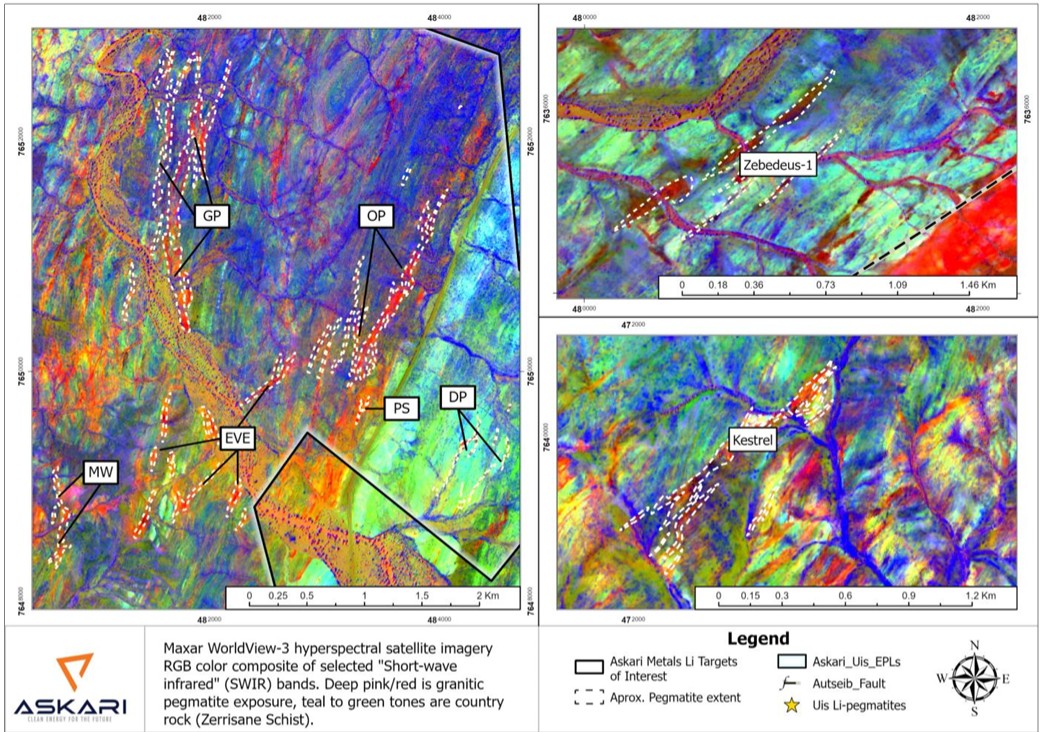
Standout targets include K10, with an interpreted strike length of 3.1 kilometres, GP at 2.4 kilometres and Tawny at 2.2 kilometres.

New targets across two licences
The 7 new targets are split between EPL 7345 and EPL 8535, both of which are part of the broader Uis project area.
On EPL 7345, Askari has identified Eve, GP, MW and K10, while on EPL 8535 the new targets are Tawny, Martial and Zebedeus-1.
The targets fall within the company’s previously defined Corridor of Interest, a zone considered prospective for fertile lithium-caesium-tantalum (LCT) type mineralised pegmatites.
The estimated strike lengths are 1.7 kilometres at Eve, 2.4 kilometres at GP, 0.9 kilometres at MW, 3.1 kilometres at K10, 1.4 kilometres at Zebedeus-1, 2.2 kilometres at Tawny and 1.7 kilometres at Martial.
Remote sensing sharpens targeting
Askari completed the study using reprocessed high-resolution satellite imagery and an optimised hyperspectral technique.
The work integrated Sentinel-2 multispectral data with Maxar WorldView-3 hyperspectral data to produce high-resolution multispectral, hyperspectral and ortho-imagery maps.
The company said the study had improved geological and regolith mapping across Uis and helped identify new areas of potential pegmatite exposure.
It also used regional magnetic data and chemical data, including potassium-rubidium ratios, to refine the Corridor of Interest, which is about 15 kilometres long and 5 kilometres wide.
Field programs underway
Mapping and rock-chip sampling are underway as Askari works to convert the newly identified target inventory into trench-ready prospects.
The company has also completed regolith domain mapping, including ground truthing of domains identified from hyperspectral data.
This work has informed the design of regional soil and stream sediment geochemical sampling programs, which will focus mainly on the Corridor of Interest.
Askari said all samples from the upcoming campaign would be analysed on site at Uis using its own analytical equipment.
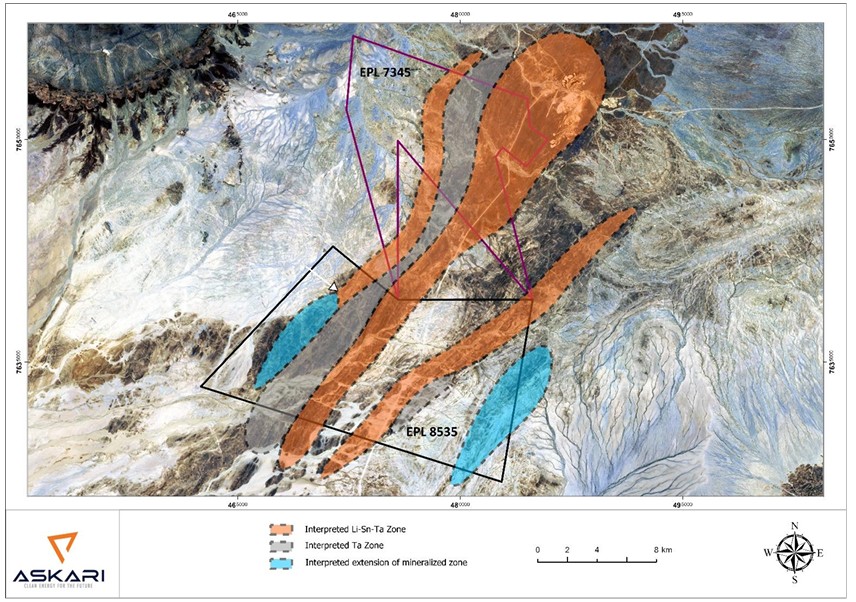
Figure: High priority prospective “corridor of interest” with re-defined Li-Sn-Ta prospective zones, Ta prospective zones and areas of potential mineralisation extensions.
Faster assay turnaround
The company has commissioned its pellet press and LIBS, or Laser-Induced Breakdown Spectroscopy, machines on site.
Future exploration samples would be prepared and analysed at Uis, which is expected to shorten assay turnaround times and support faster exploration decisions.
Executive director Gino D’Anna said the hyperspectral work had “delivered 7 new high-priority pegmatite targets” and materially expanded the project pipeline ahead of RC drilling.
“Targets including K10, GP and Tawny stand out at this stage, and with mapping and rock-chip sampling already underway, we are moving quickly to convert this growing target inventory into trench-ready prospects,” he said.
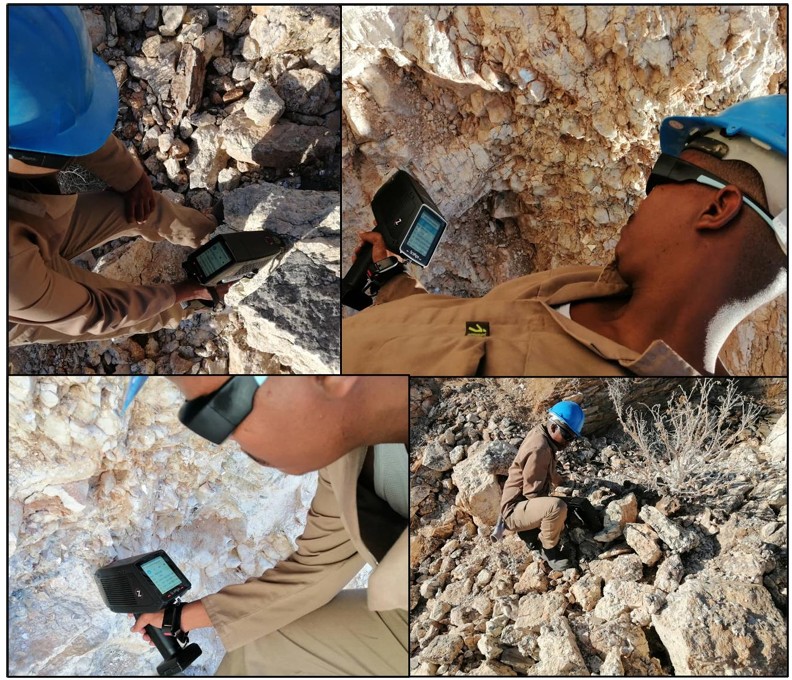
Figure:Handheld LIBS (Laser-Induced Breakdown Spectroscopy) instrument used in the field. Here, the team assess the potential of our pegmatite targets using the LIBS to analyse for light elements (Li, Be, Mg and B).
Uis project setting
The Uis Project is in Namibia’s Cape Cross-Uis Pegmatite Belt, close to Andrada Mining’s operating Uis Tin Mine.
Askari describes the project as a polymetallic critical minerals opportunity with potential exposure to tin, tantalum, lithium, rubidium and caesium.
The company’s Uis landholding includes EPL 7345, which is 100%-owned, EPL 8535, which is 80%-owned, and EPL 7626, which is 100%-owned.
What's ahead
Askari plans to advance several workstreams across Uis in parallel.
Immediate work includes detailed mapping and rock-chip sampling of priority targets, followed by regional stream sediment and soil geochemical sampling across the Corridor of Interest.
The resulting field, assay and geochemical datasets will be used to prioritise targets for Phase 1 trenching on EPL 8535 and Phase 2 trenching on EPL 7345.
RC drilling is scheduled to begin next quarter on the DP, OP, PS and K9 pegmatite targets at EPL 7345, while trenching results are expected to support an initial drill campaign later this year.