
Cobalt Blue Holdings Ltd (ASX:COB, OTC:CBBHF) (ASX: COB, OTC: CBBHF) and Glomar Minerals LLC have advanced plans for Project Infinity, a proposed polymetallic nodule refinery in the United States.
The consortium, formed in March 2026, aims to build and operate what it says would be the world’s first commercial polymetallic nodule refinery in the US, targeting production of manganese, cobalt, nickel and copper from deep-sea nodules.

Site shortlist narrowed
Cobalt Blue said the Project Infinity site selection process had moved from an initial list of more than 30 locations to a shortlist of 4 candidate sites across Texas, North Carolina and Louisiana.
The companies have engaged with 8 State Economic Development Offices and held in-person meetings with senior government representatives at the Select USA Investment Summit in Washington DC.
Shortlisted sites are being assessed for port access, infrastructure, workforce availability, permitting pathways, utilities, transport links and proximity to reagents.
The selection process prioritises brownfield locations with capacity for expansion and jurisdictions with streamlined environmental and regulatory frameworks. Site visits are now being planned.
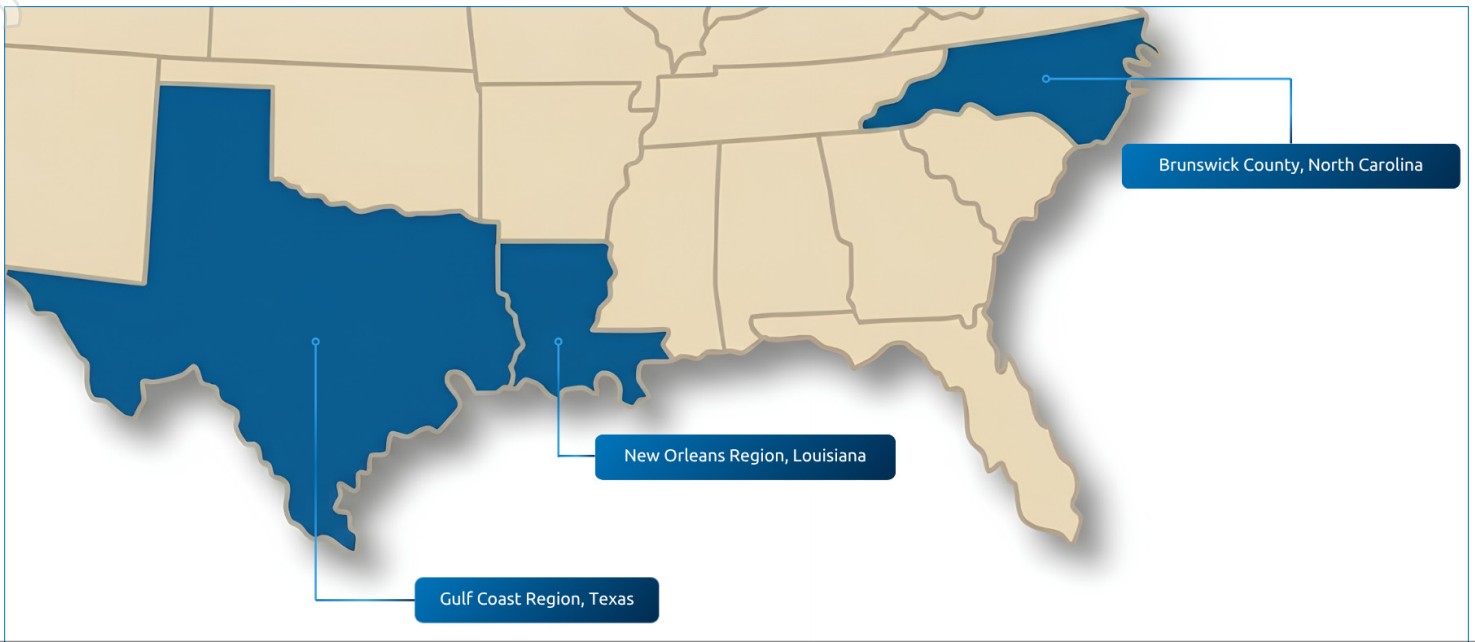
Figure 1: Potential US Locations
Samples arrive at Broken Hill
Cobalt Blue has received 25 kilograms of polymetallic nodules from Glomar Minerals’ licence areas in the Clarion-Clipperton Zone (CCZ) at its Broken Hill Technology Centre.
Initial bench-scale testing and characterisation have commenced, with the work designed to establish baseline design criteria and support the scope of a future pre-feasibility study.
The company said early data highlighted the strong multi-metal grades of the CCZ nodules, supporting their potential as an alternative to land-based resources.
Cobalt Blue managing director and CEO Dr Andrew Tong said the arrival of the samples was a key milestone.
“In the global race for critical minerals, control of processing will define the winners,” Tong said.
“The nodule samples now at our Broken Hill Technology Centre mark a key milestone in demonstrating our technology at scale and underscore Cobalt Blue’s role as a leader in critical minerals processing.”
Project Infinity targets US supply chain gaps
Project Infinity is designed as a fully integrated business to harvest, process, market and sell critical minerals from polymetallic nodules, aligning with US objectives to establish secure domestic critical minerals supply chains.
The project aims to process 200,000 tonnes of polymetallic nodules and 7,500 tonnes of cobalt hydroxide each year.
The cobalt hydroxide is expected to be sourced from ESG-compliant operations in the Democratic Republic of Congo and is intended to improve refinery economics while addressing gaps in US domestic production of manganese and cobalt.
Using Cobalt Blue’s proprietary technology, developed for its Kwinana Cobalt Refinery, the proposed US refinery would produce high-purity manganese sulphate and cobalt sulphate for battery markets, as well as nickel and copper metal.
A second phase is expected to examine recovery of iron, titanium and light rare earths from remaining leach residues.
Glomar licence base
Glomar Minerals holds 100% interests in 2 exploration tenements, UK1 and UK2, in the CCZ, covering about 133,000 square kilometres.
It also holds a 19.9% interest in a third CCZ licence, OMS, covering about 58,000 square kilometres.
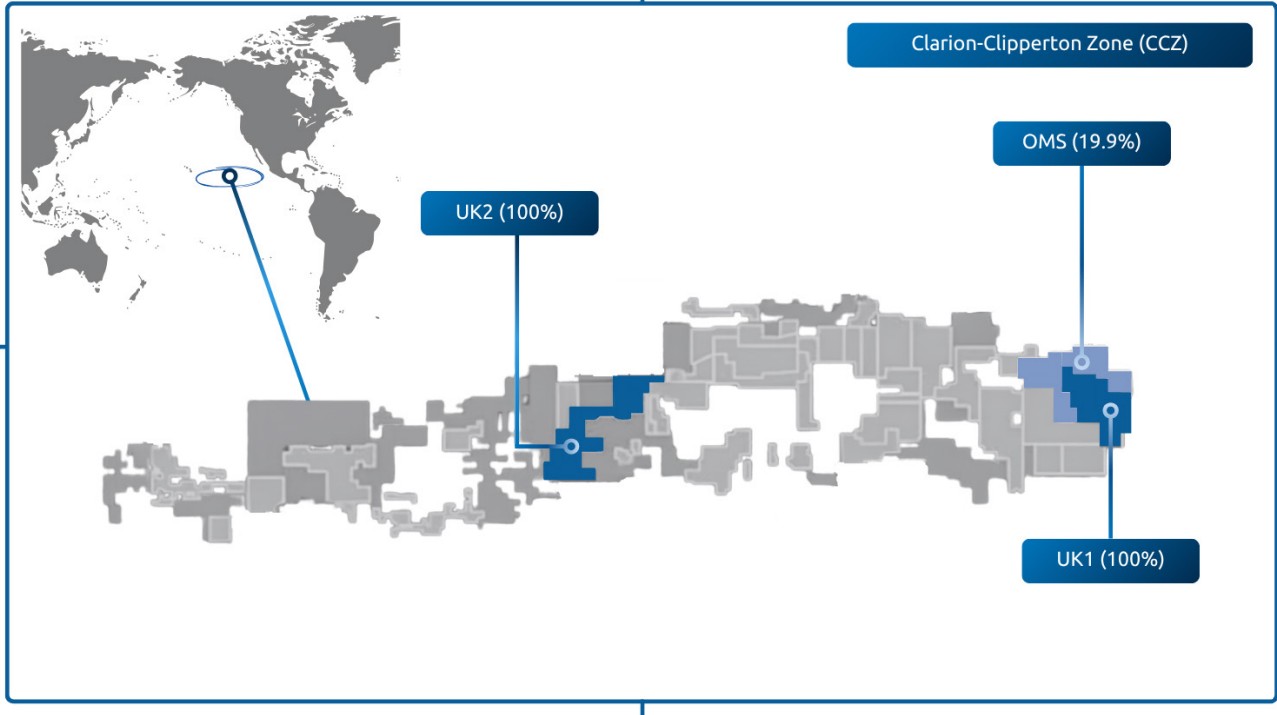
Figure 2: Glomar License Base
The company said more than US$40 million had been invested across these licences since 2012, including oceanographic surveys, environmental surveys and technical studies covering harvesting and processing.
Importantly, Glomar is working toward the release of a maiden resource statement.
Glomar Minerals executive chairman Robbie Diamond said the 4 shortlisted sites represented an important step toward building US processing and refining infrastructure for critical minerals used in manufacturing, defence and next-generation technologies.
Next Steps
Cobalt Blue and Glomar Minerals will continue site visits and selection work in the US while bench-scale testing progresses at the Broken Hill Technology Centre.
New surveys and sample collections are planned between July and October 2026, with a ship scheduled to depart New Zealand.
Newly collected samples will be sent to Cobalt Blue for pilot testwork as part of the feasibility studies for Project Infinity.
Furthermore, detailed process flowsheets and feasibility studies are expected to begin once funding is secured.