While gold prices have pulled back from record highs reached earlier in 2026, gold remains dramatically higher than the levels used in most resource models developed over the past few years. Strong investment demand, ongoing central bank buying and persistent concerns around inflation, geopolitical instability and economic uncertainty have helped drive the precious metal into a new price regime.
For junior explorers like AuMEGA Metals Ltd (ASX:AAM, TSX:AUM, OTCQB:AUMMF, FRA:FRA: MA30), that shift matters. Higher gold prices can improve investor appetite for exploration stocks, increase interest from larger producers looking to replenish development pipelines and potentially enhance the value of existing resources. It doesn't guarantee project success—geology and execution are still the key drivers—but it creates a more favourable environment for companies capable of delivering new discoveries and resource growth.
Resource-backed explorer enters a catalyst-rich phase
AuMEGA is chasing the next discovery that it believes could transform the company.
It entered 2026 with a defined gold resource, fresh exploration funding and a pipeline of drilling catalysts that could significantly reshape the company's valuation.
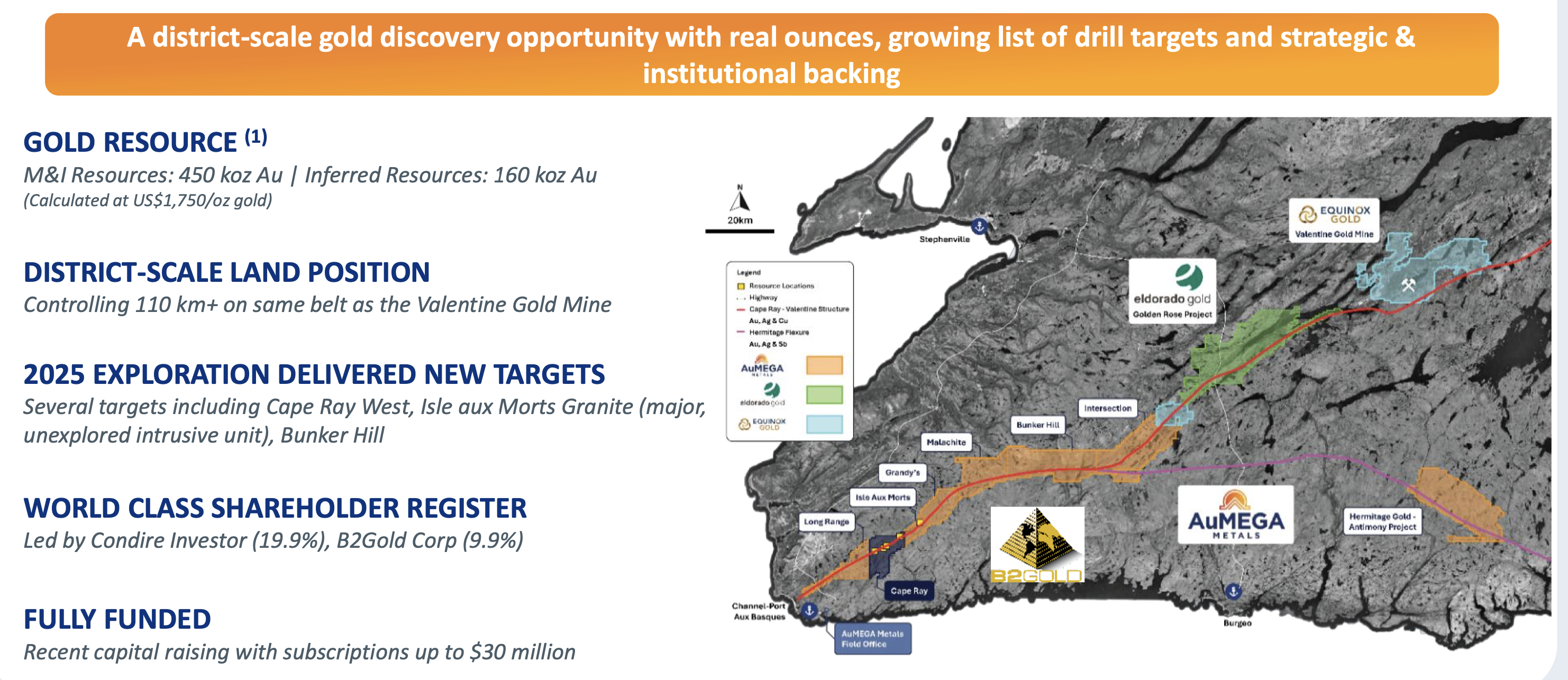
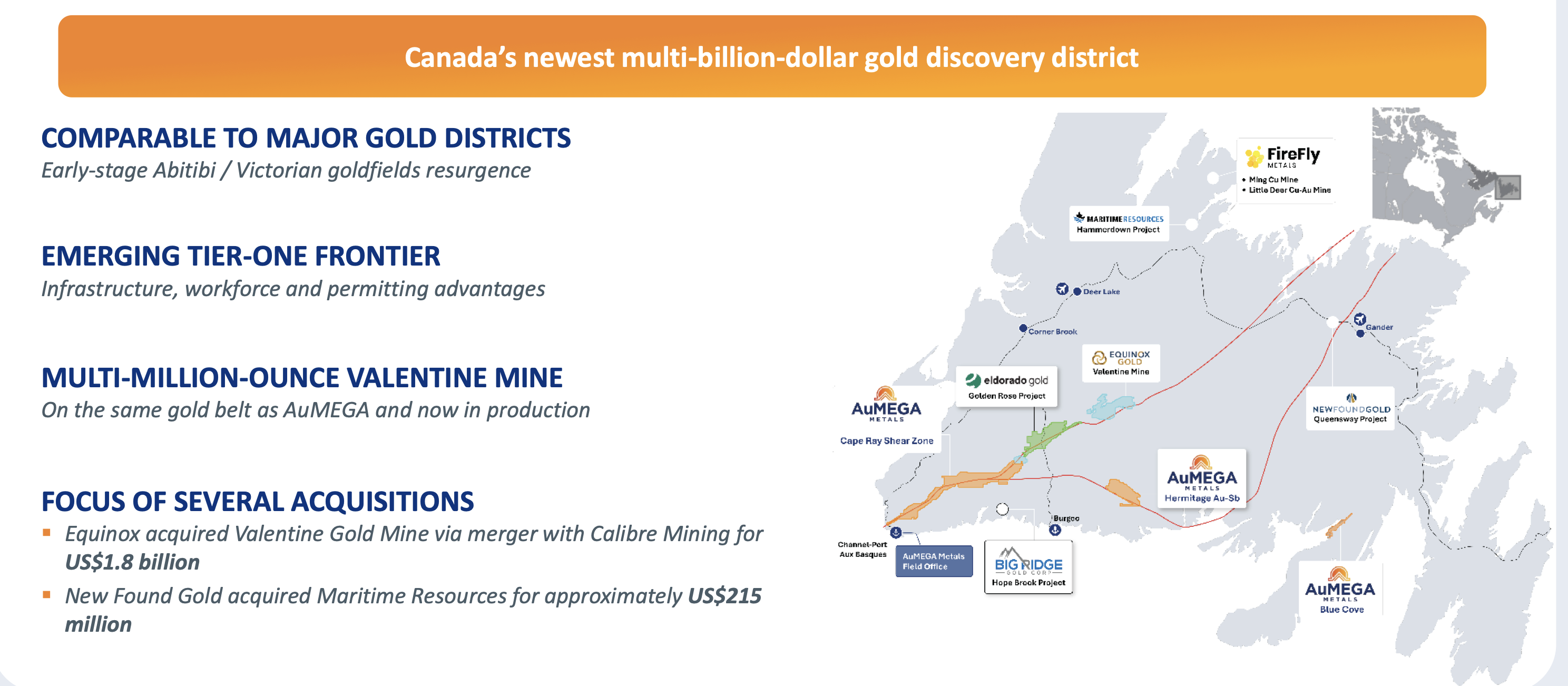
The Newfoundland-focused explorer has built its foundation around the Cape Ray Gold Project, which currently hosts a resource of 450,000 ounces of indicated gold and 160,000 ounces of inferred gold. But management's ambitions stretch well beyond those existing ounces. The company's strategy is centred on unlocking value across more than 110 kilometres of prospective ground along the same geological belt that hosts Calibre Mining's Valentine Gold Mine.
Cape Ray provides the foundation
Many junior explorers begin with little more than a geological theory. AuMEGA already has a defined gold resource, which gives the company a stronger starting point than many of its peers.
Cape Ray is also supported by practical advantages that investors often overlook. The project benefits from road access, nearby infrastructure, hydroelectric power and proximity to ports, factors that could become increasingly important if the project advances further down the development pathway.
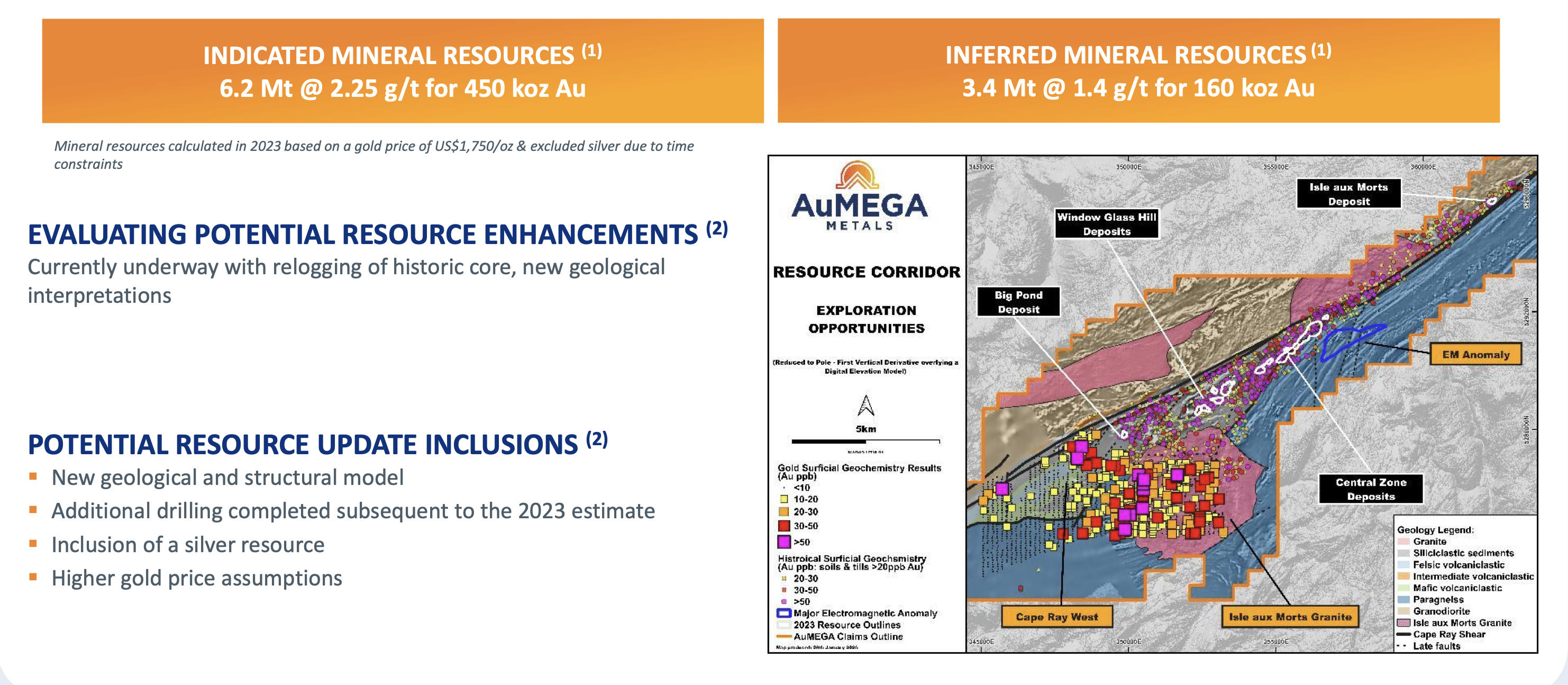
What makes Cape Ray particularly interesting today is the dramatic change in the gold market since the resource was last modelled. The current resource estimate was based on a gold price assumption of US$1,750 per ounce. Gold recently traded around US$4,260 per ounce, more than double that level.
That doesn't automatically make the resource more valuable, but it does create an opportunity. AuMEGA has indicated that future resource updates could incorporate post-2023 drilling results, revised geological interpretations, silver credits and updated gold-price assumptions. If those factors support a larger or higher-quality resource, Cape Ray could look very different from today's published estimate.
Beyond Cape Ray: The bigger district-scale opportunity
While Cape Ray gives AuMEGA credibility, the company's longer-term appeal may lie in what sits beyond the existing resource.
Management has repeatedly highlighted a series of targets that could significantly expand the exploration story.
Cape Ray West and the Isle aux Morts Granite target are emerging as some of the most closely watched prospects in the portfolio. The company believes these areas may represent a large intrusion-related gold system associated with copper, molybdenum and bismuth mineralisation. If drilling confirms that interpretation, it would represent a very different style of discovery from the existing Cape Ray deposits.
Another priority is Bunker Hill, where recent fieldwork identified multiple gold and base-metal corridors across a large land package. Importantly, management argues that previous exploration was limited and relied on outdated targeting methods, creating potential for fresh discoveries.
Further north, the Hermitage project adds another layer of optionality. The area hosts extensive gold, silver and antimony anomalies and is presented as one of Newfoundland's largest arsenic-antimony systems. While still early-stage, Hermitage offers exposure to commodities that have become strategically important in global supply chains.
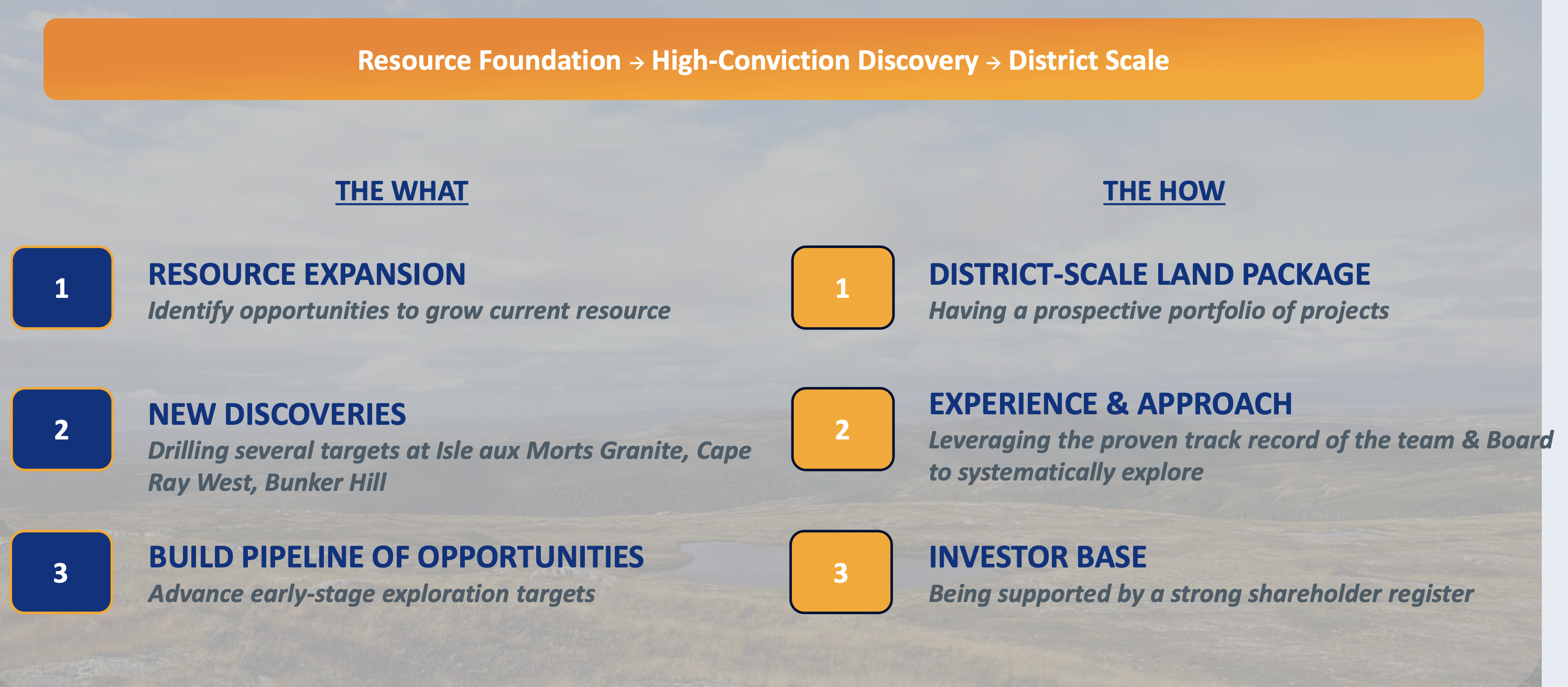
Taken together, these projects mean AuMEGA is not dependent on a single exploration outcome. Success could come from resource expansion at Cape Ray, a new discovery at Cape Ray West, Bunker Hill drilling or emerging results from Hermitage.
A stronger balance sheet for a busy field season
AuMEGA has recently strengthened its financial position.
The company reported cash of C$4.1 million at the end of December 2025. It topped that number up with a recently announced C$30.1 million financing. The placement was anchored by Condire Investors and supported by existing strategic shareholder B2Gold, which maintained a significant position in the company.
With the financing complete, AuMEGA has a hefty war chest in gross cash before exploration spending and transaction costs. For a company with a market capitalisation of around C$36 million, that represents a substantial increase in exploration firepower.
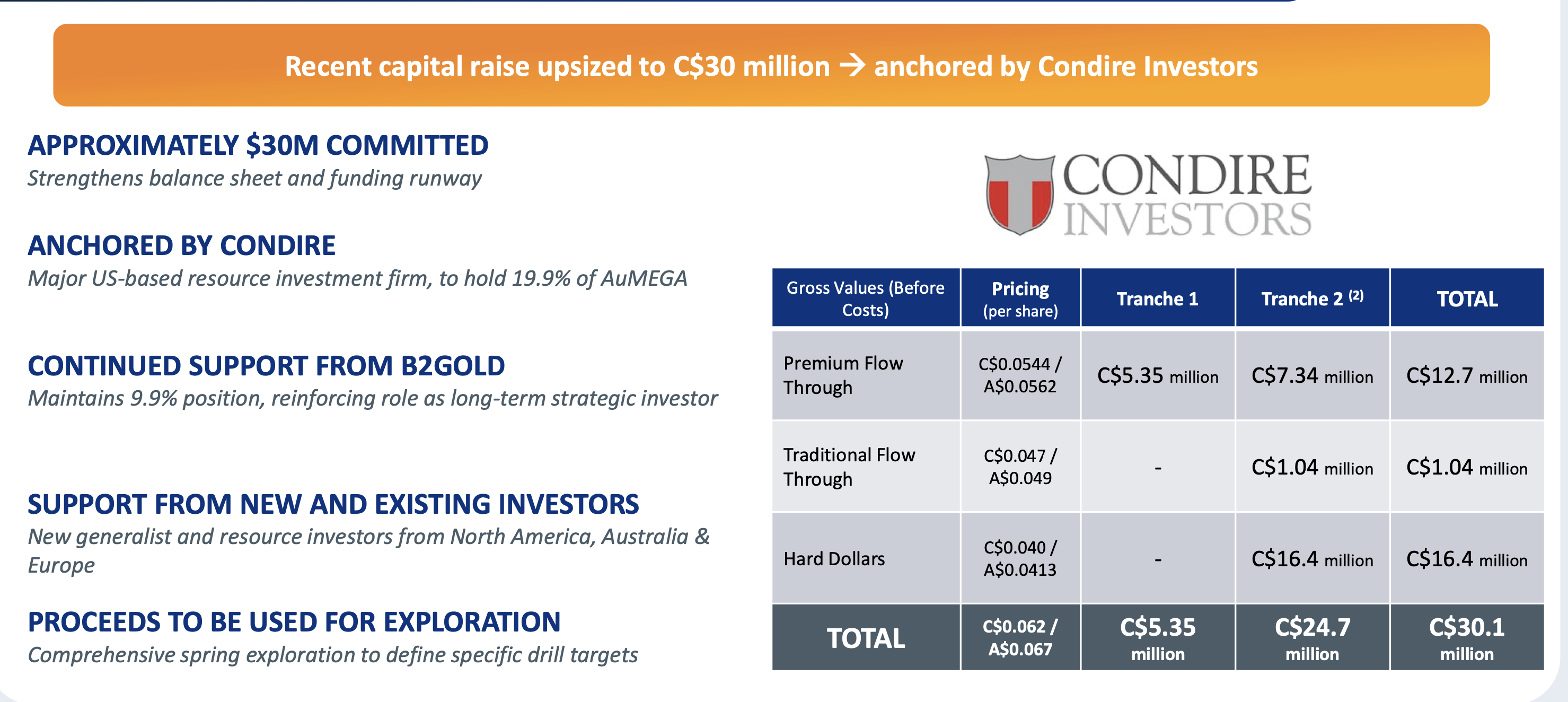
The funding provides the flexibility to pursue multiple drilling programs simultaneously, continue geological modelling work and advance several exploration targets without returning immediately to the market for additional capital.
The key catalysts investors should watch
AuMEGA's investment case now revolves around execution.
The company has identified several opportunities that could change market perceptions over the next 12 months.
A refreshed Cape Ray resource estimate would likely be the single most important catalyst. Investors will be looking for evidence that new drilling, updated geological modelling and potentially higher gold-price assumptions can improve the project's overall scale and quality.
Drilling results from Cape Ray West and Isle aux Morts Granite will also attract close attention, particularly if they support the theory of a larger intrusive-related gold system.
Bunker Hill drilling and additional work at Hermitage represent further opportunities to demonstrate district-scale potential beyond the current resource base.
The bottom line
AuMEGA is no longer a pure grassroots explorer because it already controls a meaningful gold resource at Cape Ray. Yet it is not an advanced developer either, lacking a current feasibility study or development plan.
Instead, the company occupies the middle ground that often produces the biggest share-price moves in the exploration sector: a resource-backed explorer with multiple discovery opportunities.
The ingredients are in place. AuMEGA has existing ounces, a large land position, strategic shareholders, fresh capital and exposure to a strong gold market.