
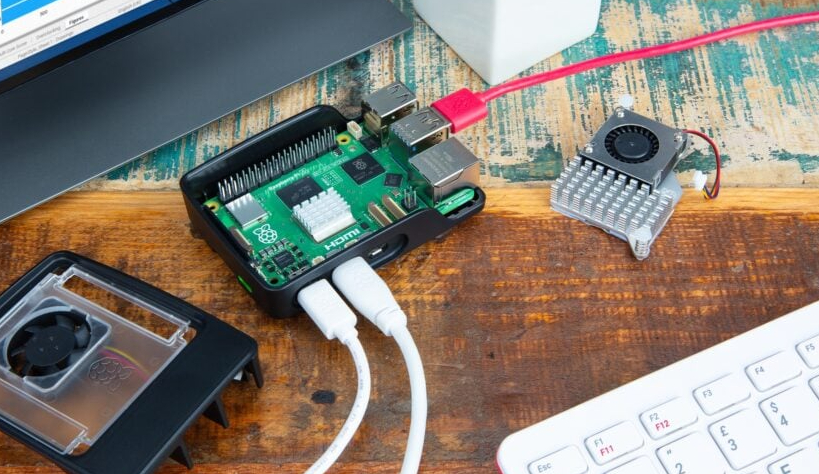
Raspberry Pi Holdings PLC (LSE:RPI) shares surged 21% to 997p on Friday, pushing the Cambridge-based computing company's market capitalisation towards £2 billion.
The immediate catalyst was clear: adjusted EBITDA of more than $38 million in the six months to June likely already meets the current full-year consensus, with the company pushing into the second half aiming to meaningfully exceed that figure.
But the more interesting question is what is driving it, and whether it can last.
The honest answer from the company itself is that the first-half performance owes more to shrewd inventory management than to any new wave of AI-related demand.
Raspberry Pi spent 2025 accumulating memory chips at relatively low prices before DRAM costs rose sharply, and has been drawing down that stockpile through the first half, flattering unit economics in a way the company has explicitly flagged will not be repeated in the second half.
Memory, in other words, is both the story of the first half and the principal risk to the second.
The company is using its debt facilities to build fresh strategic inventory and is deepening relationships with existing and new suppliers, but DRAM pricing remains elevated and volatile, and the supply picture for 2027 and beyond is far from settled.
Set against that near-term uncertainty sits a more compelling longer-term thesis, one that has animated Raspberry Pi's share price on multiple occasions this year.
AI agents, software platforms capable of taking autonomous real-world actions rather than simply answering questions, are driving demand for affordable, power-efficient, security-conscious computing at the network edge.
OpenClaw, the agent platform that triggered a 30% share price surge in February when social media tutorials promoted Raspberry Pi hardware as a natural host, is the most visible example, but it is not the only one.
The agent ecosystem is broadening rapidly, and the hardware requirements it creates, always-on, low-cost, locally-deployed compute with strong software support, map closely onto what Raspberry Pi already sells.
Peel Hunt drew an explicit parallel with the adoption curves seen in smartphones and data centres, arguing that once memory ceases to be a gating factor, edge compute volumes could inflect sharply.
The caveat is that this remains a thesis rather than a confirmed order trend.
Raspberry Pi's own management has not pointed to any measurable spike in agent-related demand, and around 70% of the company's revenues still derive from industrial and embedded applications rather than the developer and enthusiast market where agent adoption is most visible.
The stock's near-term challenge is that at 997p it sits more than twice Peel Hunt's formal target price of 460p, suggesting the broker's valuation model has not yet absorbed either the trading upgrade or the full weight of the agent demand argument.
That gap between price and target is either a warning that speculation has run well ahead of fundamentals, or an indication that the formal models are simply too conservative for a company that may be at the early stages of a significant demand inflexion.
The answer to that question will not be found in a trading update. It will be found in the order books over the next two to three quarters, once the inventory tailwind fades and underlying demand has to carry the weight on its own.


