
Orthocell Ltd (ASX:OCC, OTC:ORHHF)’s push into the US market is starting to put real numbers behind a long-anticipated commercial transition.
After years of development, regulatory work and early offshore sales, the company is now building a footprint for its nerve repair device Remplir in what is both its largest opportunity and its most demanding market. Early adoption trends — spanning hospitals, surgeons and repeat usage — suggest the rollout is gaining traction, while the threshold to profitability remains relatively low compared with the size of the addressable market.
That combination is drawing attention to a segment of surgery that is both high-volume and underpenetrated by advanced devices, where even incremental shifts in clinical practice can translate into meaningful commercial outcomes.
A large market with persistent limitations
Despite the scale of the nerve repair market, clinical outcomes remain inconsistent.
More than 700,000 peripheral nerve repair procedures are performed annually in the US, yet around 90% still rely on suturing alone.
That approach remains the standard of care, but it comes with well-documented drawbacks. Suturing can introduce tension at the repair site, trigger inflammation and scarring, and ultimately limit the quality of nerve regeneration. Even in successful cases, recovery of function is often incomplete, with typical success rates in the 50% to 70% range.
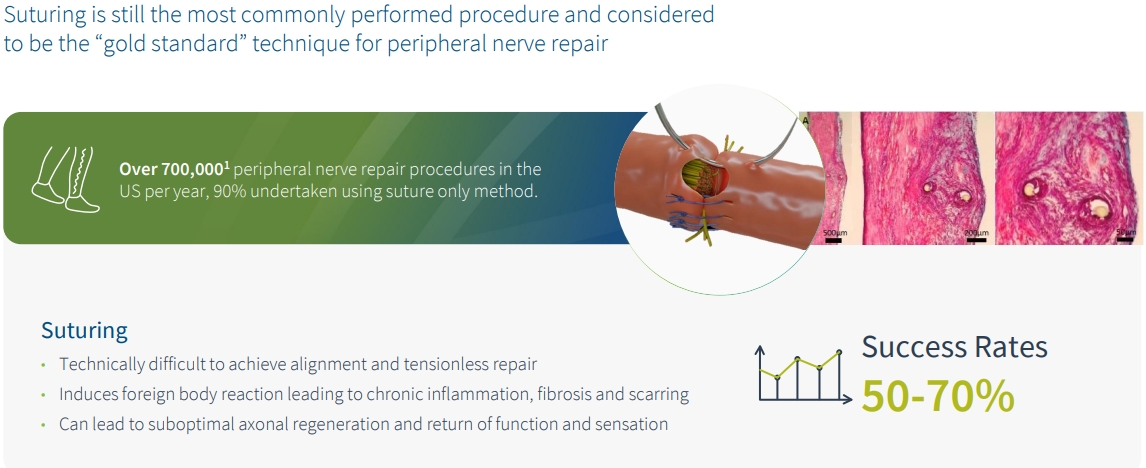
Remplir US Peripheral Nerve Repair Trends.
Devices designed to improve outcomes have been available for some time, but adoption has remained low — used in only about 10% of procedures, according to Orthocell’s estimates. That reflects both product limitations and the inherent conservatism of surgical practice.
For Orthocell, however, it also highlights a relatively underpenetrated opportunity. The company estimates the US nerve repair market at around US$1.6 billion, with scope for further expansion as clinical applications broaden.
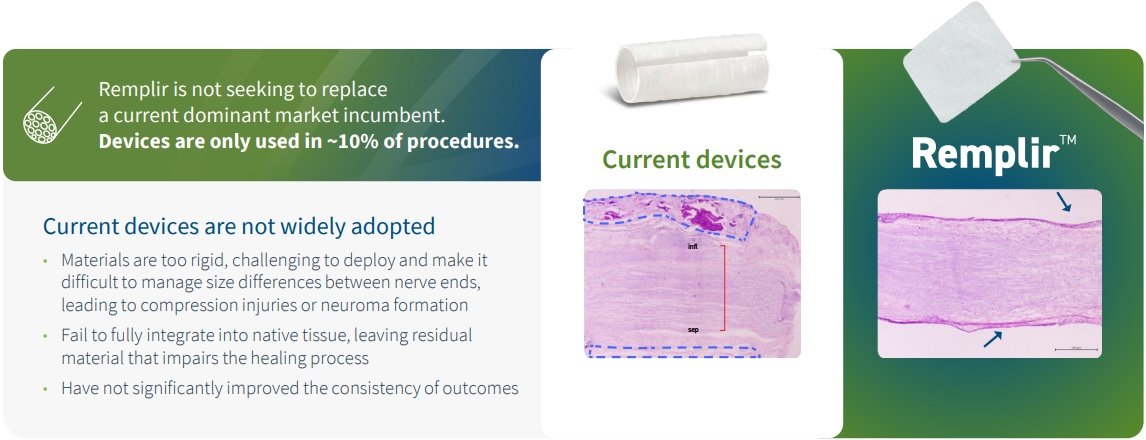
Remplir Significant US Market Opportunity: Orthocell has commenced commercial distribution into an estimated US$1.6 billion total addressable nerve repair market in the US alone.
Remplir’s positioning in the operating theatre
Orthocell’s core product, Remplir, is designed to address some of the practical and biological limitations of existing approaches.
The collagen-based nerve wrap mimics the natural epineurium — the outer layer of a nerve — while creating a more controlled healing environment. By protecting the repair site from inflammation and scarring, it aims to improve the consistency of regeneration outcomes.
From a surgical standpoint, ease of use is a key part of the value proposition. Remplir is designed to be suture-sparing and straightforward to handle, reducing complexity in procedures where precision is critical.
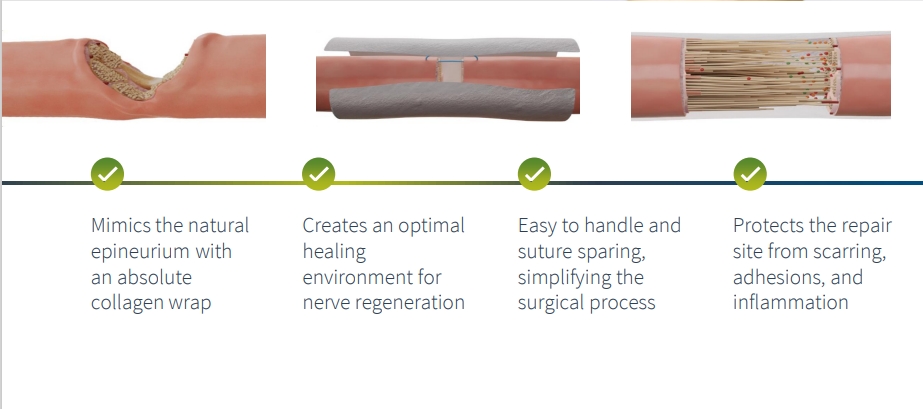
Rather than displacing an entrenched incumbent, Orthocell is targeting a segment where device adoption is still relatively low, allowing it to build share without needing to directly replace an existing standard across the entire market.
Early US traction points to adoption
The US rollout is now providing the first real test of that strategy.
Since first sales in June 2025, Orthocell has expanded Remplir into more than 50 hospitals and built a network of 48 surgeons, with quarterly unit sales now exceeding 110–120 devices.
Growth across these metrics has been rapid, with compound quarterly increases above 250% in hospitals and surgeons and even stronger gains in unit sales.
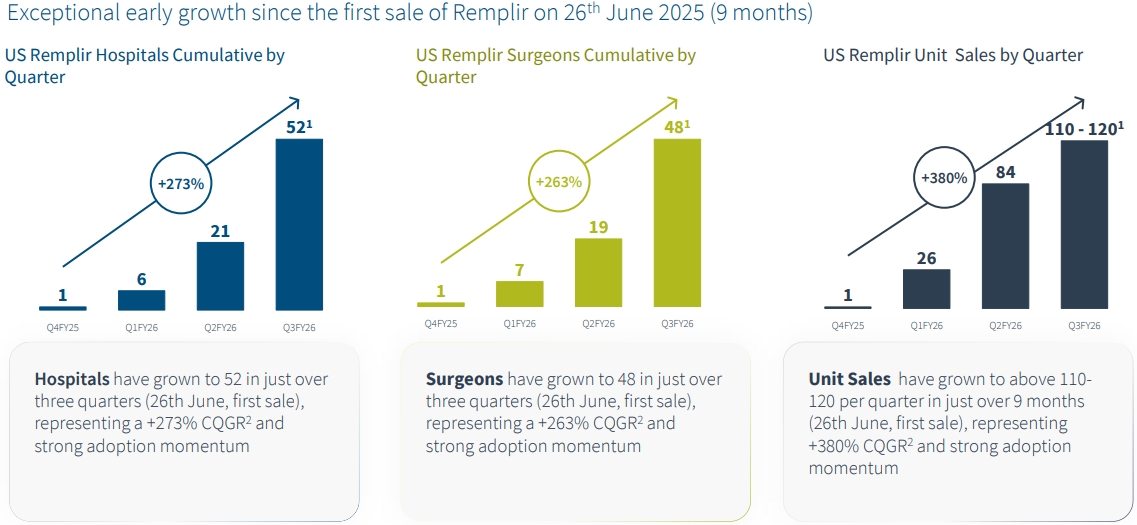
Remplir US performance since launch.
For a newly launched surgical device, that level of uptake is notable — particularly given the typically slow adoption curve in hospital settings.
Equally important is the level of repeat usage. Around 70% of surgeons who have used Remplir have returned to use it again, suggesting early confidence in the product and providing a foundation for ongoing growth.
Execution remains the key hurdle
As with most medtech rollouts, the biggest challenge is not proving the product works but navigating the commercial pathway.
Orthocell has outlined a multi-step process following regulatory approval: securing state licences, building a distributor network, obtaining hospital funding approval through Value Analysis Committees (VACs), and training surgeons to adopt the product.
Each of these steps can slow adoption, but they also create a framework for scaling once in place.
So far, the company appears to be progressing steadily, with multiple VAC approvals secured, a growing distributor footprint across the US and an expanding base of trained surgeons.
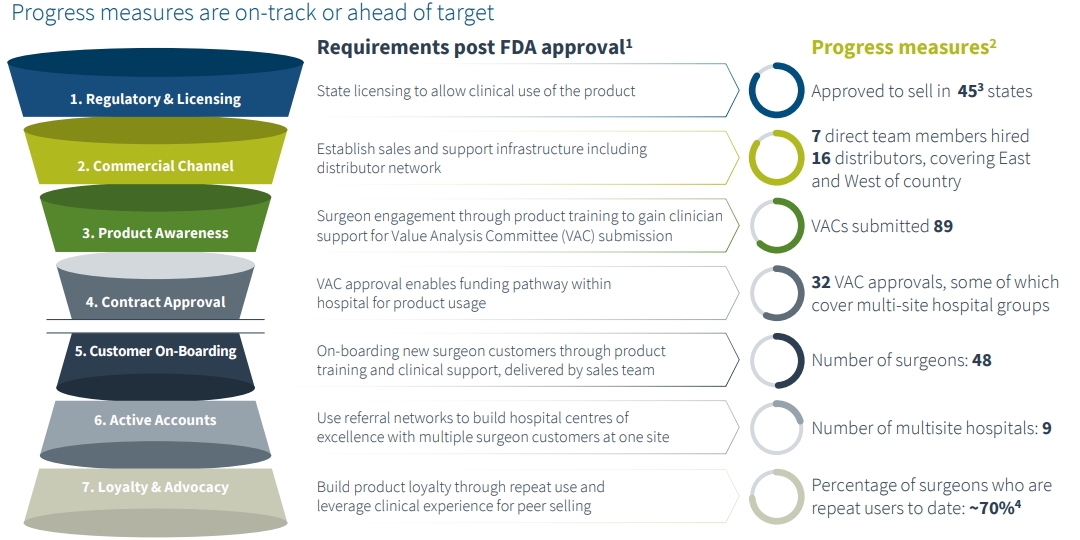
Pathway to US commercial success.
A relatively low breakeven threshold
One of the more compelling elements of the investment case is the relatively modest level of adoption required to reach profitability.
Orthocell estimates that 5,000 to 6,000 procedures annually in the US would be sufficient to achieve cashflow breakeven — representing less than 1% of the total addressable market.
That equates to roughly 300 to 400 active surgeons performing procedures, a number the company believes is already within reach given its current pipeline and training initiatives.
In practical terms, this means Orthocell does not need to capture a large share of the market to become financially self-sustaining — a notable contrast to many early-stage biotech and medtech companies.
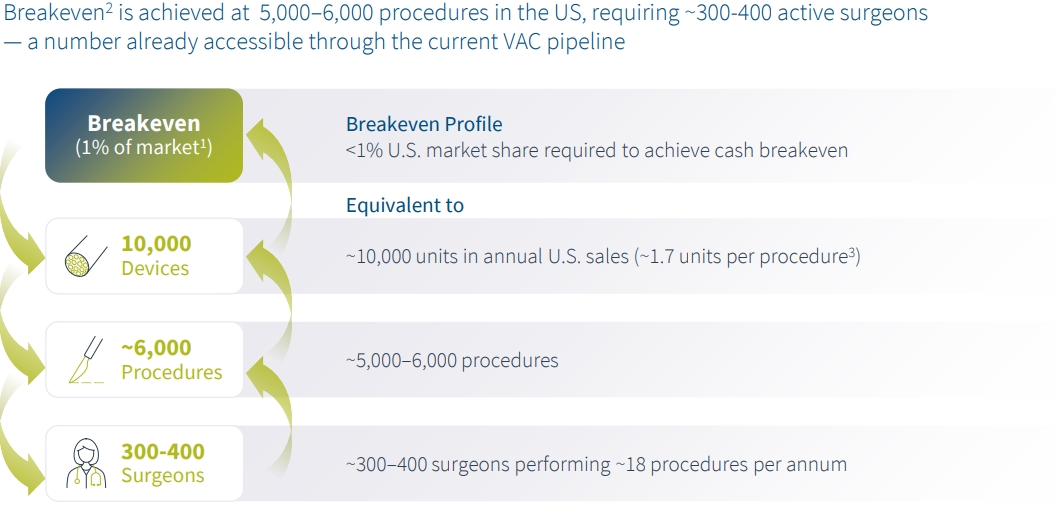
Path to profitability (Cashflow Breakeven).
Revenue growth and funding position
The company’s financials are beginning to reflect this shift towards commercial execution.
Orthocell has reported consistent revenue growth over recent reporting periods, with half-year revenue increasing from A$3.5 million in 2H FY24 to A$6.2 million in 1H FY26, driven primarily by device sales.
At the same time, it remains well funded, with around A$49.4 million in cash and term deposits as at the end of December 2025, providing runway to continue investing in US expansion and manufacturing capacity.
Expanding use cases could widen the opportunity
Orthocell is also exploring additional applications for Remplir beyond traditional nerve repair.
One area of interest is prostate cancer surgery, where nerve damage can lead to complications such as erectile dysfunction and urinary incontinence. Early use of nerve wraps in this setting is aimed at improving functional recovery, with initial patient data expected later in 2026.
If successful, this could expand the product’s addressable market and reinforce its clinical relevance.
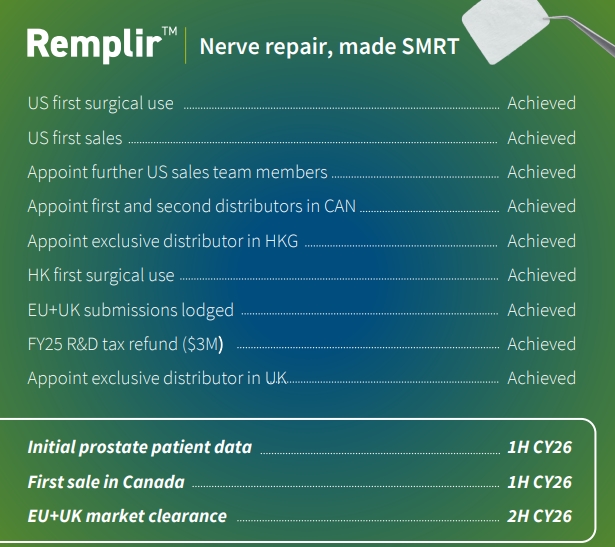
Achievements and upcoming catalysts.
From development to commercial execution
Orthocell’s trajectory reflects a broader transition common to many biotech and medtech companies — moving from development to commercial scale.
What stands out in this case is the combination of a large, underpenetrated market, early signs of adoption, and a relatively low bar for profitability.
The next phase will depend on whether the company can continue converting early interest into sustained usage across hospitals and surgical networks. If it can, nerve repair — long an overlooked corner of the surgical landscape — may prove to be a more commercially meaningful opportunity than it has historically appeared.