
A structural squeeze in global uranium supply is colliding with a fresh wave of demand from nuclear restarts, electrification and the energy needs of AI infrastructure — creating what some analysts describe as the strongest market backdrop in a generation.
Against that backdrop, Atomic Eagle Ltd (ASX:AEU, FRA:6QZ0) is advancing a uranium development story centred on scale, jurisdiction and timing, with its flagship Muntanga project in Zambia emerging as a potential near-term contributor to a tightening supply chain.
The company’s latest investor presentation outlines a strategy built on expanding an already sizeable resource base, leveraging low-cost processing pathways and positioning itself within a geopolitical shift towards secure, non-Russian uranium supply.
Uranium market resets around supply security
Uranium markets are increasingly being shaped by policy as much as price.
Governments in the US, China and India are accelerating nuclear capacity buildouts, while simultaneously seeking to diversify fuel supply away from Russian sources. The result is a market where “credible near-term pounds” in stable jurisdictions are commanding increasing strategic value.
Atomic Eagle points to several reinforcing trends:
- Persistent structural deficits expected through the late 2020s
- Demand growth tied to electrification and energy-intensive technologies
- Supply concentrated among a small number of producers
- Thin spot markets amplifying price volatility
The company argues this combination creates durable incentives for new supply — particularly from projects that can move relatively quickly through development.
Zambia emerges as a strategic jurisdiction
Atomic Eagle’s positioning in Zambia is central to its investment case.
The country combines a long-established mining industry with a relatively stable fiscal regime, while ranking as a “friendly jurisdiction” for resource development in Africa.
As global supply chains are reshaped, Zambia’s geopolitical neutrality is also becoming an asset. Atomic Eagle highlights the country’s:
- Strong existing infrastructure and export pathways
- Established regulatory frameworks for mining
- Proximity to both Western and Eastern uranium markets
In a market increasingly defined by security of supply, jurisdictional risk is becoming a key differentiator — and Zambia offers a middle ground between established producers and higher-risk regions.
Muntanga anchors a growing resource base
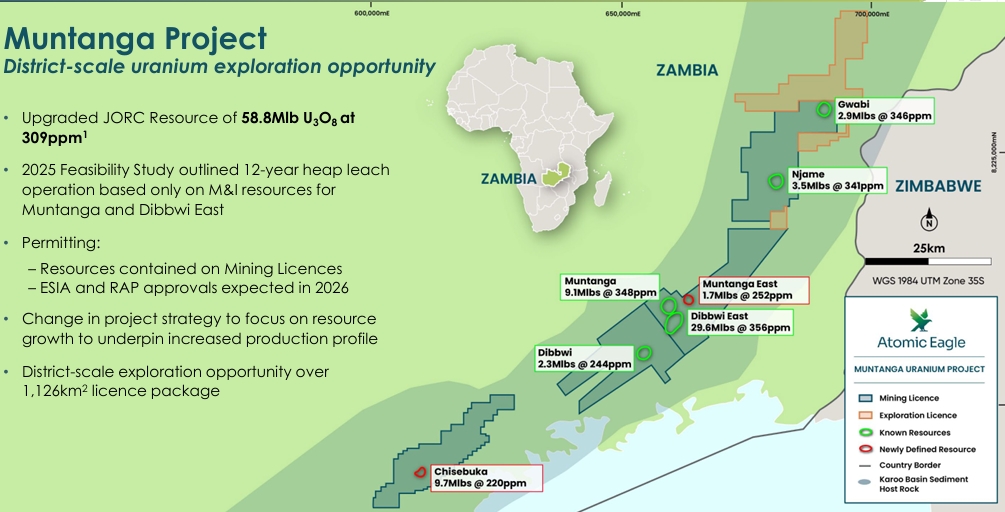
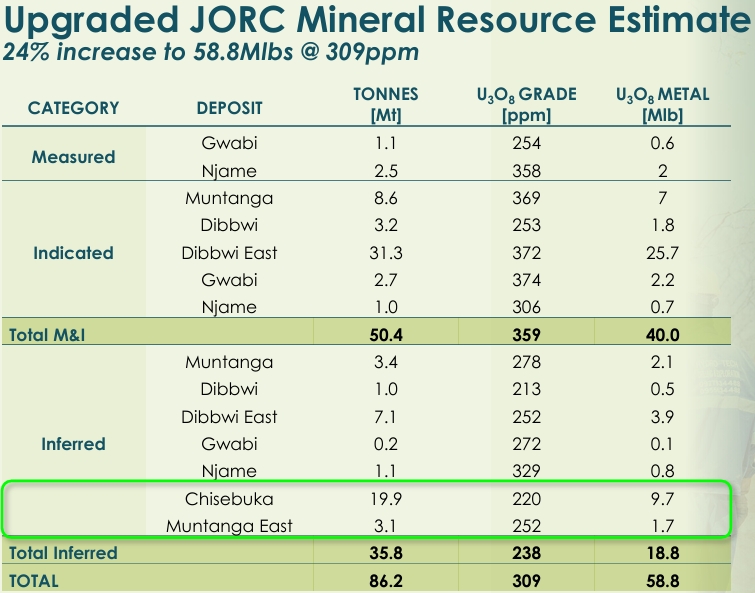
At the centre of the company’s portfolio is the Muntanga uranium project, which now hosts a JORC-compliant resource of 58.8 million pounds of triuranium octoxide (U₃O₈) at 309 parts per million (ppm), following a 24% increase from recent drilling.
The resource spans multiple deposits, including Muntanga, Dibbwi East, Gwabi and Njame, with both Measured and Indicated material forming a substantial portion of the inventory.
Key features of the project include:
- District-scale footprint across a 1,126-square-kilometre licence package
- Multiple satellite deposits with potential to feed future expansions
- Significant inferred resources offering conversion upside
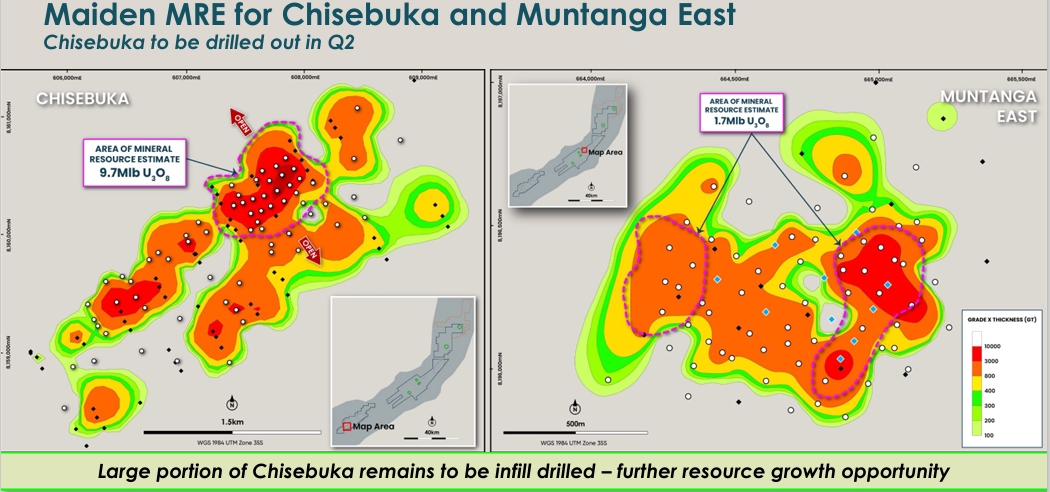
- Newly defined deposits such as Chisebuka and Muntanga East
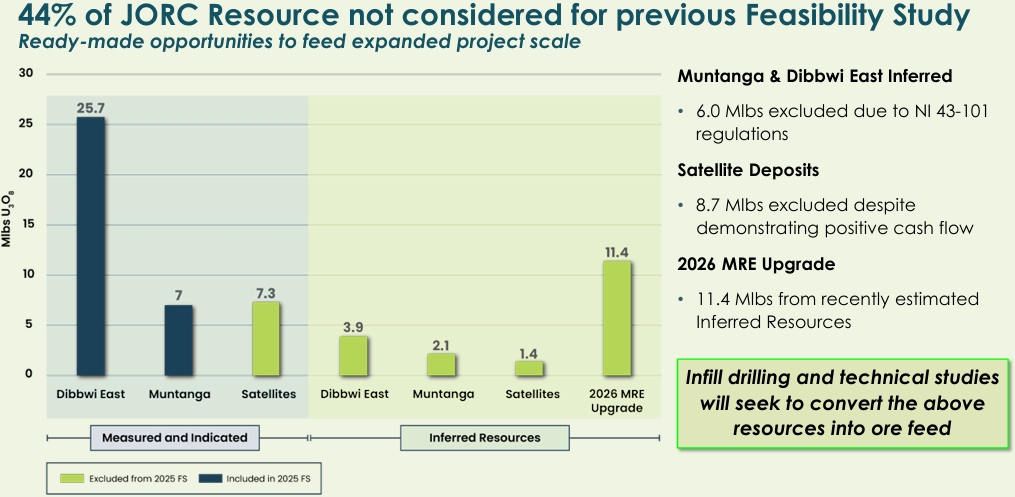
Notably, around 44% of the current resource was not included in the previous feasibility study, highlighting a clear pathway to scale.
A development pathway already in place
Unlike many early-stage uranium explorers, Atomic Eagle is working from an existing development framework.
A 2025 feasibility study outlined a 12-year open-pit, heap leach operation, producing around 2.2 million pounds annually and delivering robust economics.
Key metrics from the study include:
- Pre-production capex: US$282 million
- Operating costs: ~US$32/lb
- Post-tax net present value (NPV8): US$243 million
- Internal rate of return (IRR): 20.8%
- Payback period: 3.5 years
The project is designed around conventional processing methods, with high recoveries above 90% and relatively low reagent consumption — factors that support a scalable, capital-efficient expansion strategy.
Atomic Eagle is now looking to build on this baseline by incorporating additional resources and optimising throughput.
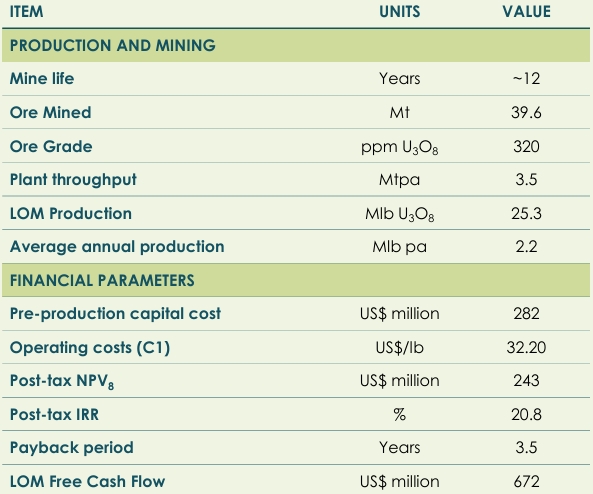
Highlights from 2025 Feasibility Study.
Exploration upside begins to unlock
While the existing resource provides a foundation, the company’s growth story is increasingly tied to exploration.
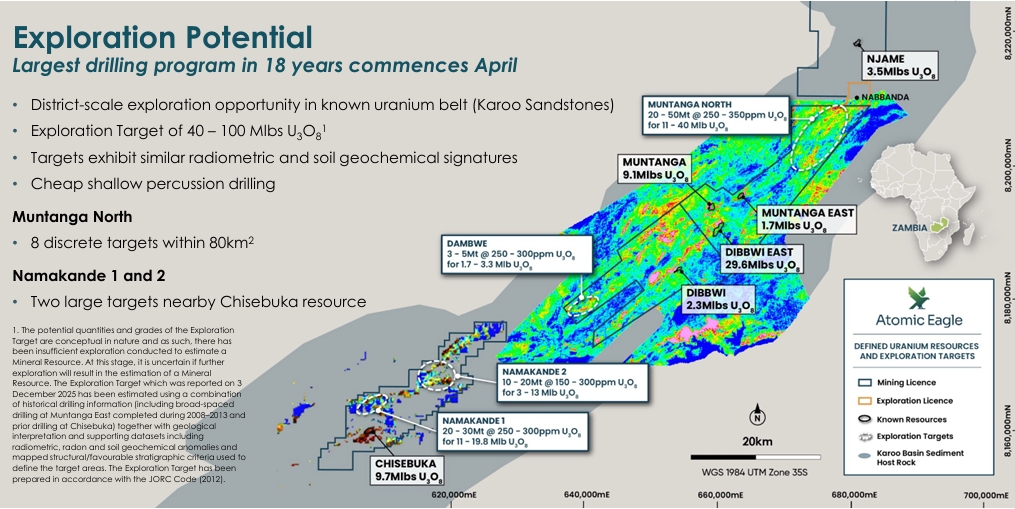
A large-scale drilling campaign — the biggest in 18 years — is set to commence, targeting multiple zones across the broader project area.
The company has defined an exploration target of 40 million–100 million pounds U₃O₈, based on historical data and geophysical signatures across the Karoo sandstone-hosted system.
Priority targets include:
- Muntanga North, with eight discrete prospects within 80 square kilometres;
- Namakande 1 and 2, large targets located near the Chisebuka resource; and
- Extensions around existing deposits to convert inferred material
The shallow nature of the mineralisation allows for relatively low-cost drilling, increasing the potential for rapid resource expansion.
Scale becomes the key differentiator
In a tightening uranium market, project size and longevity are becoming increasingly important.
Atomic Eagle’s peer comparisons suggest the market is rewarding companies with large, long-life assets — particularly those that can underpin long-term supply contracts.
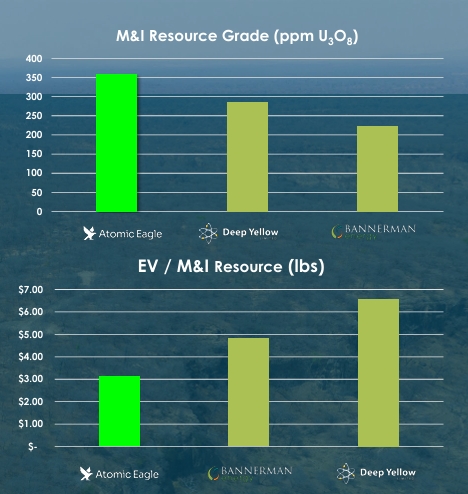
Peer comparison.
With a growing resource base, defined development pathway and exploration upside, the company is aiming to position Muntanga within that cohort.
At current metrics, Atomic Eagle trades at a lower enterprise value per pound of resource than some of its peers, reflecting both its earlier stage and the potential for re-rating as the project advances.
Positioned for the next phase of the uranium cycle
The company’s strategy is built around a simple premise: expand the resource, optimise the development plan and align with a market that is increasingly short of secure supply.
Its immediate priorities include:
- Converting inferred resources into mineable inventory
- Expanding the resource base through drilling
- Advancing permitting, with approvals expected from 2026
- Refining project economics through scale
With funding in place for its upcoming exploration program and a clear pathway to production, Atomic Eagle is moving from concept towards execution.
In a uranium market defined by long lead times and tightening supply, that transition — from resource growth to development readiness — may prove to be the most valuable step of all.