
Lithium Universe Ltd (ASX:LU7, OTC:LUVSF) and research partner Macquarie University have reported a significant improvement in solar panel recycling process efficiency, confirming an 83% reduction in acid consumption using their Jet Electrochemical Silver Extraction (JESE) process.
The development marks another scientific validation of Lithium Universe’s growing photovoltaic (PV) recycling technology portfolio — a cornerstone of its dual strategy to close North America’s “lithium conversion gap” and pioneer sustainable recovery of valuable metals from solar waste.
A cleaner, cheaper route to silver recovery
Laboratory tests verified that the JESE system achieves over 95% silver recovery in under 30 minutes using only a 12 wt% (percentage by weight) nitric acid solution — a fraction of the concentration required by conventional recycling methods.
Unlike traditional acid-leaching routes, which rely on high-strength solutions and sacrificial metals, JESE operates at a low voltage of 5 V, without silver nitrate (AgNO₃) electrolytes or heavy-metal additives. This eliminates toxic waste streams and cuts both chemical and energy costs.
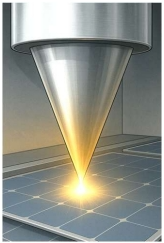
The process focuses a micro-jet of electrolyte directly on silver-bearing zones of the solar cell, generating rapid reaction kinetics while recirculating the solution in a closed loop. According to Macquarie’s engineering team, this “field–fluid synergy” enables a cleaner, safer reaction and drastically reduces reagent use and waste.
Read more: Lithium Universe and Macquarie University achieve breakthrough in solar panel silver recycling
Lithium Universe called the results a “breakthrough” that “fundamentally reshapes the chemistry and cost base of metal recovery from end-of-life solar cells”.
“The result is a zero-additive, zero-waste process — no toxic sludge, no sacrificial metals, and only minimal acidic effluent, delivering both economic efficiency and environmental integrity in silver recycling,” the company said.
Strong validation from lab studies
Macquarie University researchers Dr Binesh Puthen Veettil and Dr David Payne led the comparative studies that validated JESE’s performance against standard hydrometallurgical techniques. Key findings included:
- More than 90% of silver dissolved within seven minutes, compared with up to 24 hours under conventional leaching.
- 96% purity in recovered silver, comparable to Britannia-grade metal.
- High current efficiency — 87% for dissolution and 77% for recovery.
- No external additives required and minimal effluent generated.
The system also preserved underlying silicon and aluminium structures, allowing potential reuse of wafer substrates — another step towards circular-economy deployment.
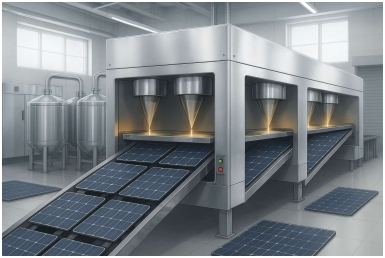
Artist Impression of JESE Technology in a demonstration plant.
Economic and market significance
Lithium Universe said the reduction in acid use could cut chemical and neutralisation costs by more than 80%, addressing one of the biggest cost drivers in solar recycling. Removing the need for silver nitrate and sacrificial copper or iron electrodes further lowers operational costs by an estimated 15–20% per kilogram of silver produced.
The breakthrough comes amid a record run for silver, which hit a 45-year high of US$52.21 an ounce this week. At current prices, each end-of-life solar panel contains roughly A$56 worth of recoverable silver — a market opportunity now made more viable by JESE’s improved economics.
Advancing the circular economy
The company said the latest results underscore the growing potential of its clean-tech portfolio, following recent milestones in its lithium refinery and PV recycling initiatives. On Wednesday, Lithium Universe revealed plans for a second lithium carbonate refinery in Brownsville, Texas, aimed at complementing its flagship Québec facility.
Read more: Lithium Universe unveils Texas refinery plan to expand North American footprint
The collaboration with Macquarie University continues to deliver research outcomes that strengthen the commercial and environmental case for industrial-scale solar panel recycling.
Lithium Universe’s broader mission includes developing a battery-grade lithium carbonate refinery in Québec, while its PV recycling technologies — including the Microwave Joule Heating Technology (MJHT) and JESE systems — aim to recover silver and other critical metals from the growing volume of solar waste projected to reach up to 78 million tonnes by 2050.
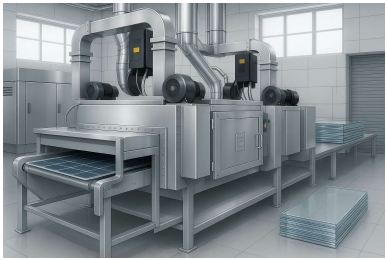
Artist Impression of Microwave Joule Heating Technology (MJHT).