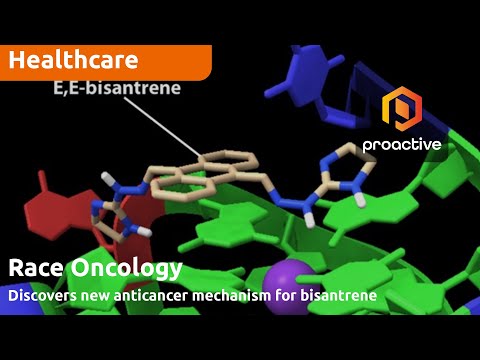
Race Oncology Ltd (ASX:RAC, OTC:RAONF) has appointed Laurence Hurley to its Scientific Advisory Board (SAB), adding a leading figure in the discovery and development of drugs that target DNA-quadruplexes (G4). Hurley will advise on the G4-binding mechanism of RCDS1 (E,E-bisantrene) and support clinical study design for RC220, following Race’s recent identification of a G4-targeting mode of action.
“I am extremely pleased to welcome on behalf of the entire Race team Prof. Hurley to Race’s SAB. His wealth of knowledge about G4 structures and the drugs that target them is unparalleled. He has already provided Race with several key insights as we begin to explore the potential of RCDS1 as a G4-targeting agent and how to best use RC220 in the clinic,” Race Oncology CEO and managing director Dr Daniel Tillett said.
High-level expertise
A founder and chief scientific officer at Cylene (Cyternex) Pharmaceuticals, Hurley helped develop first-in-class G4-DNA binding agents quarfloxin and pidnarulex (CX-5461), the latter receiving United States Food and Drug Administration (FDA) Fast Track Designation for BRCA1/2-mutant breast and ovarian cancers.
His group also showed that the approved anticancer drug trabectedin (Yondelis®) acts through G4-DNA binding, and was first to demonstrate that targeting a G4 structure in the MYC promoter can repress transcription.
Hurley said: “After more than 50 years, first as a basic and then a translational research scientist, I am thrilled to be working with Race Oncology as they carry the torch towards an effective treatment for cancer patients with their drug bisantrene… Race Oncology's (E,E)-bisantrene will be a banner-carrying clinical example of G4 targeting.”
Race Oncology pinpoints lead drug’s anticancer mechanism as G-quadruplex stabiliser
Race recently identified the primary anticancer mechanism for its lead candidate, (E,E)-bisantrene (RCDS1), saying the finding reframes the drug’s clinical and commercial path.
Read more: Race Oncology uncovers primary anticancer mechanism of (E,E)-bisantrene
New studies by Race and collaborators indicate RCDS1 works by binding to and stabilising G-quadruplexes, rather than behaving like traditional anthracycline chemotherapies such as doxorubicin. G4 structures regulate the expression of genes that drive cancer growth. By stabilising these structures, RCDS1 can inhibit a master regulator of cancer, the MYC oncogene, while also blocking key enzymes including topoisomerase II and telomerase, and indirectly increasing N6-methyladenosine (m6A) RNA methylation levels.
Race says this mechanistic clarity fundamentally changes how the drug may be deployed in future clinical settings, guiding trial design, patient selection, and potential combination strategies.