
Cobalt Blue Holdings Ltd (ASX:COB, OTC:CBBHF) will work with Mount Isa City Council (MICC) in Northwest Queensland to assess solutions to the region’s looming sulphuric acid supply shortage.
A Memorandum of Understanding (MOU) between the two parties will see COB provide advice to MICC on the requirements, challenges and barriers to a potential pyrite tailings re-processing operation to produce sulphuric acid.
This solution would potentially involve COB’s ReMine+ patented minerals processing technology for the economic recovery of elemental sulphur and metals from pyrite deposits, which could play a crucial role in any future collaboration.
Looming smelter closure
The announced 2030 closure of the Glencore Mount Isa copper smelter will create a critical shortfall of sulphuric acid, a vital resource for numerous industries in the region, including the fertiliser, metallurgical and chemical sectors.
This significant deficit in the market will jeopardise a significant proportion of the region’s industrial employment base, threatening to impact thousands of jobs and hinder economic growth.
To mitigate this challenge, COB and MICC will collaborate on the assessment and feasibility of a potential Mt Isa-centred pyrite tailings re-processing operation to produce sulphuric acid.
Committed to local solution
Mount Isa Mayor Peta MacRae said: "This MOU with Cobalt Blue aligns with council’s commitment to a sustainable future for our industries, economy, environment and communities.
"It demonstrates our commitment to developing a locally-made solution to the looming sulphuric acid shortage that will otherwise have a huge negative impact on many of our largest industries.
"Mount Isa already has expertise in the production of sulphuric acid and has existing air monitoring systems in place to ensure community safety.
"Cobalt Blue’s technology solves the issue of dealing with old tailings as well as reinforcing the economics of the supply chain for the whole of Australia. It also reduces the sovereign risk of relying on international sulphuric acid supply.”
Technology demonstrated
ReMine+ technology has been demonstrated at COB’s Broken Hill-based demonstration facility with large-scale operations over the last five years producing around 10 tonnes of high-purity elemental sulphur from pyrite feedstocks.
Sulphur was produced via a commercial rotary kiln typically operating at 150-300 kilograms per hour throughput capacity.
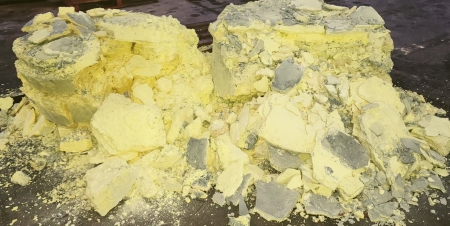
Elemental sulphur production at the Broken Hill Demonstration Plant.
Samples from the test-work were then shared with potential customers to gauge the quality of the resulting elemental sulphur, with positive assessments underpinning the viability of the technology.
By reprocessing pyrite and other sulphide-rich mine tailings, ReMine+ can recover valuable metals (including gold, cobalt, nickel, and copper) while simultaneously generating elemental sulphur or sulphuric acid.
COB has successfully evaluated the application of ReMine+ to pyrite feedstocks from various regions, including in Queensland and Canada.
Next steps
The next steps in the MOU include assessing the commercial and operational viability of different technologies, feedstocks and outputs.
COB aims to complete proof of concept test-work within 16 weeks of receipt of sample, with MICC assisting, where possible, to source samples.
The company will also advise MICC on the requirements, challenges and barriers to a potential pyrite tailings reprocessing operation in the region to produce sulphuric acid.
Unlocking value
Cobalt Blue CEO Joe Kaderavek said: “Queensland's Northwest Minerals Province offers a wealth of opportunity for sustainable mining and resource recovery.
"Our ReMine+ technology can unlock the value of these resources and produce essential commodities, like sulphuric acid, which is critical across several industries in the region.
"This MOU underscores the resilience and innovation that prevails in Australian mining communities.”
Investors welcome the MOU with shares as much as 14.71% higher to $0.078 in ASX trading.
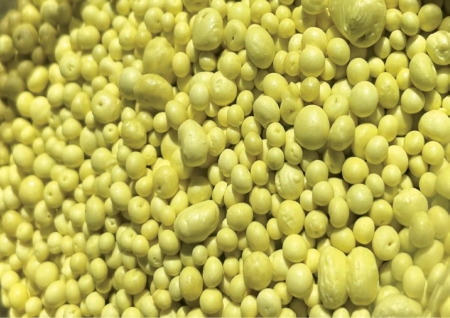
Elemental sulphur prills produced from Broken Hill Demonstration Plant output.
During the assessment phase, MICC intends to set aside land upon which to build and operate a pilot-scale plant that would evaluate the amenability of technologies to process pyrite into sulphur and sulphuric acid and create associated business and community benefits.
COB will provide advice and detailed information on the construction, power and other consumables required for the plant.
Sustainable solution
By combining MICC’s local knowledge and infrastructure with COB’s advanced technology, this collaboration aims to deliver a sustainable and economically viable solution to the sulphuric acid supply challenge in Northwest Queensland.
Developing a commercially viable, low-impact solution to acid supply, whilst alleviating long-term environmental liabilities and generating critical and other metal revenue through tailings re-processing is in the interest of all stakeholders.
The MOU will remain in force until December 31, 2029, unless terminated earlier by a party. A party has the right to terminate the MOU with written notice.
About elemental sulphur
Elemental sulphur is a clean, low-hazardous product used as a precursor to manufacture sulphuric acid, providing industry with significant advantages in handling, storage and transport and allowing sulphuric acid to be produced directly at the customer site driven by local production requirements.
COB’s technology, focusing on elemental sulphur production, was included as a solution in the ‘Queensland Sulphuric Acid Study (August 2024)’ (Core Resources Ltd) delivered to the Queensland Government for further assessment.
COB’s decision to focus on elemental sulphur production, rather than sulphuric acid, for the Broken Hill Cobalt Project was driven by the low local sulphuric acid demand profile.
This demand profile is in sharp contrast to that of Queensland’s Northwest Minerals Province, which the 2024 Sulphuric Acid Supply Study estimates to grow from 1.3 million tonnes annually to 2.8-5 million tonnes in the future.
A focus for work under the MOU with MICC will be to demonstrate the flexibility of COB’s process for direct production of sulphuric acid.
The benefit of the COB process is that sulphur gas excess to acid requirements can be cooled and prilled as elemental sulphur for safe storage against future acid deficit, ensuring security of supply for the region.