
Acquisitions. Lord Wolfson at Next PLC (LSE:NXT) and Michael Murray at Frasers Group PLC (LSE:FRAS), supposedly without much influence from father-in-law Mike Ashley, are masters at it.
Prior to Wednesday’s announcement that Next is in the final stages of acquiring Fatface for more than £100 million, the two companies have been stakebuilding rapidly since the pandemic, but how do the two strategies differ?
Differences
For Next, it's focused on a “coordinated strategy” of acquiring struggling brands, developing a majority or substantial stake through an injection of much-needed cash before implementing the companies into its online offering.
Shore Capital analyst Clive Black told Proactive: “Next’s strategy looks to help broaden its brand portfolio, particularly when building its online retail platform.
Having owned as well as non-owned complementary brands on its website, Next is basically trying to become a major player in the online apparel arena.”
During the last few years, Wolfson’s group has saved companies like Cath Kidston, Made.com and Joules from administration, taken majority stakes in going concerns like Victoria Secret and Gap’s UK arm and slowly upped holdings in firms like Reiss.
Over at Frasers Group, the fashion company has focused on opportunistically upping stakes in listed companies slowly over time, with an emphasis in recent years on online retailers from a range of segments.
In some cases, the Sports Direct owner finds troubled brands and after buying them for cheap is able to generate returns from selling their inventory.

Michael Murray took the helm from Mike Ashley in 2022 Source: The FT
Upping its stakes in Boohoo throughout the year, Frasers Group is now the largest shareholder of the e-commerce company, with Ashley’s company also lifting its holding in Asos to 20% and a 19% stake in AO World.
Frasers also holds shares in Hugo Boss, Curry’s, Mulberry, JD Williams owner N Brown and even a tiny portion of Next.
Clive Black said: “[Frasers] has got a long history of taking stakes in retail businesses, and for all sorts of rhyme and reason of which is not always clear.
“Sometimes it builds stakes with a view to acquiring a business, other times to have an influence on the board of the business, and in some cases, it takes stake with a view to having commercial relationships with the business.”
What makes them similar?
While the tactics and the end goal for the two companies may be different, there are several similarities between the London-listed firms.
Firstly, shares in both are up by around 15% in the year-to-date, although Next’s gains of 58% in the last twelve months are almost double that of the 33% rise experienced by Frasers Group.
Both also use gearing to their advantage, with market caps in the billions, the two firms can rely on upping their total debt without becoming overly geared, meaning that the two can wait for the right valuation for a prospective purchase target before pouncing when the times right.
Wayne Brown at Liberum told Proactive: “Another of the similarities between the two is that they’re leveraging their distribution pipelines.
“Next has purchased brands with strong business models, that are fundamentally very robust. And it’s using those brands to help leverage its Total Platform investment.”
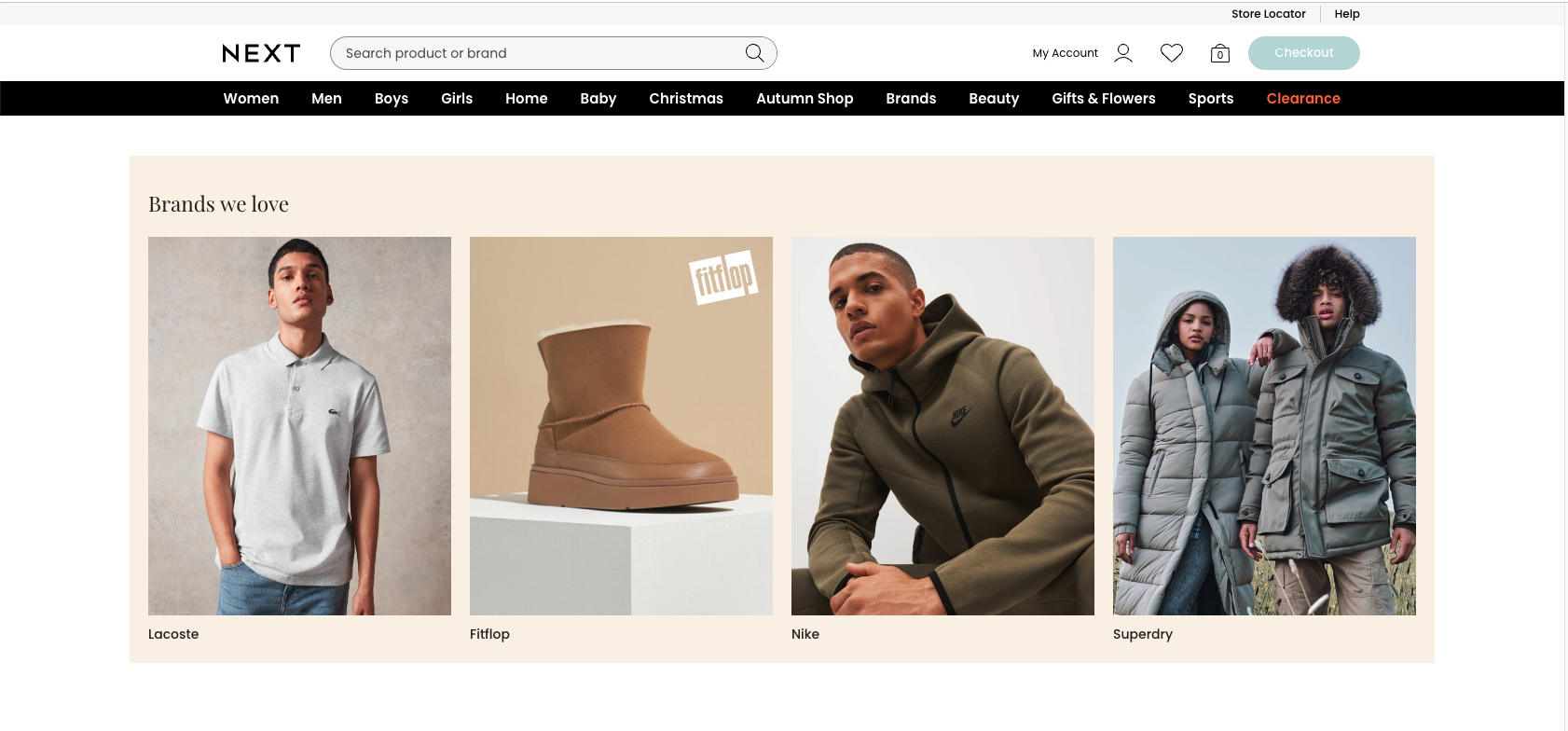
Next's website Source: Company
Brown noted that while Frasers has done something slightly different by investing in automation, but pointed out that at the core it is also helping improve distribution.
“Frasers’ distribution network is second to none across the UK and Europe and it's obviously leveraging that to drive synergies. The strategies are relatively similar in what they're trying to do, they've just obviously looked at slightly different positions in the marketplace,” the Liberum analyst added.
Additionally, the companies seem to be purchasing brands to help shift away from more historic markets, with the pandemic ramming home how important it is to engage with customers digitally without being completely reliant on in-store sales.
Murray at Frasers revealed earlier this week he was considering switching up how its flagship department store operates, incorporating some of its other brands and opening smaller sites.
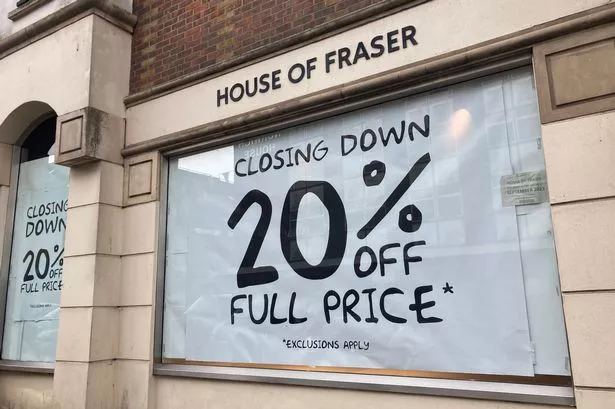
Is House of Fraser closing down? Source: Surrey Live
Mike Ashley’s retail consortium, by picking up shares in various e-commerce groups, is also highlighting how it is focused on becoming an “omnichannel” where shoppers can find online brands in the group’s stores, while also placing an eye on the chance to become an “online department store”.
Online department store? What other companies are doing that?
Well, Next of course. The London group has bolstered its online offering in the last few years, providing customers with a wider range of brands like Nike, Lacoste and Superdry, as well as selling typical ‘department store’ products like furniture, cosmetics and even flowers.
Shares in Next remain flat on Thursday, having opened at around 6,900p, while Frasers is trading at around 820p.