
Apple’s Vision Pro didn’t claim it would revolutionise the world or change how we go about our daily lives.
Instead, the power and possibilities of the US$3,500 extended reality headset spoke for itself.
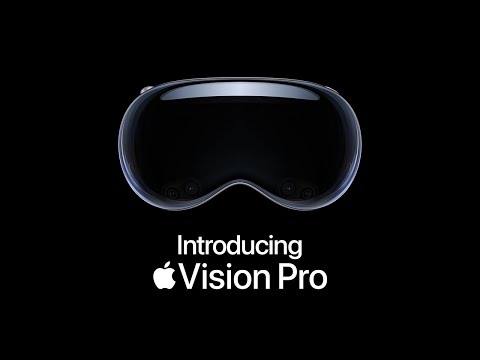
Vision Pro can do a lot, or at least according to its launch video, and it’s been enough to spark interest from Mario Ramic, the founder of VR firm Takeaway Reality, who believes some of the technology it's using “is the future”.
He told Proactive: “It’s a revolution, people will put this on their headset, and they'll see things in a whole new way. The technology, 23 million pixels, is a lot. Those are two 4k displays one for each eye. That's ridiculous.”
Seeing is believing
Yet, beneath the ultra-powered screens and digital renderings of user's eyes lies an even bolder innovation.
Eye track technology.
Controllers aren’t required on Apple’s goggles, unlike like Meta’s Quest Pro or Microsoft’s Holo Lens, because it uses your eyes to select an element for the on-screen display.
“A high-performance eye tracking system of LEDs and infrared cameras projects invisible light patterns onto each eye,” the tech firm explained on its website.
This is all the information Apple gives about its eye-tracking technology.
Speaking to Nilavra Bhattacharya, a research scientist at the University of Texas, he explained how it worked a little further.
“When a person is in a well-lit room, a reflection of the room’s light can be seen on the cornea,” he said.

When a person moves their pupil to look in a different direction, the reflection on the cornea doesn’t shift but the angle between the pupil and the reflection does move, the eye-track specialist added.
“So where the person is looking can be determined from the location of the pupil centre relative to the corneal reflection. This is the technique by which eye-trackers are able to understand where we are looking at,” he concluded.
The Potential
The saying goes that the eyes are the window to the soul. Practically, eye tracking can understand user intention almost instantaneously – and far more quickly and interactively than say hand waving, or finger pointing.
Ludwig Sidenmark, a postdoctoral researcher at the University of Toronto, has spent years working with eye-tracking technology and believes the scope of the tech is massive.
“It has the potential to be very, very powerful for all kinds of different applications. It can potentially track anyone in any sort of scenario and tell you what someone is paying attention to,” he told Proactive.
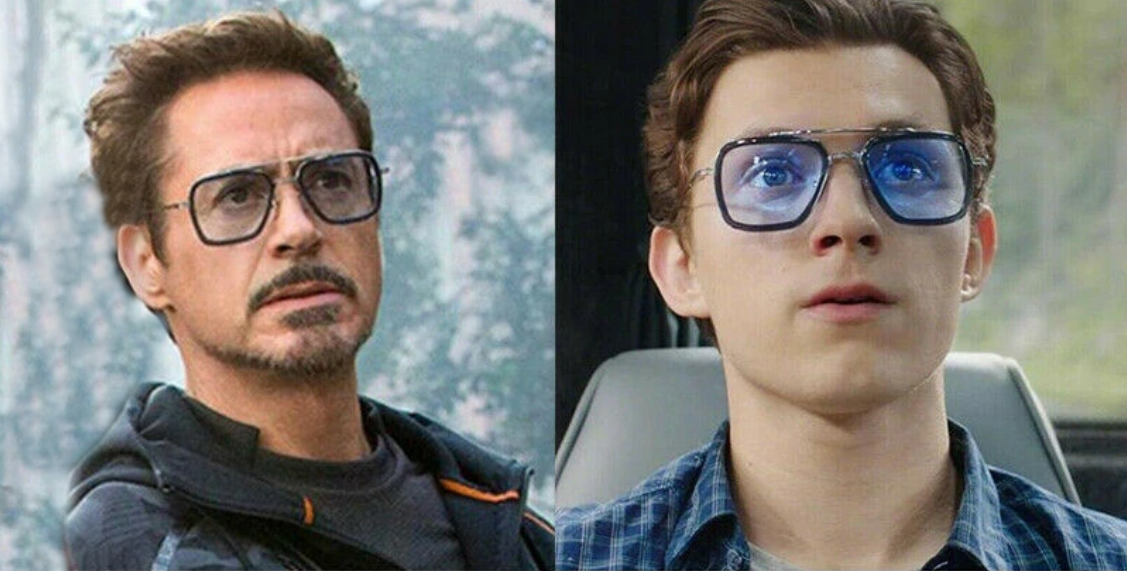
Smart glasses have already been showcased in films Source Augmented Startups
Commercial uses for this type of technology are endless and can really revolutionise the way we consume digital information, the Swedish scientist believes.
“Imagine having VR glasses and wearing them on the bus, you wouldn’t want to be waving your arms around in front of a bunch of people. Eye tracking in comparison is very subtle,” he added.
There's also the chance for the tech to work alongside AI, Sidenmark imagines a pair of glasses being created that can track where a user is looking and offer suggestions based of it.
“Imagine, a person is looking at Starbucks and wants a drink, all of a sudden the AI suggests if you would like to buy a coffee,” he envisages.
Investment Case
By 2030, eye tracking is predicted to be worth over US$8.5bln, growing at a compound annual rate of 28% - which is faster than industries such virtual reality, streaming and renewable energy.
However, investing in the creators of the eye-tracking technology used in the Vision Pro might not be so easy – or return such stellar rates of growth.
SensoMotoric Instruments (SMI) is the developer of the eye-tracking used inside the Vision Pro, a German developer of eye-tracking glasses which helped implement the tech into the Oculus.
This Apple Inc (NASDAQ:AAPL) developer, however, is owned by the big boss, after the tech giant quietly bought it through a shell company back in 2017.
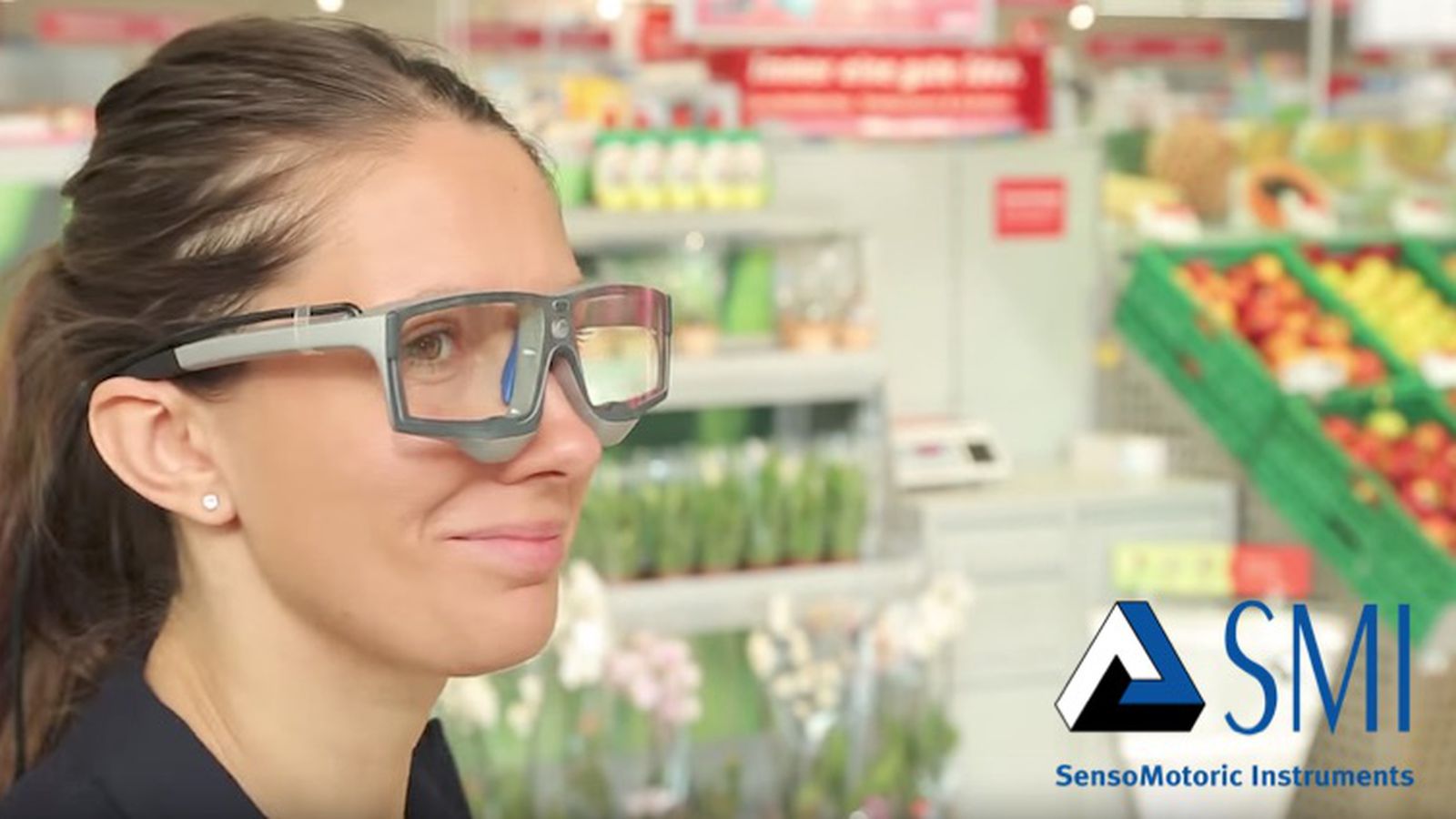
Source MacRumours
The technology team as the investment bank UBS Group AG (NYSE:UBS) sees little room for Apple’s share price to grow further from current levels given its already stretched valuation. And, in fact if you look at it, eye-tracking technology is only a small cog in a machine that spans phones, tablets, laptops, PCs and TV production.
Driving the tech
Eye-tracking has been around since as early as 1879 when French scientist Louis Émile Javal began observing how people’s eyes moved when they read books.
Nearly 150 years later and companies globally are developing and refining the technology for numerous, and equally unique, purposes.
In Laguna Beach, California, Ocutrx Technologies Inc. uses eye tracking to help people with macular degeneration see whole again as well as creating a headset surgeons can wear to see into a patient without a microscope.
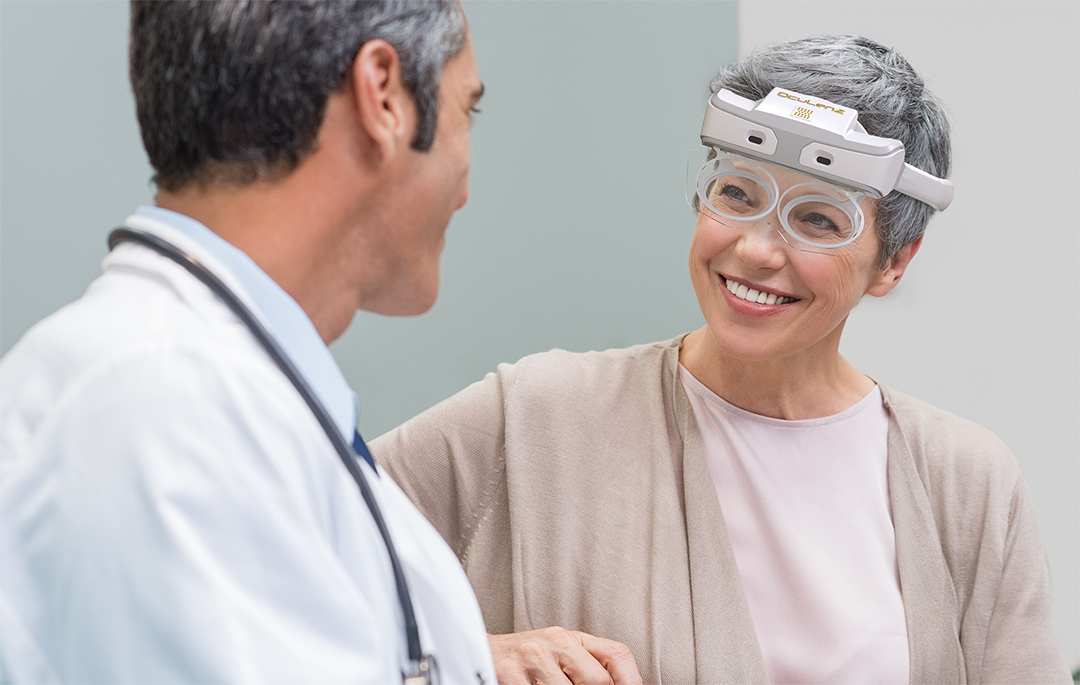
A headset developed by Ocutrux Source Ocutruxtech.com
Video game heavyweights like Ubisoft Entertainment (OTC:UBSFF, EPA:UBI) and Electronic Arts Inc. (NASDAQ:EA) already support the technology for their products such as the F1 and Far Cry series.
In Sweden, developer Tobii has commercialised the tech selling eye-tracking glasses and a thin bar-shaped camera which can be plugged into computers or TVs.
The stock market-listed group even collaborates with tech giants such as Google and Facebook in support for consumer research studies.
The gift of sight
All the previously mentioned uses for eye-tracking, while important, are limited to small pools of customers.
For UK investors, one company that has to date flown under the radar is using the tech to potentially improve millions of people's lives daily.
That company is Seeing Machines Ltd (AIM:SEE, OTC:SEEMF).
Founded in 2000 with the core aim of “getting people home safely”, the Australian business provides OEM (original equipment manufacturers) with monitoring systems (DMS) that uses eye tracking to detect whether a driver has his or her eyes on the road – and, by extension – is cognisant of potential hazards.
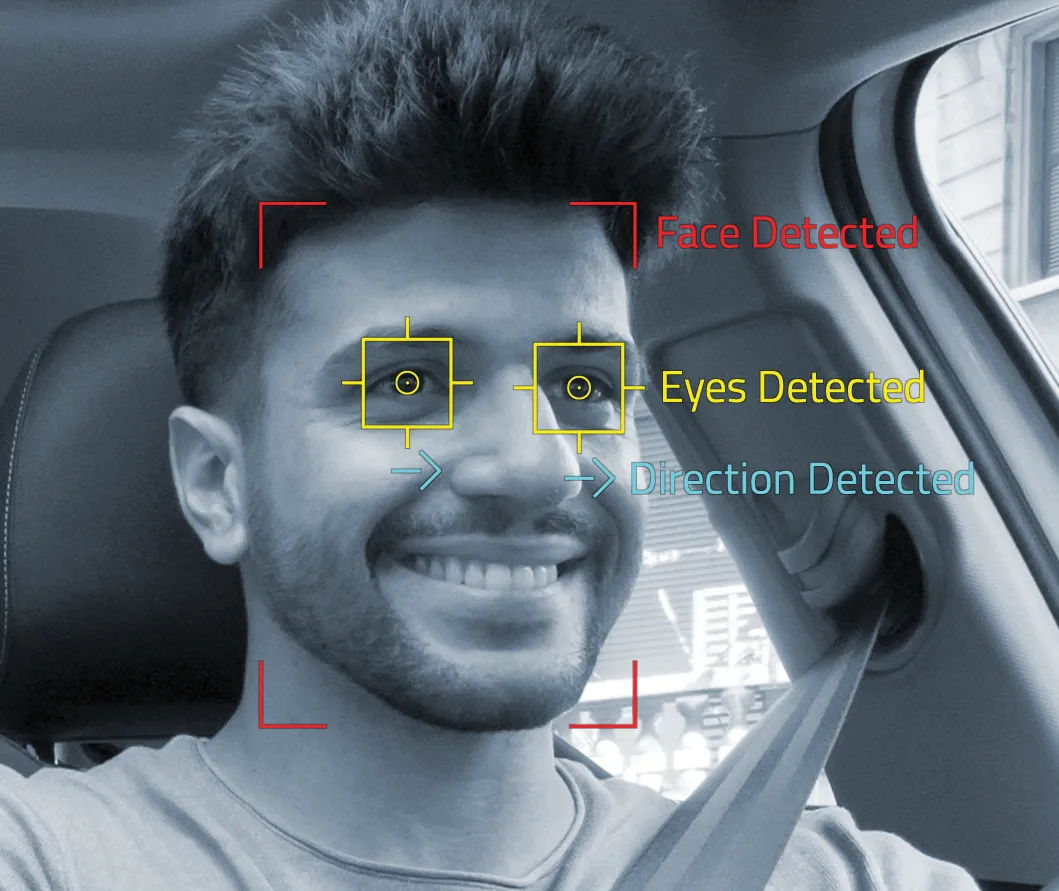
DMS system Source: Embedded.com
Tapping into three unique markets - OEMs and the automotive industry, aftermarket fleets and aviation - Seeing Machines is one of the few companies producing eye-tracking products at scale commercially.
It has now won a total of 15 automotive programs spanning 10 individual OEMs, covering more than 160 distinct vehicle models.
Car parts manufacturer Magna has embedded Seeing Machines tech in rearview mirrors it sells en masse to the major car companies it supplies.
On the back of this success, investment analysts are starting to get excited about the company and its prospects.
The boutique investment bank Peel Hunt Ltd (AIM:PEEL) is one of growing fanbase.
Already working with leading car manufacturers the UK investment bank believes a new swarm of regulation could drive the stock.
“We are entering the regulation-driven second wave of DMS adoption, and we expect a rush to meet design deadlines in mid-2024 and production deadlines in mid-2026,” Peel Hunt said.
“For a business model primarily based on per-unit software royalties, this market inflexion should finally drive free cash flow.”
The state of the industry
Dominating the industry, Seeing Machines alongside its closest rival Smart Eye has been able to rake in over US$700mln worth of sales from OEMs, controlling between 70% - 80% of the market, Peel Hunt said.
Paul McGlone, chief executive officer at Seeing Machines told Proactive: “Our view of the vision-based DMS market alone is that it is expected to have a [compound annual growth rate] of over 50% between now and 2029, given the increasing safety focus and accelerating regulatory momentum we are seeing on a global scale.”
In total, across all three of Seeing Machines’ divisions, there is an “addressable market opportunity is over US$14bln”.
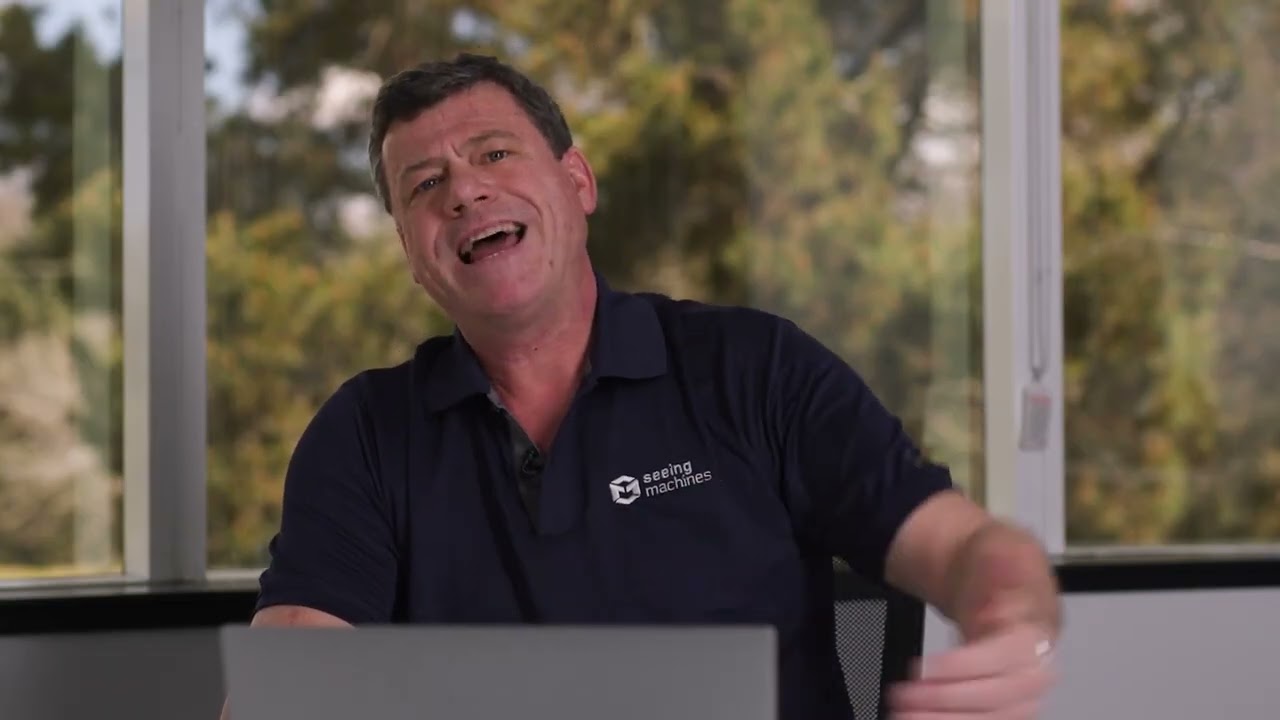
Paul McGlone Source: Seeing Machines Youtube
“We are well positioned to achieve around 40% market share of the global fitment rate as DMS expands in Automotive and we have a solid footing in the Aftermarket space (vehicles already on the road),” McGlone added.
“Guardian”, the company’s retroactive DMS instalment division, already monitors the alertness of over 50,000 drivers across the planet, while also making movements in the aviation industry.
“Our recently announced exclusive collaboration with Collins Aerospace means we are the first DMS supplier able to deliver eye-tracking-based safety and efficiency solutions across the aviation market,” the tech boss said.
AI
Source Forbes
Artificial Intelligence, pervasive now, has found a way to sneak itself into eye-tracking, with Seeing Machines using it to teach its product how to distinguish between focused and unfocused eyes.
DMS algorithms are trained using “naturalistic human behavioural data combined with simulated environments”, said Mike Lenne, the company chief science and innovation officer. It has also been taught with differentiate between ethnicities, genders and ages to avoid coded biases.
Lenne told Proactive: “We go to great lengths to ensure the distribution of key demographic characteristics are measured and balanced in our training and validation data sets. To achieve this, we have specifications for each data set which define the target demographic distributions. We then ensure these distributions are quantified across the data sets."
Simply, humans and their eyes are needed to train the technology.
Working in the industry for over 20 years, the group has collected more than 13bn kilometres of naturalistic driving data.
“This data cannot be simulated,” said Lenne.
Using 50,000 vehicles monitored by the “Guardian” DMS, Seeing Machines has a constant stream of data, with recordings being fed back to a monitoring centre before being validated.
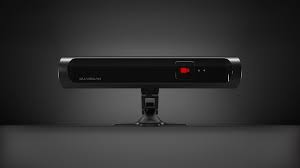
Guardian device Source Seeing Machines
Governments and universities are also developing supplementary data sets for the company.
Saving Lives
Garnering the data and teaching the technology to be aware of when a driver is not alert is one thing, protecting the driver is another step.
Commercial drivers using its Guardian units are alerted in real time with audible and haptic alarms.
“If a drowsy driving event is detected by our system, our 24/7 monitoring centre will alert the driver’s manager (the operator) and they will then be prompted to initiate their company's own fatigue intervention plan,” Lenne reveals.
Using human-based monitoring reduces the impact of fatigue-induced driving events by more than 94%, he adds.
“For Automotive, the way that DMS interacts with other sensors in and outside of the cabin and the human, is ultimately up to the way the system is integrated by a tier 1 vehicle manufacturer,” Lenne said.
Theoretically, because the DMS is being integrated into the car’s system, it could allow for the car to pop up with advisory indications or even, in some cases, regain control of the car.
Why Seeing Machines?
It is difficult to deny that Apple’s Vision Pro is eye-tracking technology's biggest chance to be brought to the mainstream, if the headset is a hit, and the pressure point of a hefty price tag subsidies, it can influence other industry titans to take a punt.
This relies on a lot of maybes, however.
Maybe the eye tracking in extended reality won’t feel right for users, maybe the ethical issues of companies seeing through your eyes will be too much of a legal headache or maybe another trend will divert our attention.
Yet, one thing is certain, Seeing Machines is already here, being used in 900,000 cars on the road across the world.

Source Los Angeles Times
McGlone said: “We are a trusted partner and industry leader with best-in-class DMS technology. [We work with] vehicles from General Motors, Mercedes Benz and Ford Motor Company (NYSE:F) to name a few.”
Securing contracts for hundreds of vehicles, totalling around US$321mln, this figure could snowball when planned legislations in the US and EU comes into action.
McGlone added: “Monitoring a driver (and occupant) is a difficult problem to solve, and applying this in the real world, is even harder. A reliable and unobtrusive DMS is critical for OEMs - no customer wants to be alerted unnecessarily or have systems they need to de-install because they don’t work- and we are now a proven supplier with world-leading technology.”
Work has begun prepping how it can embed the DMS into the most challenging of platforms and infrastructure for the automotive industry as it tries to push the technology to the next level, working with car manufacturing giants to innovate further.
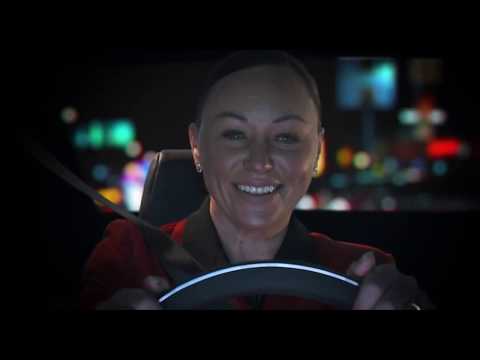
A group has been created to specialise in optics and processing technologies, meaning its DMS is constantly evolving and improving its ability to detect an at-risk driver in real time.
Workers in the newly formed division use next-generation tech like image sensors and lenses to measure human movements from as broad as overall facial expressions to as minute as eyelid closure.
It's even being taught to detect a user on their phone.
The laws driving change
Investment bank Peel Hunt was initially cautious about the product, questioning whether OEMs would be willing to absorb the costs before customers were willing to pay.
However, these concerns have been quickly forgotten since the government realised the potential for saving live.
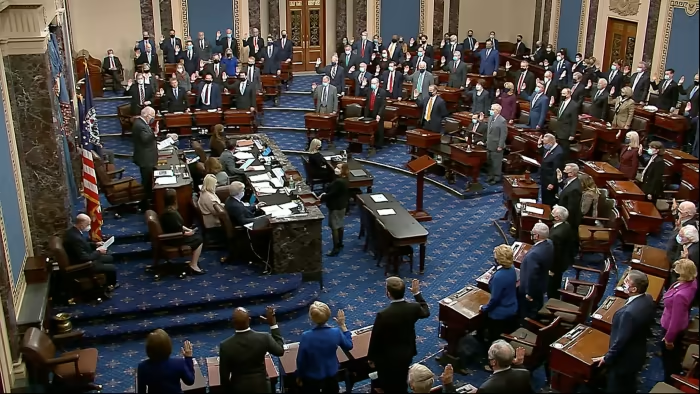
US Senate Source: Financial Times
In the US, the government is pushing the “Moving Forward Act”, regarded as one of the strongest automotive safety bills in decades, which would require DMS’s to be in all cars and trucks made from 2024 onwards.
Additionally, the “Stay Aware of Everyone Act” was introduced to the Senate in 2020, aiming to kickstart analysis into the state of the DMS industry and the technology supporting it.
Likewise, the EU hopes to halve the number of fatal and serious injuries from traffic accidents by 2030, leading to the EU legislating that every car from 2026 onwards will need to be equipped with a DMS.
“The reason we are now bullish on the market is the trailblazing EU regulator, which is demanding all new vehicles adopt DMS starting mid-2024,” Peel Hunt said.
Looking Forward
There’s still new ways for the DMS to support drivers in other areas too, Seeing Machines believe.
For example, working in tandem with crash avoidance systems, using the camera-based DMS to decide whether a driver is already aware of a threat.
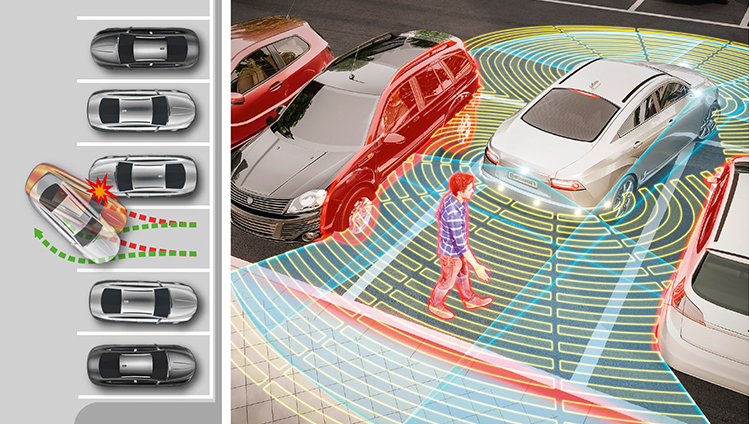
Crash avoidance system Source: ContinentalAutomotive
Lenne said: “Let's say that threat was a pedestrian running out onto the road. The car might only have a second or two to react. But what if the system recognized that the driver was alert and visually tracking the person?
“That information is only achievable through camera-based DMS.”
Essentially it puts a buffer between the driver taking evasive action and the system intervening.
Meta effect
When you hear the words eye-track technology it's easy for the mind to jump to ideas of futuristic half-eye half-cameras which can do countless numbers of tasks and help the human race on its journey into amalgamation with technology.
Meta, explored a similar vulnerability in society when it launched itself into the metaverse, letting people’s imaginations dictate what they thought it could look like, rather than showing them the reality of it.

A vision of the metaverse Source GP Generate
Helped by the timely release of Ready Player One and people thought the metaverse could become a new society for people to live in, and with that type of hype behind it, the idea of the technology snowballed into something bigger than what it was.
Apple’s approach has been slightly more subdued in pushing its new product, but the impressiveness of its launch trailer was easy enough to convince millions of people it is the future.
While new technologies seem to always suffer the roller coaster hype train, where one minute interest is sky high and the next people have moved on to the newest fad, companies like Seeing Machines, which is having a real impact on the world, will not suffer a similar fate.
So when getting excited about the latest piece of kit, it may be wise to consider, who’s using it to actually change the world, not just mine.