
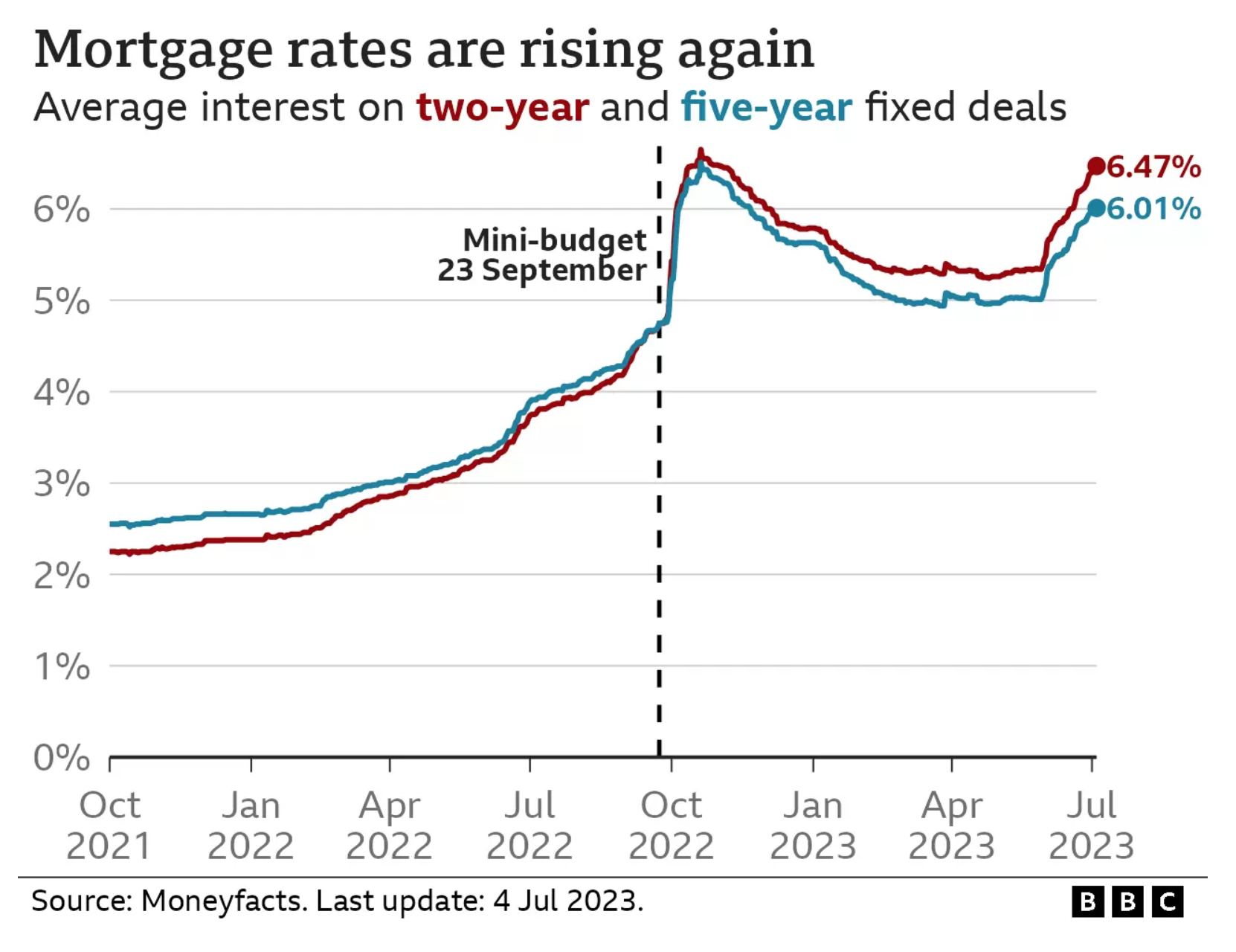
Interest on the average five-year fixed mortgage now sits over 6% as lenders continue to hike prices in the wake of last month’s base rate rise.
According to Moneyfacts, rates on the average five-year fix climbed to 6.01% on Tuesday, while interest on two-year fixed deals came in at 6.47%.
Nationwide currently offers the best five-year fix at 5.44%, as per Moneyfacts, though this comes with a product fee of £999 and climbs to 7.74% after the initial period ends.
Lenders have repeatedly lifted the price on, and pulled mortgage deals from the market in recent weeks, as the Bank of England lifted UK base interest by 50 basis points to 5% in June.
Lloyds Banking Group PLC (LSE:LLOY), HSBC Holdings PLC (LSE:HSBA), NatWest Group PLC (LSE:NWG) and Barclays PLC (LSE:BARC) chiefs will meet with the Financial Conduct Authority on Thursday meanwhile, over sluggishness to pass on higher savings rates to consumers.
For instance, average easy-saver account rates currently sit 4.02 percentage points lower than the UK’s typical two-year fixed rate mortgage at just 2.45%.
“Maintaining a large gap between savings and mortgage rates means they make more money,” Hargreaves Lansdown analyst Sarah Coles explained.
“While interest rates were ultra-low [during the pandemic] the mortgage market was incredibly competitive, so they were operating on unusually small margins between savings rates and mortgage deals.
“The rise in rates has given them an opportunity to make up for lost time, so they’re busy filling their boots.”
Some deals have offered higher interest rates, such as a 7% regular savings account from HSBC’s online arm First Direct, though better deals require customers to deposit minimum monthly amounts and often have caps on how much can be put away.
Coles added that banks were more inclined to help mortgage holders rather than savers all the while, given their own losses if people begin to struggle to make payments.
"They’re […] aware of the fact we have a looming debt problem,” she said, “they know that rocketing mortgage rates will mean more people start to struggle”.