
BP PLC (LSE:BP.) in the future will have “a big biofuels business, a big EV (electric vehicle) charging business, a sustainable fuel business and a hydrogen business that should be able to scale in the 2030s,” said Barclays’ analysts after seeing a presentation from the oil supermajor's chief executive Bernard Looney.
Barclays sounds on the money with the EV charging comment, given the oil giant’s intention to invest US$1bn to expand its network of electric vehicle charging points across the US by 2030.
On the sustainable fuel front, BP said in its record-setting 2022 earnings call that it aims to be a “sector leader” in sustainable aviation fuel.
According to Looney's International Energy Week presentation, BP also aims to increase its installed renewables capacity from 2.2 gigawatts presently to 10GW in 2030, and ramp up its final investment decision (FID) pipeline from 5.8 GW to 50 GW.
It should be noted that more than a quarter of renewables output presently is used in support of various hydrogen projects.
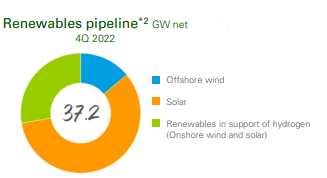
Source: bp.com
It is clear that BP is, as analysts at Jefferies said following the group’s latest results, “rebalancing the role of traditional businesses versus BP’s low-carbon growth ambitions”.
Barclays mirrored this sentiment, stating: “It is ‘and not or BP’ needs to develop a new system as well as investing in the existing system to deliver reliability in the near term.
Which it is: transitional energies and traditional oil and gas are due to get a 50/50 share of the FTSE 100-listed group's capital expenditure by 2023.
Barclays gave an 'overweight' rating on BP shares with a target price of 1,000p.