
Radiopharm Theranostics Ltd (ASX:RAD) has welcomed additional data from a Phase 2a imaging trial linked to the F-18 Pivalate (RAD 101) treatment candidate.
The imaging trial enrolled patients with brain metastases and Imperial College London is investigating F-18 Pivalate’s therapeutic potential to target this and possibly other brain tumours.
The additional data includes high-contrast images, seen 60 minutes after patients were given a radiotracer injection.
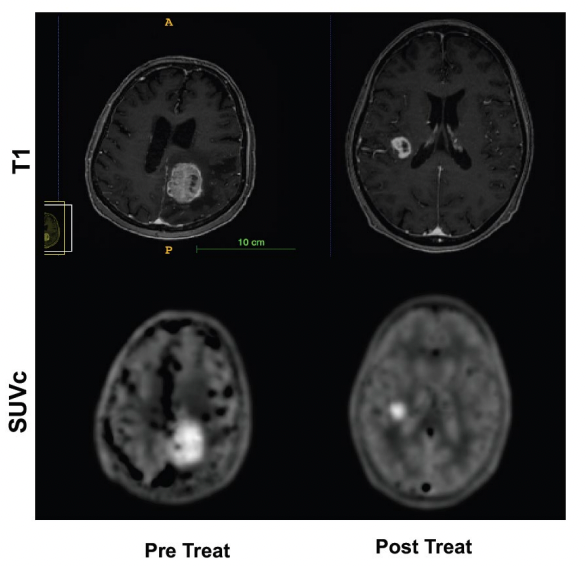
Scientifically speaking, the images show the maximum standardised uptake within lesions compared to the mean differed in a statistically significant manner.
What’s more, the calculated tumour-to-background ratio ranged from 1.73 to 6.07, which supports the assertion of high image contrast in patients regardless of the origin of the primary cancer.
Back in October, the initial data read-out showed significant tumour uptake that was consistent and independent from the tumour origin, and also indicated that Pivalate can be used to monitor cerebral metastases.
“The new data released shows the additional benefit of PET scan with F-18 Pivalate in detecting the metabolic activity in the brain metastases” said Radiopharm managing director and CEO Riccardo Canevari.
“This quality image is a promising indication that the tracer can be used to monitor brain metastases, which is yet another positive step for the potential of this technology for Radiopharm.”