
Aruma Resources Ltd (ASX:AAJ) has doubled down on lithium and rubidium during its latest drill campaign at the Mt Deans project in southeast WA.
The explorer has closed the books on a second phase of drilling at the lithium-rubidium project, completing 21 reverse circulation holes across 1,409 metres along the way.
This broad-spaced phase two program tested multiple pegmatites, and results from the first two holes already point to high-grade hits like:
- 7 metres at 2.03% lithium and rubidium from 26 metres;
- 9 metres at 1.23% from 32 metres; and
- 5 metres at 1.05% from 45 metres.
So far, the program has intersected up to 1.43% rubidium, with an average of 0.77% to 0.96% rubidium encountered in the first two holes. In addition, lithium content exceeded 1% on multiple occasions.
Aruma said assays from the remaining 19 holes would be released as they came to hand.
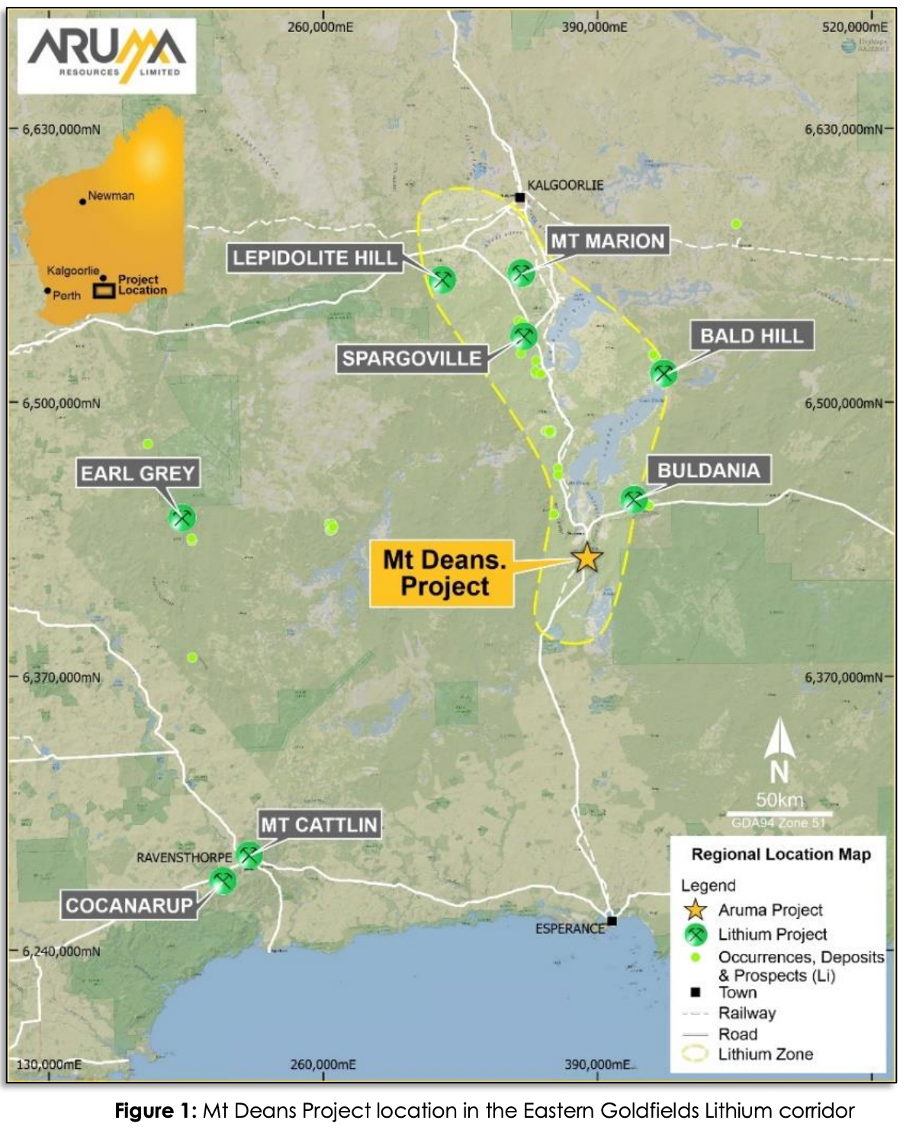
Recent drilling and surface sampling has etched out a thick, vertical sequence of lithium- and rubidium-bearing pegmatites at the Mt Deans project.
This corridor spans around 1.5 kilometres of strike and was the focal point of the recent phase two drill campaign.
Looking at the results so far, the rubidium/lithium plot below demonstrates that the highest lithium grades were uncovered in the pegmatite.
However, what’s also interesting is that the highest rubidium grades were in the contact pegmatite-mafic mix.
Scientifically speaking, this may indicate that rubidium-bearing muscovite forms the alteration zone on contacts.
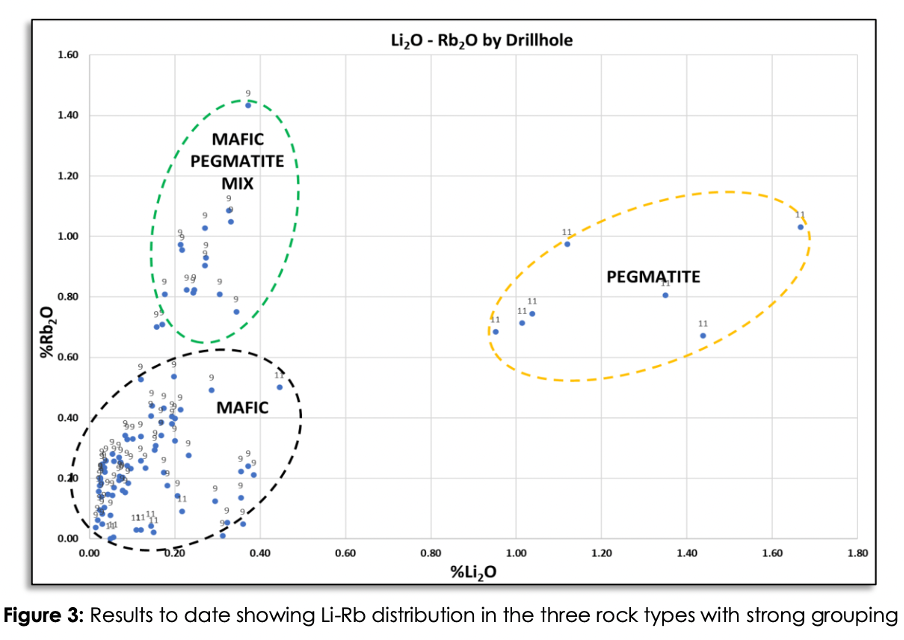
Based on this finding, Aruma believes it’s looking at lepidolite-rich pegmatites — formations with high lithium and rubidium content. The contact material could be lower lithium and high rubidium, teamed with a yet-to-be-identified mineral.
The explorer will complete mineralogy work on the drill samples to confirm these assumptions. It’ll come back to the market when it knows more.