
Natural Resources
Comment
14 November 2022
Moving in the Right Direction?
Over the last couple of years many, or perhaps most, mining market commentators (including ourselves) have written quite extensively about the paucity of the project pipeline for metals that, in some cases, are facing a step change in demand from decarbonisation and the energy transition.
The reasons behind it are well known, depleting resources, declining grade profiles, lack of exploration spending and new technologies driving a change in commodity demand.
The scars from over investment at the top of the previous cycle have led the mining industry to be weary of investing in production growth in recent years, with shareholder calls for more of a focus on returns rather than growth and capital return rather than capital investment into new projects.
However, the supply crunch that looks to be heading our way shortly has pushed governments and metal consumers into a flurry of activity as the significance of the issue has begun to register. Public pronouncements about the issue (thanks Elon), the publication of numerous Critical Minerals strategies, and in some cases, actual capital, have been deployed to encourage the mining industry to accelerate production growth in specific commodities.
Exploration budgets have tentatively increased, though still far below previous cycle highs, and mining companies, in particular the diversified producers, have given a lot of airtime to portfolio change and increasing exposure to “future facing” metals and shown an appetite to invest in new projects through M&A activity in junior miners.
In the industry’s defence commentators have also been at pains to point out to governments, regulators and investors alike, that mining is complex, accessing capital is hard and the timeline to get from discovery to production makes any significant reaction to price signals (and therefore demand) very challenging.
Accessing capital for anything earlier than a post-feasibility study project remains difficult, but as this graph from S&P Global shows, the time to production even after that milestone has been achieved takes more than 5 years.
Global Average Project Development Timeline – Source: S&P Capital IQ Pro
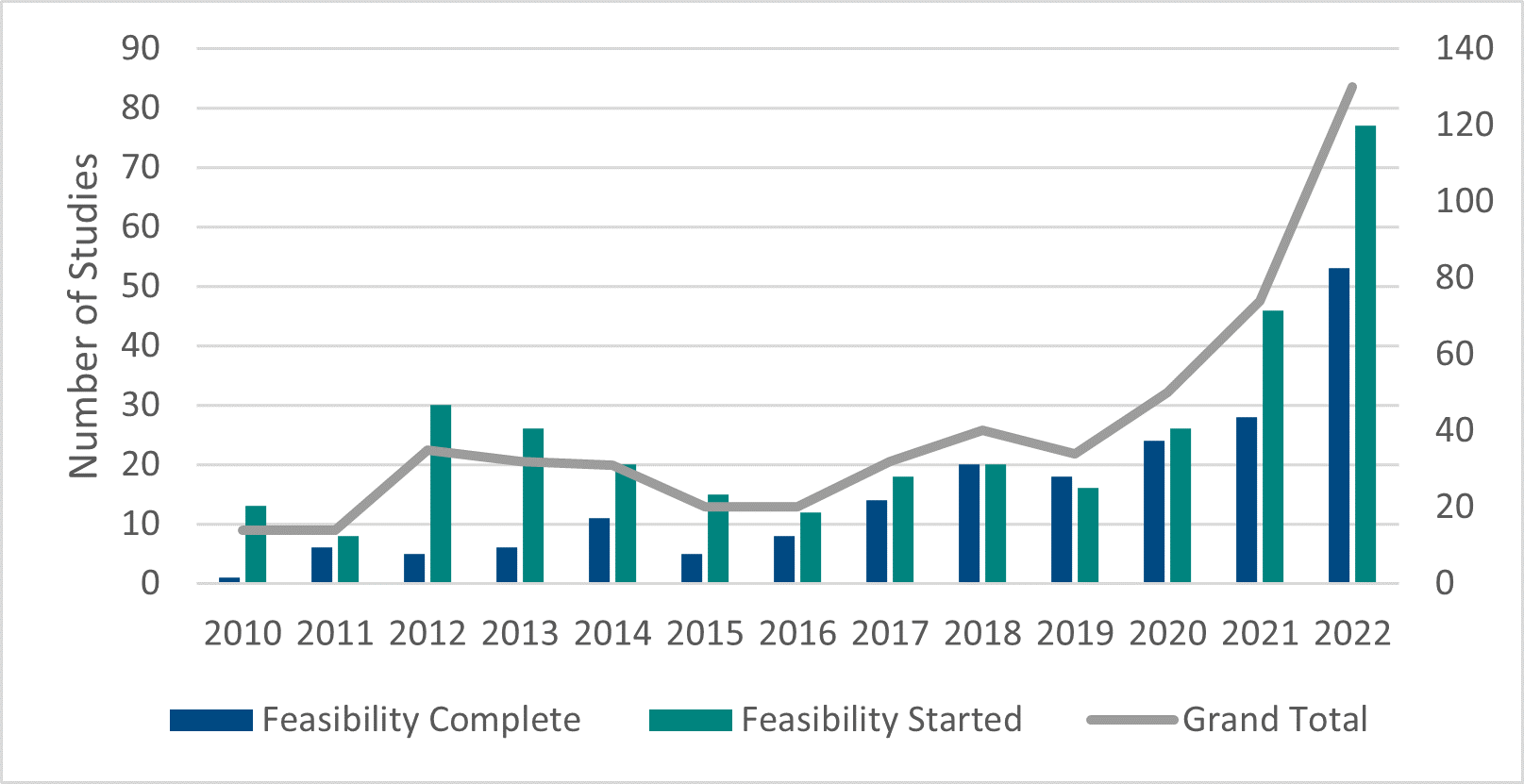
Nevertheless, the industry has been responding to commodity price signals and the expectation of demand increases. The number of mining projects undergoing or completing feasibility studies has increased rapidly over recent years as the extent of the supply gap has become more obvious, clearly helped by commodity price increases and improving balance sheets.
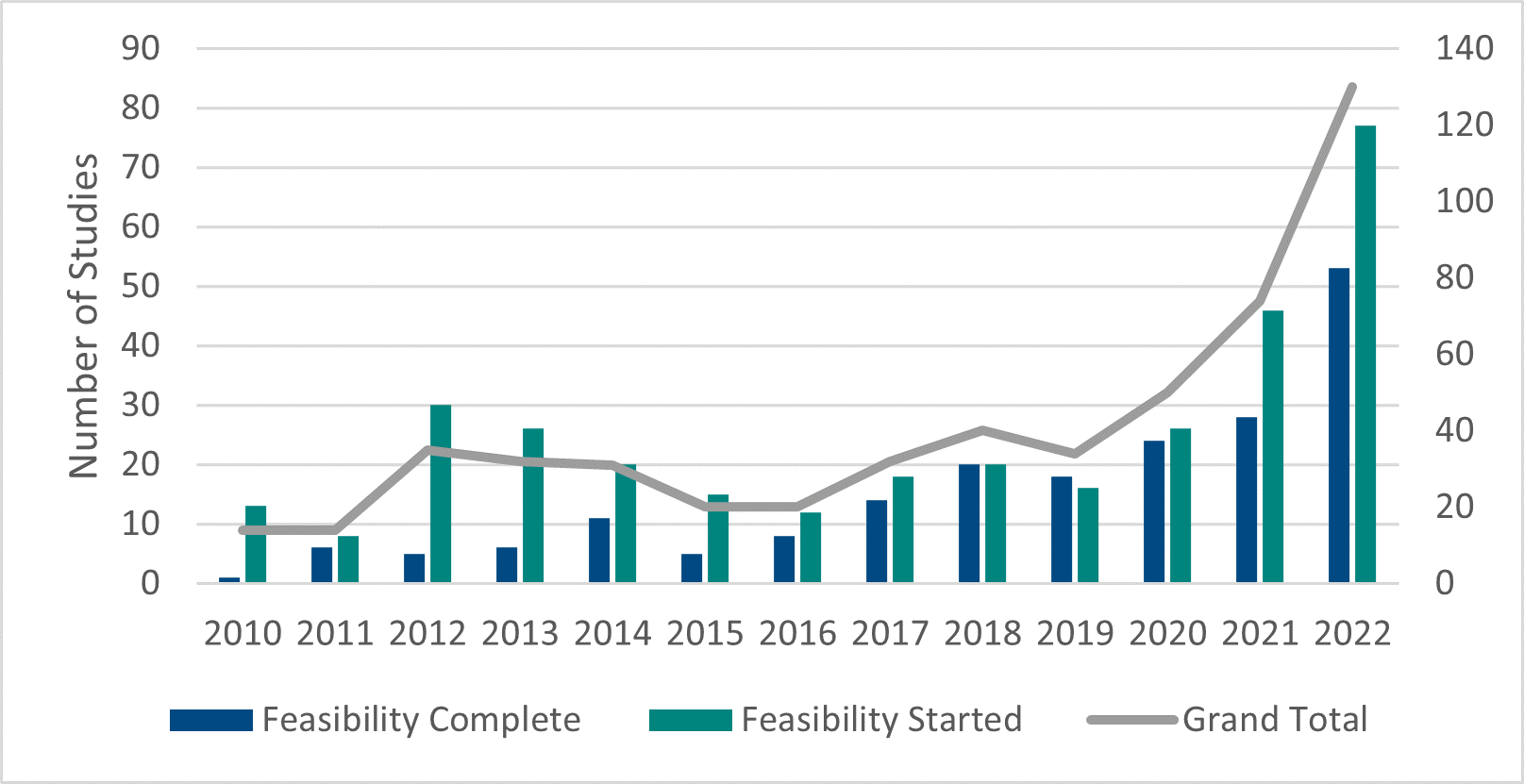
Global Mining Projects undergoing Feasibility Studies – Source: S&P Capital IQ Pro
If the market consensus on the supply-demand outlook is anywhere near right for the later part of the decade, that trend has much further to go.
That’s alright then…
As the cynics amongst us know, currently the energy transition is the probably the only mining thematic that elicits a positive response from the more generalist investor audience, almost everything is now a “battery” metal.
It is perhaps surprising to note then that if those feasibility stage projects are characterised as “Energy Transition” (copper, lithium, cobalt, nickel, etc) or “Other” (coal, iron ore, gold, etc) the picture suggests the energy transition crowd have more work to do.
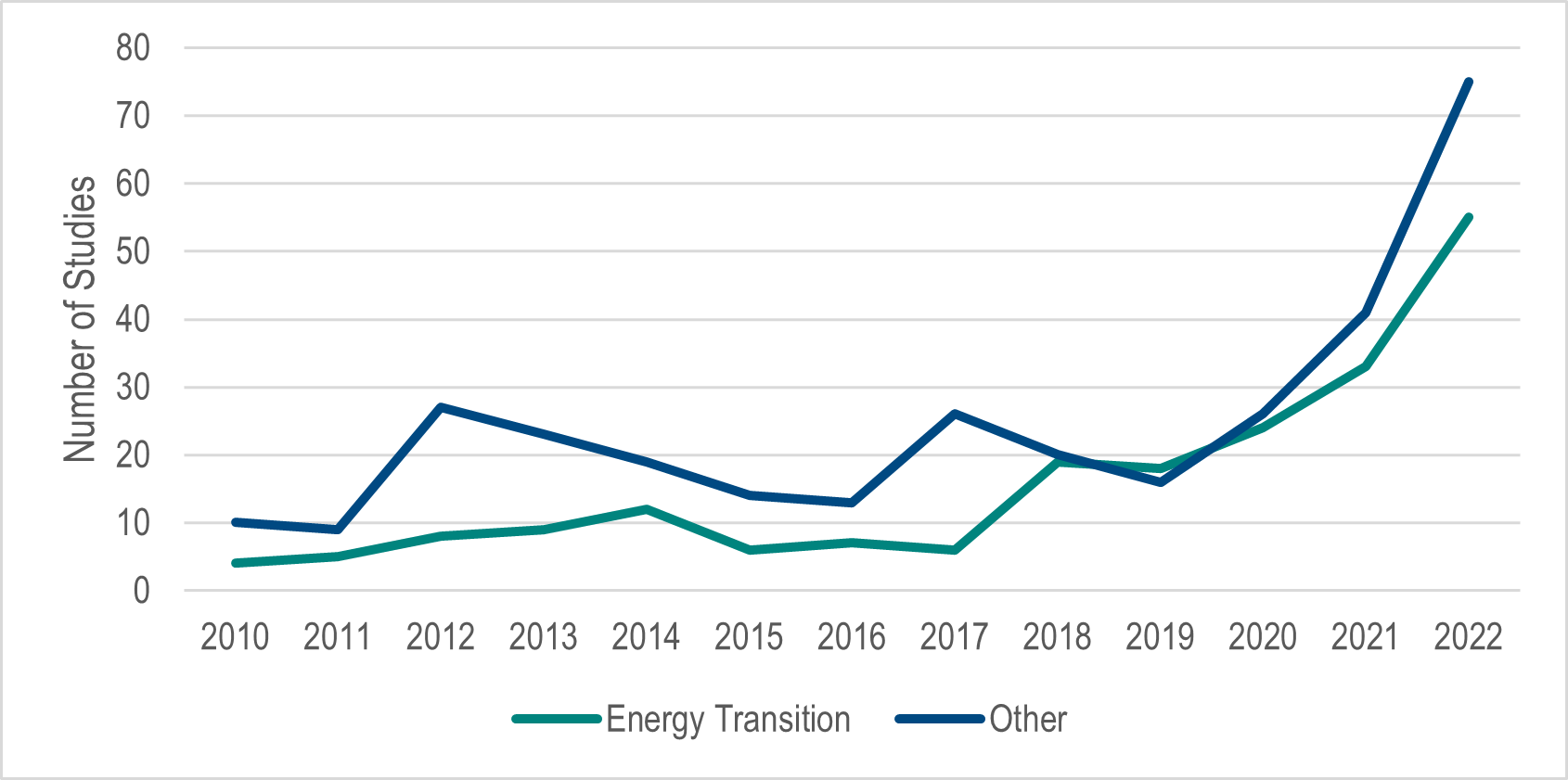
Global Mining Projects undergoing Feasibility Studies – Source: S&P Capital IQ Pro, RFC Ambrian
Charlie Cryer
Head of RFC Ambrian London
+44 (0)20 3440 6834
charlie.cryer@rfcambrian.com
This document has been approved under section 21(1) of the FMSA 2000 by RFC Ambrian Limited ("RFC Ambrian") for communication only to eligible counterparties and professional clients as those terms are defined by the rules of Financial Conduct Authority. Its contents are not directed at retail clients as RFC Ambrian does not provide investment advisory services to retail clients.
RFC Ambrian publishes this document as non-independent research which is a marketing communication under the Conduct of Business rules. It has not been prepared in accordance with the regulatory rules relating to independent research, nor is it subject to the prohibition on dealing ahead of the dissemination of investment research. It does not constitute a personal recommendation and does not constitute an offer or a solicitation to buy or sell any security. Neither RFC Ambrian nor any of its directors, officers, employees or agents shall have any liability, howsoever arising, for any error or incompleteness of fact or opinion in it or lack of care in its preparation or publication; provided that this shall not exclude liability to the extent that this is impermissible under the law relating to financial services. All statements and opinions are made as of the date on the face of this document and are not held out as applicable thereafter. This document is intended for distribution only in those jurisdictions where RFC Ambrian is permitted to distribute its research. In particular, it is not intended for distribution in and is not directed as persons in the United States.
On the date of this document, RFC Ambrian, RFC Ambrian's holding company, persons connected with it and their respective directors may have a long or short position in any of the investments mentioned in this document. RFC Ambrian is a member of the London Stock Exchange and is regulated and authorised by the Financial Conduct Authority. RFC Ambrian is registered in England and Wales no. 4236075. Its registered office is at Octagon Point, 5 Cheapside, London EC2V 6AA.
NOTICE: The information in this e-mail message is confidential and may also be privileged. It is only intended for the above-named addressee/s. If you are not a named addressee, you must not disclose, copy or take any action in reliance on this e-mail and should delete it from your system. If you have received this e-mail in error, please contact the sender by return e-mail or by telephone +44 (0)20 3440 6800. We believe, but do not warrant that this e-mail and any attachments are virus free. You should take full responsibility for virus checking.