
The ASX had a tumultuous week, trending down the last four days before sharply rallying 1.62% or 107.80 points intraday to remain virtually unchanged over the week, shedding only 0.20% in total.
The other indices did not fair as well; the Nikkei 225 lost only 0.74% this week, but the S&P 500 shed 1.99%, the FTSE 100 -2.10% and the NASDAQ -3.83%.
Hang Seng was an outlier, although it was fairly flat today, dropping a whopping 7.62% just this week and down 43.35% for the year compared to just 9.32% for the ASX200.
ASX sectors for the week were a mixed bag, with more downward momentum than up (Healthcare -3.13%, Information Tech -2.04%, Utilities -3.22% and Real Estate -2.73%) but financials rallied to lift 3.29%, with marginal increases to Consumer Staples (+0.49%) and Consumer Discretionary (+0.24%).
Commodities were in even worse shape, with silver down 8.93%, palladium -6.65%, aluminium 5.93% and zinc 5.26%.
West Texas Crude and lead continued their upward momentum this week, lifting 0.30% and 0.20%, respectively.
What’s making the news this week…
Deloitte foreshadows higher taxes to come
This week, Deloitte released its Access Economics Budget Monitor report, commenting on the budget’s ‘remarkable comeback’ in recent times and warning of higher taxes to come if we’re to maintain vital government programs like aged and disability care.
“The budget backdrop is daunting, but it is made slightly less intimidating by an astonishing improvement in the bottom line over the past two years,” Deloitte Access Economics partner and report lead author, Stephen Smith said.
“The timely and necessary emergency support in response to the pandemic led to massive increases in spending and debt. However, the budget has staged a remarkable comeback.
“The fact that Australia has emerged from the pandemic with a budget position far healthier than most of our peers owes a lot to the strength of the economic recovery.
“Remarkably enough there is likely still some more left to bank, with Deloitte Access Economics expecting a further $114.4 billion in additional revenue over the next four years to be revealed in the October Budget.
“The upswing in revenue is entirely the result of cyclical serendipity – a clear example of passive budget repair. That passivity is serving Australia well for now, as the path back from some very large deficits becomes clearer.
“But this is likely to be the last budget to unveil an unanticipated write-up in government revenue for the foreseeable future. Continuing to repair the budget from here will require a more active strategy.
“That means making some difficult decisions. Those decisions will involve navigating the stand-off between ‘good policy’ and ‘good politics’ that keeps most Treasurers up at night.”
Those hard decisions are likely to include higher taxes, said Deloitte Access Economics director and report co-author Cathryn Lee, although there’s always the option of lowering costs.
“If Australians want the government to continue to fund existing programs, and to meet the cost of a long list of important spending priorities – from aged care and childcare to disability care and defence – they need to be prepared to pay higher taxes over time,” Lee said.
“Alternatively, Australians could decide that they don’t, in fact, want or need some of that spending quite as much as they initially thought they did. Or they may choose some combination of the two.
“Realistically, those tough decisions are more likely to be made in later budgets, say in 2023 or 2024, ahead of an early 2025 election.
“The upcoming Budget will be more boring (or 'bread and butter' as the Treasurer put it). Watch for a modest set of savings. It’s always easier to make cuts to the pet projects of your opponents, and even better when those cuts come years away from an election.”
Overall, Deloitte said it’s hoping for a sensible, practical budget that trims fat and tightens spending to ensure the budget is in the best possible shape to weather the current economic downturn.
“That’s a difficult balance to strike. So, when the treasurer stands up on budget night to deliver both the news of a big improvement in the bottom line and the news of difficult times ahead, he’ll be exactly right,” Stephen Smith concluded.
More than 27,000 Australians refinance their home loan
A record 27,667 Australians refinanced their mortgage in August alone, amounting to $14 billion in home loans, according to ABS data.
Representing a 20% increase to re-mortgaging over the year, analysis by Finder.com shows the rush to refinance comes as one in four Australians struggle to keep up with mortgage payments, made all the more difficult by recent rate hikes from the RBA.
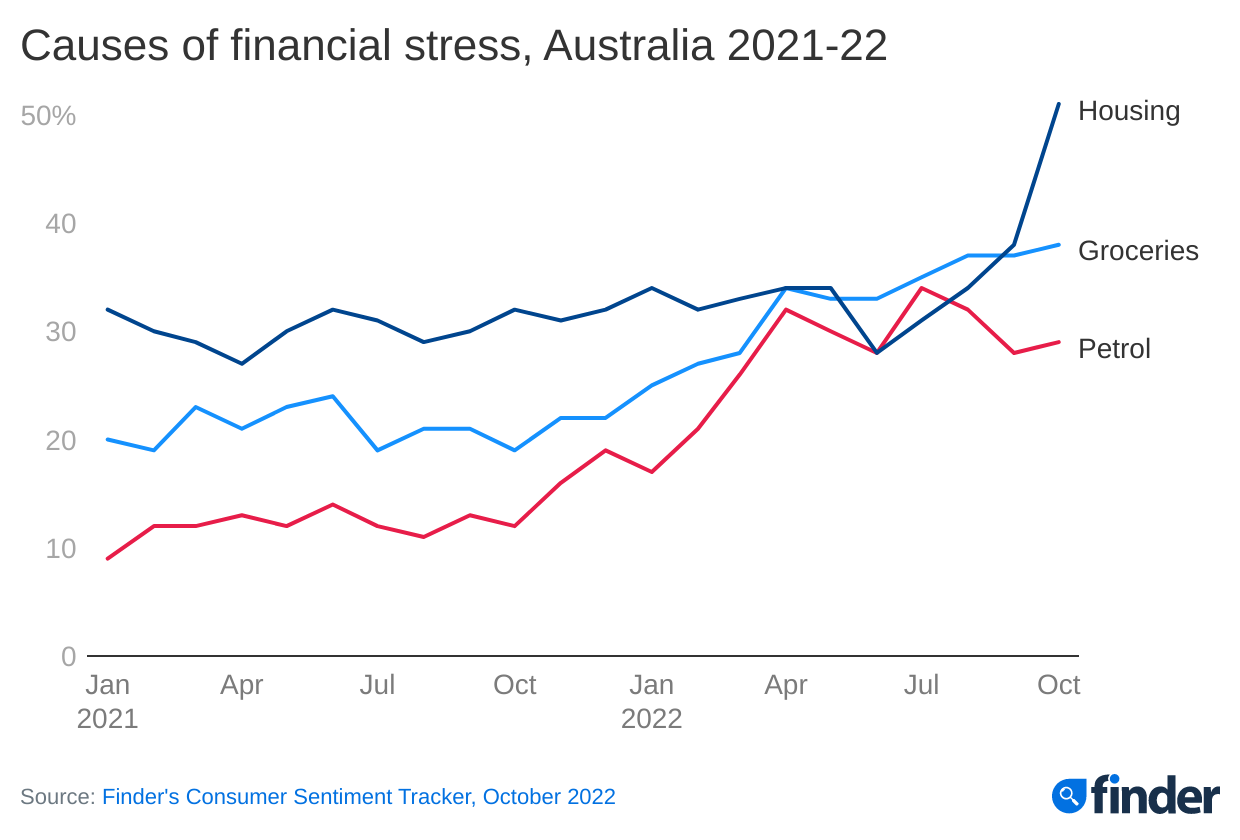
Australian homeowners with $500,000 in mortgage debt — the average mortgage is $589,141 this year — have taken a cumulative $ 735-a-month hit to their budgets, meaning they’re paying almost $9,000 a year in extra mortgage interest.
“Borrowers are scrambling to cut costs on their mortgage where they can,” Finder head of consumer research Graham Cooke said.
“Repayment spikes are just too much to manage for millions of households causing a rush to refinance.
“Refinancing to a better deal can dramatically lower your costs and increase your savings. With at least one more rate rise predicted in the short term – the full impact of increasing rates is not expected to be felt until early next year.”
Cooke recommended comparing offers to find the best deal if you’re looking to refinance.
“Loyalty doesn’t pay,” he said. “Shop around for the best deals on all your expenses.”
Small cap wins for the week
Element 25 surges 42.44%
Element 25 Ltd (ASX:E25) has drawn interest from new potential offtake partners following the US Inflation Reduction Act. The company’s feasibility study is also on track for December 2022.
St George Mining jumps 26.3%
St George Mining Ltd (ASX:SGQ) intends to hit the ground running at the Mt Alexander Lithium Project, with a maiden lithium drilling campaign late this month or early next.
AuTECO Minerals shares rise 20%
AuTECO Minerals Ltd (ASX:AUT) unearthed a gold sample of 569 g/t just six kilometres outside the main Pickle Crow Project Resource in Canada.
Emperor Energy gains 13.5%
Emperor Energy Ltd (ASX:EMP)’s independent review of the Judith Gas Field permit lifted the contingent gas resource to 198 billion cubic feet and the P50 prospective gas resource to 2.249 trillion cubic feet.
Queensland Pacific Metals up 11.66%
Queensland Pacific Metals Ltd (ASX:QPM) garnered international attention with the announcement of a collaboration with global carmaker General Motors, setting the stage for a strategic investment and offtake agreement.