Natural Resources
Comment
4 October 2022
At least Liz is better than Vladimir
As one non-politician guest said on the BBC’s flagship Question Time programme last Thursday night “Liz Truss has done more damage to the British economy than Brexit, the war in Ukraine or the Pandemic, and she’s done it since Friday”.
They had a point, and this morning sees the UK government performing a rapid U turn on the most politically sensitive, though not fiscally important, aspect of the “mini-budget”. Still, it could be worse.
Following sham referendums held in Luhansk, Donetsk, Zaporizhzhia and Kherson earlier in the week President Putin signed the annexation documents that formalised the illegal seizure of the four regions on Friday, despite the fact Russia is not even in military control of all the territory.
Putin’s Orwellian political calculation seems to be twofold. Firstly, by pretending part of Ukraine is in fact Russia, sceptical citizens already afraid of the military draft will be persuaded by their patriotic selves that mother ‘Russia’ is now being attacked and therefore be more willing to support Putin. Secondly, that his geopolitical sleight of hand means the West will think harder about supplying weapons to allow the Ukrainians to attack ‘Russia’ as opposed to defending their sovereign territory.
Statements from the US and other European leaders, particularly in the light of suspected sabotage of the Baltic gas pipelines, would seem to indicate, certainly in the short term at least, that Ukraine’s determination to fight and western support for their efforts is more likely to ramp up.
Up till now the rafts of US, EU and Western World sanctions against Russia have largely excluded aluminium, nickel, titanium, palladium and other critical metals given the significant position Russian occupies as a global supplier.
The chances of a Putin U turn still seem remote. As Putin escalates the war and threatens to use all weapons at his disposal in the “defence of Russia” it seems quite likely that either Putin will stop the exports of those metals to the West or the West will add them to the sanction’s lists.
On the LME on Thursday, perhaps in anticipation, both aluminium and nickel prices climbed sharply, +8.5% and +6% respectively. Despite recessionary fears hanging over equity and bond markets, commodity prices look likely to be supported for longer.
Back to the Beginning
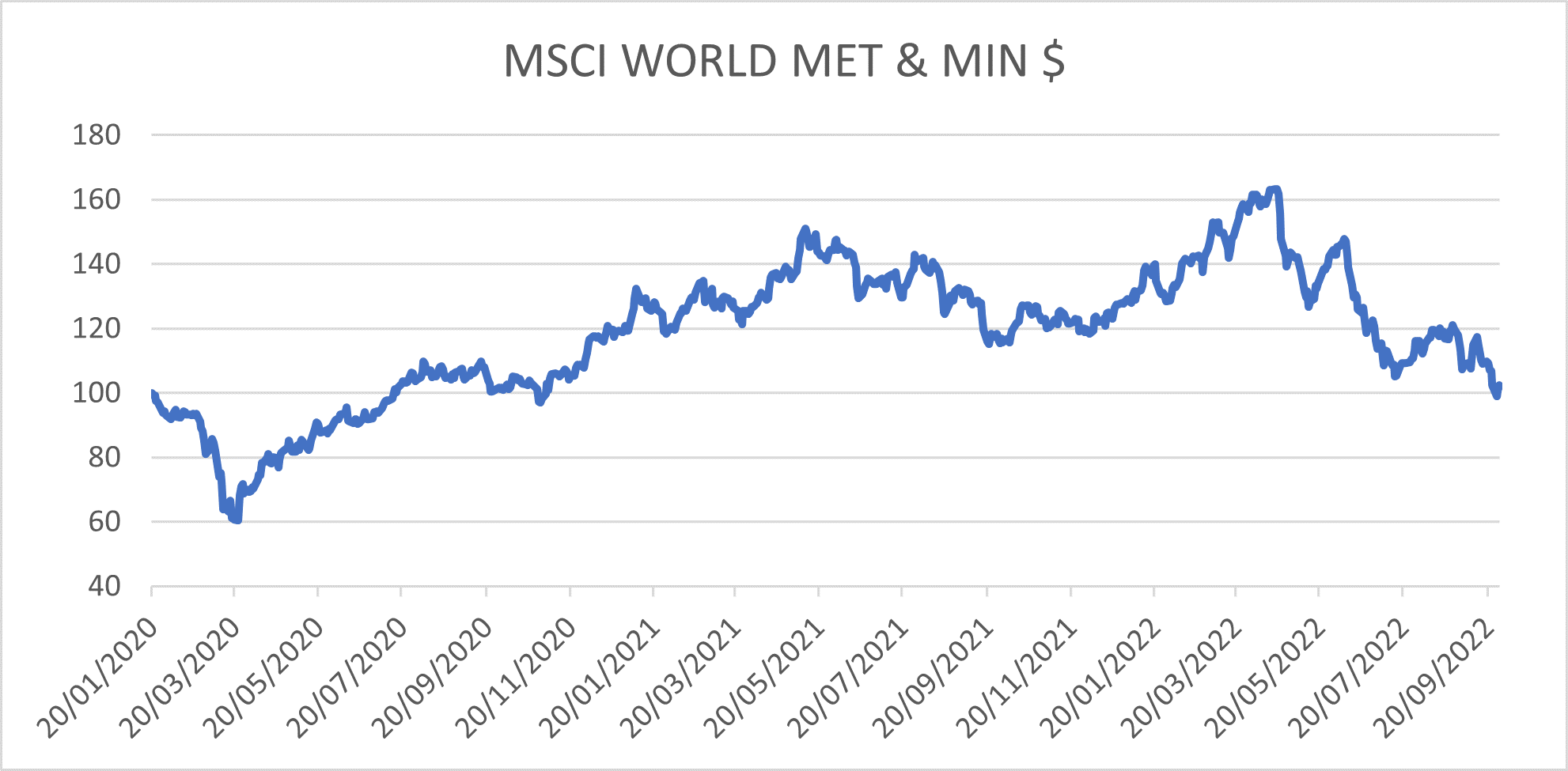
A lot has happened in the mining industry in the last couple of years. $11 trillion dollars of QE pumped into the global economy by central governments to cope with the effects of COVID, and a renewed focus on the decarbonisation agenda have helped elevate the prices of commodities and the profitability of mining companies. Financial markets are now struggling to deal with the negative consequences of the former. It’s interesting (and somewhat depressing to be frank) to note that, in aggregate at least, mining stocks are now back to where they started. In market capitalisation terms that represents a gain and subsequent loss of close to half a trillion dollars in value.