
- FTSE 100 closes in red
- World Bank warns higher rates could cause global recession
- Pound at 37 year low as retail sales tumble
4.43pm: FTSE closes 45 points down
The FTSE 100 closed in the red at the end of the week, dragged down by US investors as the ongoing gloom continues.
Having traded higher before Wall Street opened, Britain's blue-chip index finished around 45 points lower, or 0.62%, at 7,236.
Across the pond, stocks were also firmly lower with the Dow Jones Industrial Index off around 359 points, or 1.16%
"The mood has turned far more pessimistic over the last few days, from the possibility of the much discussed "dovish pivot" from the Fed next week to a potential 1% hike and recession next year," said Craig Erlam, senior market analyst at Forex group Oanda.
"That's quite the shift on the back of one economic release but that's the weight that investors had put on the report in the days and weeks before," he added, referring to Tuesday's inflation report.
He added: "The UK is right up there as far as bleak outlooks are concerned, with the cost-of-living crisis already hitting the economy hard. Of course, it could have been much worse if not for the cap on energy bills but today's retail sales figures highlight how bad the situation already is, with some suggesting they're indicative of an economy already in recession. Sterling traders seemingly agree, with the pound slipping to new 37-year low against the dollar."
4pm: Plans for emergency budget met by scepticism
New chancellor of the exchequer Kwasi Kwarteng will deliver a mini-budget next Friday, according to reports, where he intends to set an official target of raising real GDP growth to 2.5% a year.
“One clear problem”, says Jane Foley, head of forex strategy at Rabobank, “is that this aim has been met with a wall of scepticism.
“Not only do investors view the government’s chances of success in achieving this target as unlikely, but many commentators are also concerned that the new Tory cabinet’s desire to lower taxation is taking unnecessary chances with UK public finances.”
With the UK’s current account deficit widening to record levels as a percentage of GDP, further exposing the pound to “judgement by overseas savers”, Rabobank said its previous target for GBP/USD of 1.14 has been hit.
Based on the expectation that the dollar strength will persist into next year, the analysts now see the pound tumbling even further “to 1.08 on a 6-month view”.
3.45pm: Negative bearing
FTSE 100 headed to the close in negative territory following further losses in the US with markets in a gloomy state of mind ahead of central bank meetings next week.
At 3.45pm the lead index in London was trading 22 points lower at 7,260, with the FTSE 250 down 43 points at 18,843.
Michael Hewson chief market analyst at CMC Markets UK said “Having seen a weak lead from Asia markets, European markets have seen another negative session, dragged lower by further weakness in the US, whose losses have been driven by the surprise decision by FedEx (NYSE:FDX) to bring forward their Q1 earnings numbers from next week.”
“The FTSE 100 came under pressure, although the rise in yields this week has helped the likes of Lloyds Banking Group and NatWest Group outperform, although that’s not been enough to stop the UK benchmark from closing at a one week low.”
“Risk sentiment here wasn’t helped by UK retail sales falling off a cliff in August, declining by -1.6% sending the pound to its lowest levels against the US dollar since 1985.”
“Retailers have also slipped back as a result of those retail sales numbers, with the likes of B&M European Retail, Frasers Group, JD Sports and other consumer discretionary taking a hit.”
“The FedEx (NYSE:FDX) effect has clobbered the price of Royal Mail, sending the shares to their lowest levels in two years, and opening the trapdoor in a sector that is bellwether for the wider global economy.”
3.15pm: Atom Bank CFO to step down - Sky News
Sky News has reported that Atom Bank's finance chief since its launch nearly a decade ago is stepping down just months before a possible flotation of the digital-only lender.
Sky said it understands that David McCarthy is to leave the Durham-based bank after eight years as part of its leadership team.
Shareholders in Atom Bank were notified about his departure in a memo from its chair, Bridget Rosewell, last week, and were told that the search for his successor was well-advanced.
Insiders said that Andrew Marshall, a senior finance executive at Atom Bank, was being lined up to replace Mr McCarthy.
2.40pm: FTSE slips as US markets slide again
The FTSE 100 slipped back into negative territory, after a brief foray higher, as US stocks continued to retreat with all three major indices heading south.
At 2.40pm the FTSE 100 was down 22 points at 7,260, while the FTSE 250 fell 91 points to 18,786.
In the US stocks continued to tumble as investors turn their attention to next week, which is packed with central bank meetings, including the Federal Reserve’s meeting on Wednesday where it is expected the central bank will hike interest rates by another 75 basis points (bp).
Just after the open, the Dow Jones Industrial Average had shed 346 points or 1.1% at 30,615 points, the S&P 500 dipped 45 points or 11% at 3,856 points, and the Nasdaq Composite dropped by 164 points or 1.4% at 11,388 points.
2.10pm: Goldman and JP Morgan cut price targets for UK property groups
Shares in Land Securities and British Land fell today after both property groups were downgraded by Goldman Sachs (NYSE:GS), while JP Morgan lowered its price targets on both companies.
Goldman Sachs (NYSE:GS) downgraded British Land to neutral from buy and reduced its price target to 410p from 580p, while JPMorgan cut its price target to 530p from 700p but retained its overweight rating.
On Land Securities, Goldman Sachs (NYSE:GS) lowered its rating to sell from neutral and cut its price target to 500p from 650p, while JPMorgan retained its neutral rating but with a lower price target of 650p down from 900p.
1.40pm: "Bleak Friday" for the pound
‘’It’s Bleak Friday for the pound, amid worries the UK has hurtled into recession, as the cost-of-living crisis intensifies and confidence in the government’s ability to prompt an economic turnaround fades.”
So says Susannah Streeter, senior investment and markets analyst, at Hargreaves Lansdown who pointed out “It’s a chilling repeat of the dismal day, 30 years ago, when sterling faced another crisis and spectacularly crashed out of the European Exchange-Rate Mechanism.”
“Three decades on, Black Wednesday has a new rival in the notoriety stakes for the pound.”
“This time its decline is being sparked not just by a deteriorating UK economy, but a mighty dollar and the fearless approach by the Federal Reserve in hiking rates.”
“Sterling reached fresh 37 year lows, to trade at $1.13, after a worse than expected snapshot of retail sales which highlighted the sharp nature of the slowdown.”
“This has led to expectations that the Bank of England policymakers won’t be as bold in raising rates as their peers around the table at the Fed.”
Streeter also said there were market concerns Liz Truss’s plans for widespread tax cuts and a shock and awe push to reduce energy bills won’t just add to the UK’s growing debt pile but will also make the Bank of England’s task of lowering demand in the economy and reining in inflation that much harder.
“That is likely to mean that rates will have to stay higher for longer, hampering future growth prospects even more” Streeter said.
12.40pm: Gas prices fall
British and Dutch gas prices fell today, with Norwegian gas flows to the rest of Europe stable, and storage levels up, easing fears of an energy crunch and raising hopes that mandatory rationing this winter can be avoided.
The Dutch October contract, the European benchmark, fell €12.15 to €200 per megawatt hour, a 5.7% drop, while the contract for next-day delivery slid 13% to €176 per megawatt hour.
The British contract for weekend delivery fell 45p to £265 per therm, a 14.5% decline.
European gas inventories are almost 85% full, exceeding the EU’s target.
Analysts at Fitch Solutions said: “Continued increases to storage levels across the EU are expected, markets have increased confidence that mandatory rationing this winter will not be necessary should it prove to be a normal winter of consumption.”
12.15pm: Company insolvencies rise in August
The number of company insolvencies in England and Wales rose last month and was 43% higher than a year ago and 42% higher than in August 2019, before the pandemic, government figures showed on Friday.
The increase in company insolvencies was driven by a rise in creditors' voluntary liquidations, rather than compulsory liquidations, the Insolvency Service agency said.
Individual bankruptcies were 10% lower than a year ago and 58% below their level three years ago, while the number of Debt Relief Orders was similar to before the pandemic.
11.40am: FTSE 100 pushes into positive territory
FTSE 100 pushed into positive territory after a weak start with investors looking for value after the recent falls in the market and despite expectations of further falls in the US later today.
At 11.40am London’s blue-chip index was trading 11 points higher at 7,293 although the broader FTSE 250 remained in the doldrums down 52 points at 18,835.
US stocks were poised to open lower on Friday as investors fix their focus firmly on the Federal Reserve’s rate-setting meeting next week after a mixed bag of economic data this week that included stubbornly-high consumer prices for August.
Futures for the Dow Jones Industrial Average were trading 0.9% lower pre-market, while those for the broader S&P 500 index were down 1.0%. and futures for the tech-laden Nasdaq-100 lost 1.2%.
The Federal Open Market Committee will meet on September 20-21, when it is expected to raise interest rates by 75 basis points, matching the moves it made in June and July, to bring down the inflation rate which is running at 40-year highs.
Traders had expected recession fears to soften the Fed's aggressive approach to runaway inflation but persistent price pressures, as seen in August’s sharp gains from the prior month, are putting policymakers in a tough spot.
“The fact that US retail sales, and last week’s jobless claims - which both hinted that the US economy remains relatively resilient to the Federal Reserve’s rate hikes - didn’t help keep the Fed hawks at bay … we will likely close this week on a sour note,” said Swissquote Bank senior analyst Ipek Ozkardeskaya.

11.10am: Eurozone inflation hits fresh high
Inflation in the eurozone hit a fresh high of 9.1% in August from 8.9% in July in line with market expectations while the core figure (excluding energy, food, alcohol and tobacco) also rose to 4.3% from 4.0%, again in line with market forecasts.
Claus Vistesen, chief eurozone economist at Pantheon Macroeconomics thought the core inflation number “will be very uncomfortable for the ECB in the next few months” with further rises expected.
“The good news is that the acceleration in services inflation is now petering out in our forecasts, leaving non-energy goods as the main near-term upside risk.”
Vistesen said whether the ECB hikes rates in October by 75bps “hangs in the balance” adding “If the ECB looks at the core, they will do 75bp, but if they glean at the headline, we now think they will be inclined to dial it down to 50bp. Watch this space.“
10.35am: Capita rises after double dose of good news
Shares in Capita PLC (LSE:CPI) advanced after it reported a contract extension with Barnet Council and the disposal of its subsidiary Pay360 Ltd to Access PaySuite.
Shares in the outsourcing services group rose 6.6% after securing the contract extension with the north London council that is worth £42.7mln, although with indexation and potential additional work it could be worth up to £57mln.
Separately, Capita said it agreed to dispose of Pay360 to the division of Access Group for £150mln on a cash-free, debt-free basis.
Capita said the sale will help reduce its debt, provide additional liquidity, and allow it to enhance its digital offerings for clients and build a more focused and sustainable business for the long term.
10.00am: FedEx (NYSE:FDX) warning hits Royal Mail
Shares in Royal Mail PLC (LSE:RMG) dipped today following the profits warning by US peer FedEx (NYSE:FDX) pulled its full year guidance after warning that first quarter profits would miss estimates as a global demand slowdown accelerates.
It cited "macroeconomic weakness" in Asia and "service challenges" in Europe.
Investors took the view that industry challenges would be the same for Royal Mail which also faces the prospect of more industrial action as employees strike over higher pay.
Royal Mail workers represented by the Communication Workers Union (CWU) had planned a walkout on 9 September 2022 but are now planning to strike on September 30 and October 1 2022.
Shares fell 10.5% to 223.5p.
9.30am: Sterling hits 37 year low
The pound has fallen to a new 37-year low against the dollar, as the sharp drop in UK retail sales heightened recession fears.
Sterling dropped more than 1% to $1.1350, and has lost 0.5% against the euro to €1.1407.
The low point, not seen since the days of Margaret Thatcher, resulted partly from a firm dollar, the greenback has been strong against a number of major currencies as the US Federal Reserve has aggressively hiked interest rates, thereby offering better returns for investors.
The dollar index, which measures it against a basket of currencies, rose as much as 0.5% this morning.
The Fed is expected to raise interest rates by a further 75 basis points at next Wednesday’s meeting, a day before the Bank of England is set to hike rates by 50 basis points.
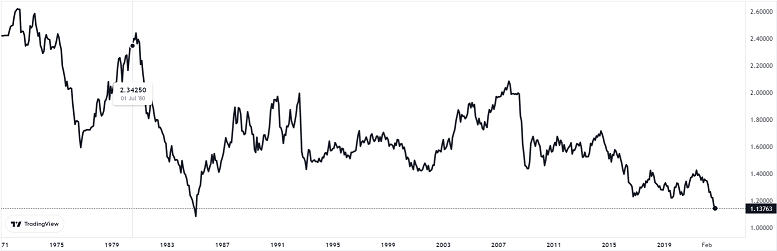
Two stories emerging on UKI Pound $GBP - wrapped up as a single emergent Sterling crisis. Sharp recent devaluation vs US Dollar is painfully inflationary for dollar-denominated imports - but decline in the 80% of the broad basket that is non-USD is rather less stark (chart below) pic.twitter.com/LjoNUAuscU
— Simon French (@shjfrench) September 16, 2022
9.00am: FTSE weaker as miserable week for investors continues
Richard Hunter, head of markets at interactive investor, said today’s falls in global equity markets “capped off a fairly miserable week for investors, with inflationary concerns remaining front and centre.”
In London both the FTSE 100 (down 34 points at 7,248) and FTSE 250 (down 127 points at 18,760) were lower.
“With inflation remaining the major thorn in the side for central banks globally, the inevitable rate rises to lower the current levels are leading investors to question how high the possibility of recession is now becoming, with any policy errors due to over-tightening likely to be the root cause.”
“In the meantime, the bond market is in clear agreement, with yields remaining sharply inverted, often seen as a harbinger of recession.”
“The general gloom also permeated to the FTSE100, which opened unsurprisingly lower” with “losses were broad based, but particularly marked in the mining sector on weakening demand, and in the housebuilders amid an increasingly challenging environment.”
AstraZeneca PLC (LSE:AZN) was a rare riser in the FTSE 100 after it said today it had received two recommendations for drug approvals in the EU, while a drug for blood disorder paroxysmal nocturnal haemoglobinuria met its primary endpoint in a phase three trial.
The group said its Beyfortus drug, which it develops with Sanofi. for the prevention of lower respiratory tract disease in newborns and infants has been recommended for marketing authorisation in the European UnionMeanwhile, AstraZeneca's Evusheld Covid antibody treatment has been recommended for marketing authorisation in the EU for adults with the virus at risk of progressing to severe disease.
8.30am: August retail sales should steer MPC to 50bp rate rise
Gabriella Dickens, senior UK economist at Pantheon Macroeconomics said today’s weaker than expected UK retail sales figures came as little surprise given the extremely low level of consumers’ confidence.
She said it “should steer the Monetary Policy Committee towards a 50bp increase in bank rate next week, rather than the 75bp hike deemed most likely by markets.”
Looking ahead, Dickens does not expect the additional public holiday for the Queen’s funeral on Monday, and associated shop closures, will materially dampen retail sales in September believing people simply will shop online or visit shops later in the month instead.
She pointed out that retail sales volumes fell by just 0.1% month-to-month in September 1997, when Princess Diana’s funeral took place, even though most shops closed for the day.
Moreover, the government’s decision to freeze consumer electricity and natural gas prices for the next two years at 27% above their current level, should foster an improvement in consumers’ confidence and a partial recovery in households’ real disposable incomes over the coming quarters.
Dickens expected August’s retail sales figures to be this year’s nadir with a consumer-led recession to be narrowly avoided this winter.
8.10am: FTSE 100 opens lower, down 30 points
FTSE 100 opened lower on Friday following falls in Asian and US markets and as the World Bank warned that central banks could cause a “devastating” global recession if they raise interest rates too high.
At 8.10am the FTSE 100 fell 31 points and the FTSE 250 dropped 118 points to 18,765.
A further dent to sentiment in the UK came from weak retail sales figures which fell 1.6% in August well below market expectations for a fall of 0.5%.
Sophie Lund-Yates, lead equity analyst at Hargreaves Lansdown said the weak figures “suggest the UK is already in recession” adding that it “raises a serious question for UK policy makers.”
She noted retail sales were holding up better in the US than in the UK giving more scope to the Federal Reserve to increase rates more aggressively than the Bank of England has in the UK.
“The UK consumer base is weaker, meaning it may be deemed too risky to inflate rates at the same pace as our trans-Atlantic friends, which would keep up the downwards pressure on the pound” she said.
7.45am: World Bank warns of global recession
The World Bank has warned that leading central banks risk sending the global economy into a “devastating” recession next year if policymakers raise interest rates too high over the months ahead and stress financial markets.
The world’s three largest economies - the United States, China and the euro area - have been slowing sharply, and even a “moderate hit to the global economy over the next year could tip it into recession,” the bank said in a new study.
It said the global economy was now in its steepest slowdown following a post-recession recovery since 1970, and consumer confidence had already dropped more sharply than in the run-up to previous global recessions.
The Washington-based organisation called on monetary authorities in the big economies to co-ordinate their actions to reduce the overall amount of tightening.
Central banks, led by the US Federal Reserve, have embarked on a series of aggressive rate rises over the course of 2022 in a bid to tame inflation that is at, or close to, double figures in several advanced economies for the first time in decades.
Energy and food prices have surged following Russia’s invasion of Ukraine in late February, triggering a cost of living crisis.
To avoid letting inflation rip, the World Bank urged governments to provide targeted relief to vulnerable households instead of relying on tighter monetary policy.
World Bank president David Malpass said momentum in the global economy was sliding and more countries were already falling into recession. “My deep concern is that these trends will persist, with long-lasting consequences that are devastating for people in emerging market and developing economies,” he added.
The World Bank did not produce new forecasts for the global economy, but noted that the outlook for 2023 had been sliding as rich and poor countries alike responded to high inflation this year by seeking to limit spending.
7.20am: UK retail sales slump in August
UK retail sales slumped by 1.6% in August 2022, continuing a downward trend since summer 2021 following the lifting of restrictions on hospitality, and well below City forecasts for a 0.5% fall with rising prices squeezing consumer spending.
All main sectors (food stores, non-food stores, non-store retailing and fuel) fell over the month which last happened in July 2021, when all legal restrictions on hospitality were lifted.
Non-food stores sales volumes fell by 1.9% over the month because of falls in each of its sub-sectors: other non-food stores (negative 2.8%), department stores (negative 2.7%), household goods stores (negative 1.1%) and clothing stores (negative 0.6%).
Non-store retailing (predominantly online retailers) sales volumes fell by 2.6% in August, food store sales volumes fell by 0.8% and automotive fuel sales volumes fell by 1.7%.
6.55am: FTSE seen lower after falls in the US and Asia
FTSE 100 expected to open lower after US markets failed to hold onto early gains and ended the session lower.
Spread betting companies are calling London’s blue chip index down by around 40 points.
The Dow closed Thursday down 173 points, 0.6%, at 30,962, the Nasdaq Composite lost 167 points, 0.4%, to 11,552 and the S&P 500 shed 45 points, 1.1%, to 3,901. Thursday marked the Dow's lowest close since July 14.
Michael Hewson chief market analyst at CMC Markets UK said “Concerns about a global recession are also growing, manifesting themselves by way of weakness in commodity prices, crude oil prices slumping by over 3% yesterday, while natural gas prices on both sides of the Atlantic also plunged sharply.”
“These fears have translated into further weakness in Asia this morning with the latest Chinese retail sales and industrial production data for August offering some encouragement of an economic improvement, but unable to turn around the wider negative tone, with European markets set to open lower.”
In the UK retail sales figures are due and are expected to show a fall of 0.5% in August.