
As geopolitical tensions continue to rise, old trading partners become potential adversaries and critical mineral supply surety becomes a matter of national security.
China currently produces 70-80% of the world's graphite and 100% of the natural graphite used in lithium-ion batteries.
While there are hopes the recently elected Australian Federal Government might be able to restore relations with the superpower, we are nonetheless in a ‘trade dispute’ with the People’s Republic that is likely to continue into the foreseeable future.
Australia, the US, India, Canada and a plethora of European Union states have all declared graphite a critical mineral, in large part due to its importance as a battery anode material in rechargeable lithium-ion batteries and similar energy storage technology.
Each of these countries is now looking to create domestic supply chains within or close to their own borders and inside their spheres of influence.
ASX listed International Graphite Ltd (ASX:IG6), an environmentally focused graphite company, is developing a fully integrated graphite supply chain entirely within Australian borders.
“I really see it as supply chain surety,” International Graphite founder and executive chair Phil Hearse said.
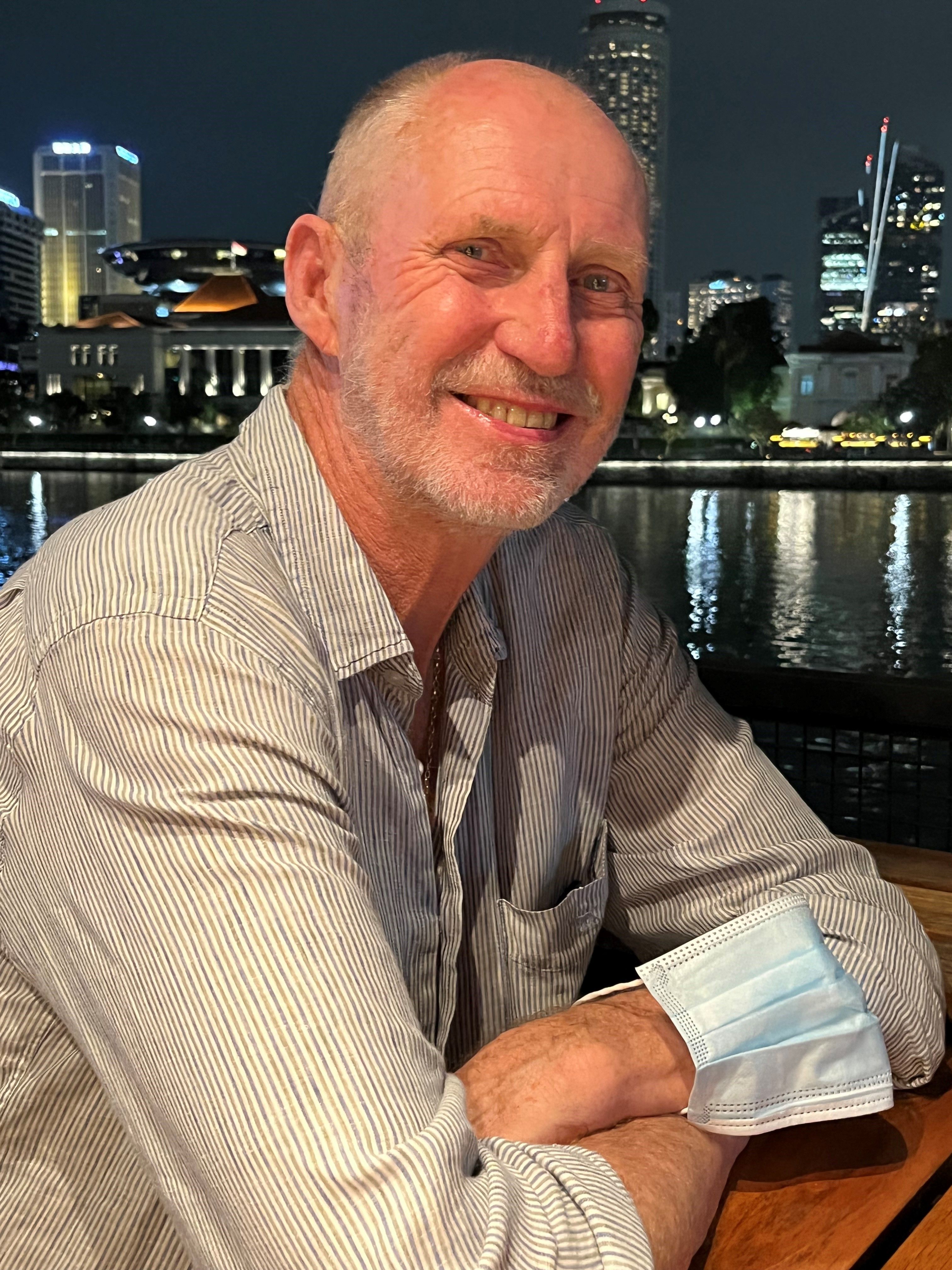
Phil Hearse, founder and executive chair of International Graphite.
The company intends to create a new source of graphite battery anode material for technologies needed to transition to a low-carbon renewable energy system, sourced from its own Springdale graphite mine in Western Australia.
Springdale holds a JORC-compliant inferred resource of 15.6 million tonnes at 6% total graphite content (TGC), with a particularly high-grade zone of 2.6 million tonnes at 17.5% TGC.
“If our mine, for example, was overseas, then there's always the risk of your supply being cut off for one reason or another. That becomes highly unlikely here in Western Australia, and indeed, in Australia.”
Adding to the fabric of society
Phil Hearse has enjoyed a long, successful career in the industrial minerals industry and in that time has developed a keen understanding of domestic supply issues.
He grew up by the beach in Victor Harbour, South Australia, where his love for both the ocean and metallurgy were born.
“When I was going through high school, I met an old fellow called Claude MacDonald,” Hearse remembered.
“He was a retired metallurgist living in South Australia, in Victor Harbor, and he'd worked in the Port Pirie smelters. That was really what first led me into a career in the mining industry.
“With mining engineering, you can achieve anything you want, I think. The industry has so much to offer, you're really adding to the fabric of society. It's been a wonderful career.”
The said career began in the mines of Broken Hill but quickly moved beyond Australia to the Panguna copper mine in Papua New Guinea, run by Bougainville Copper (ASX:BOC).
“At that point, it was just past the commissioning stages. It was a 'world's your oyster' moment really, for a very young bloke to be in that environment, both socially and from a career perspective it was just wonderful.”
From there, Hearse moved from copper to nickel with Queensland Nickel, then to alumina with Gove Alumina as he toured various mining regions and worked with a raft of different metals and industrial materials.
In the mid-1980s, Hearse leveraged his extensive industry expertise to create the private contracting firm Normet with the goal of providing metallurgical services to mining companies.
“That was sort of a new industry back in those times,” he explained.
Hearse was something of a forerunner in the mining engineering sector during that period, feasibility and metallurgical contract services being a fairly new offering in the industry.
Once he’d moved on from Normet and stepped down from a director advisory role with GRD Minproc, his next step was to create Battery Limits, another consulting firm that this time focused specifically on battery-related commodities from mineral sands to base metal and gold.
“It didn't have the sort of meteoric rise that Normet had but solidly became a company that was relied upon for providing really niche and high-quality services to the mining industry,” Hearse recalled.
“Then, about seven years ago, we got drawn into the graphite industry, and that wasn't a conscious decision. It just sort of happened.
With seven years of experience under their belt, the Battery Limits team became graphite experts almost by accident.
Filling a void in material manufacturing
International Graphite was born from Phil Hearse’s experience as director of Battery Limits.
“We were doing a lot of work in Africa for ASX and AM listed companies and as I was going through that process, it became apparent to me that outside of China there was essentially almost zero downstream processing capacity, particularly at that stage, in the battery anode materials,” he said.
“There were companies providing industrial products but from the viewpoint of battery anode materials, just about every kilogram of that material in one way or another is processed in China.
“We thought, well, there's got to be another option for this.”
The hunt was on.
Hearse flew from Perth to the Middle East, to China and back again, searching for the right place for a processing plant and graphite mine to begin manufacturing battery-grade graphite products.
After months of back and forth, Hearse and IG6 realised an overseas operation was more trouble than it was worth and began looking closer to home for better opportunities.
“Collie became the obvious option. At the end of the day, that was the place for us to set up a downstream processing facility, and hence, that's the location that we are now focused on.”
International Graphite is constructing the first vertically integrated, standalone graphite production facility in Western Australia.
A research and development and processing plant under construction in Collie, Western Australia, has been designed to manufacture spheroidised (the processed form of flake concentrate) graphite suitable for battery anode materials, fed by the Springdale Graphite Project.
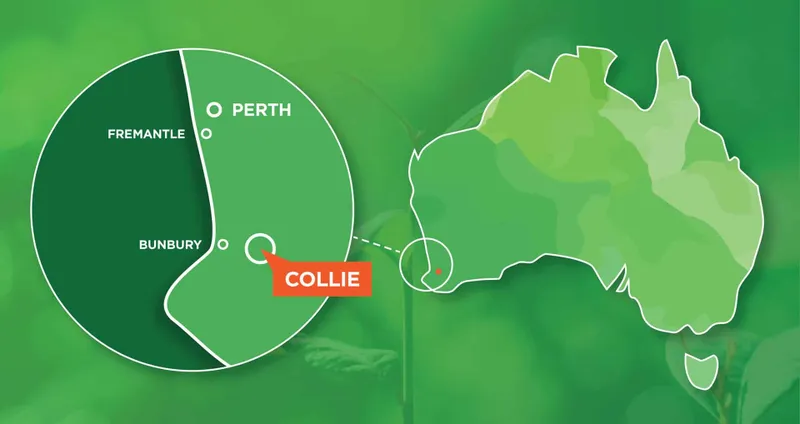
Springdale is one of the highest-grade graphite resources in Australia, just 150 kilometres from the industrial port of Esperance, Western Australia.
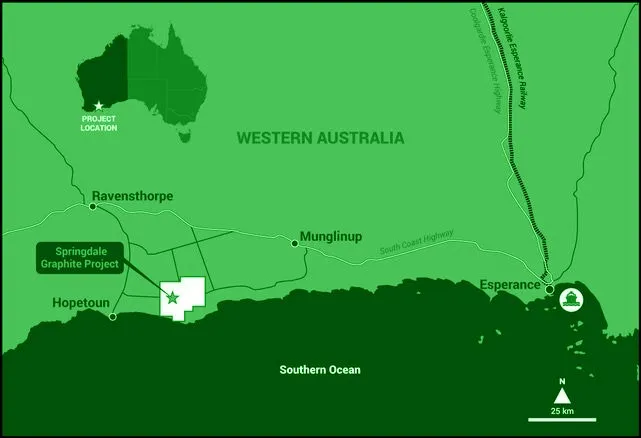
IG6 chose these locations due to a combination of excellent infrastructure, access to major power stations and ports, and strong government support.
A matter of national security
In May, Western Australia’s governor Kim Beazley invited select critical mineral industry leaders to a roundtable event discussing the vital role that minerals and energy play in generating and securing economic growth, and the opportunities they offer Australia.
Unsurprisingly, Hearse was invited to participate in the roundtable, where the issue of strategic supply and energy security took centre stage.
“That [the roundtable] really drove home to me the importance of strategic supply,” Hearse said.
“There was an interesting ideological shift potentially out of that, that goes from commercialism to strategy.
“I think we would be very remiss if we didn't try to shore up our own supply of strategic commodities.”
Leaving fears around China aside, the fragility of the critical minerals supply chain and of graphite’s supply, in particular, are a serious concern.
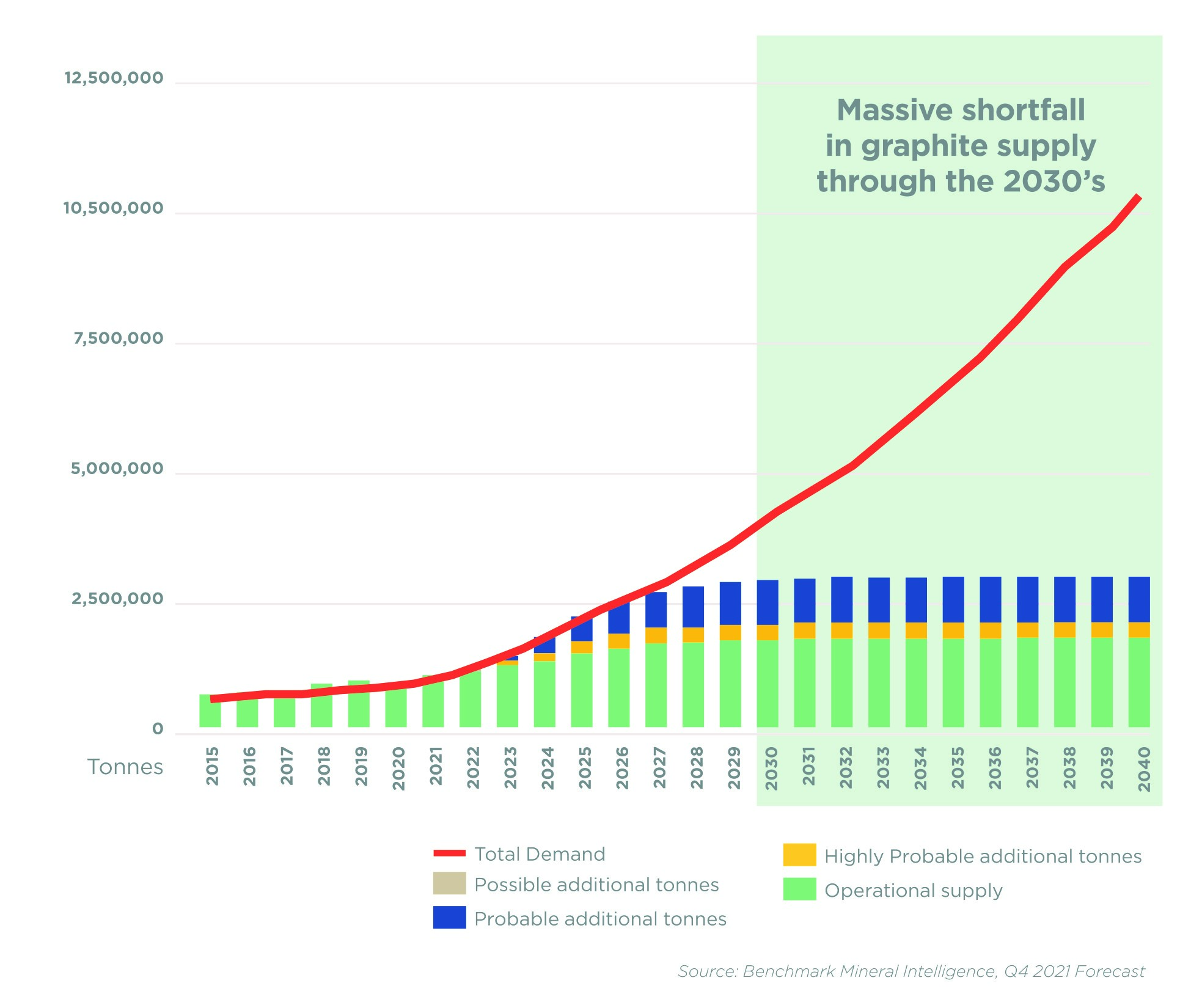
Source: Benchmark Intelligence Q4 2021 Forecast.
“The supply-demand curves show that the demand exceeds supply from about 2025-27, particularly in graphite, but also in the other commodities as well,” Hearse warned.
“If the expected demand that all of the projections are showing becomes real, then suppliers are going to really struggle to meet that.”
The issue of critical mineral supply as a strategic national objective was also highlighted in a US-Australian Net-Zero Technology Acceleration Partnership inked on July 12.
This partnership is designed to facilitate the ‘development and deployment of zero-emissions technology, and cooperation on critical minerals supply chains to reduce greenhouse gas emissions while supercharging economic growth’.
The Australian Federal Government’s Minister for Climate Change and Energy Chris Bowen emphasised that the partnership was a “huge milestone in ramping up the US and Australia’s shared commitment to ambitious climate action and energy security”.
“It prioritises not just development but deployment of the critical technologies that will underpin economic opportunity in the energy transformation of our two countries,” Minister Bowen continued.
The sentiment is certainly one Hearse supports.
“I think what we need people to understand is the strategic value of graphite,” he stressed.
“The fact is that the world is changing, Australia is changing. We're pushing heavily down the path of climate change; fossil fuels are on their way out.
“The answer, at least for the next 10 years or more, is in the battery storage of lithium-ion batteries.”