
Natural Resources
25 July 2022
Comment
In March this year Ford Motor Co announced that its planned spending on electric vehicles was increasing from $30bn to $50bn to 2026. Last week the company announced more details on how it was looking to shore up its own supply chain for the transition to EV manufacturing.
Not content with securing deals with the likes of CATL for battery cell production, Ford seems to be making doubly sure of their battery manufacturer’s ability to actually deliver the cells by also sourcing battery metals direct from the miners through offtake deals on cobalt, nickel, lithium and graphite. Given the possible scarcity of many critical metals, as the energy transition accelerates, perhaps ”FOMO” might just be beginning.
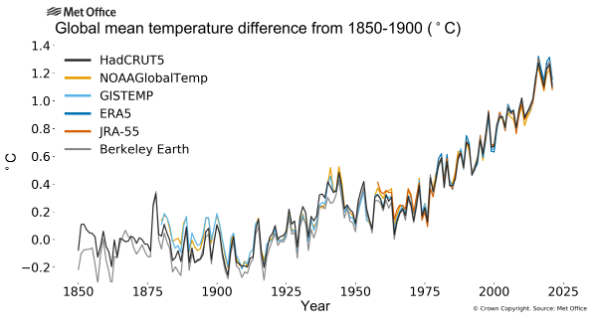
On the other side of the pond the UK’s Met Office issued its first ever “Red Warning” for extreme heat in parts of the UK last week. A Red Warning indicates that temperatures will “be a danger to life with the risk of illness not limited to vulnerable people”. Record temperatures in the UK and across Europe were duly smashed.
The effects of climate change are of course already being felt across the globe, but this is perhaps the first time it’s been writ large for the UK population in its own backyard.
I am sure my Australian colleagues will shrug their shoulders at 40C+ temperatures but in the UK, where only 1% of buildings have fixed cooling systems, that really is extreme. Working from home never felt less appealing. It is interesting to note that, according to the IEA, by 2050 66% of the world’s households will have air conditioning, triple today’s number, requiring additional electricity generation equivalent to the current US, European and Japanese capacity combined.
In an interview in the FT Corinne Le Quéré, lead author of the reports of the Intergovernmental Panel on Climate Change and member of both the UK and French government’s climate change committees, wasn’t surprised at all at Europe’s current heatwave, “It’s so predictable…like a train moving forward”. Asked about the likelihood of limiting global temperature rise to 1.5c without a significant change in current behaviour her response was “forget it”.
However, right now Europe is trying to face in two different directions simultaneously - attempting to isolate Russia and tackle climate change. There is an argument that says that Putin’s war will accelerate Europe’s transition from reliance on fossil fuels but in the short term these appear to be mutually exclusive goals.
Germany is in the process of having to decide whether to turn coal fired power stations back on or face the prospect of energy rationing and some pretty negative immediate political and economic consequences this winter. The latter option, while not palatable, is perhaps the only realistically acceptable one with a population already experiencing the economic fallout from rampant inflation and the consequences of the war in Ukraine.
Nevertheless, the nature of climate change means the longer we leave it the more drastic the action is likely to be required to correct it.
The sweaty experience of Europeans last week is a visceral reminder that irrespective of the current state of the world - even amid a looming global recession, slumped commodity prices and geopolitical turmoil - the urgency to address climate change isn’t going away, and the solutions are going to require a lot more metal.
Charlie Cryer
Head RFC Ambrian London
+44 (0)20 3440 6834
charlie.cryer@rfcambrian.com