
The ASX looks set to rise today following the best trading day on Wall Street in weeks.
ASX futures were up 79 points or 1.2% to 6,626 near 7am this morning, while the dollar was trading at 68.99 US cents – 1.3% up on yesterday.
US stocks closed on a high note as corporate reporting revealed strong earnings, giving concerned investors renewed confidence in the markets at a time of tightening monetary policy and as-yet-untamed inflation.
The Nasdaq closed 3.1% up, the biggest single-day percentage gain since June 24, the S&P 500 gained 2.8%, the highest close since June 9, and the Dow Jones added 2.4%.
In Europe, despite raging wildfires and record heat across much of France, Spain and Portugal and the mercury tipping 40 in the UK for the first time since records began, shares hit a five-week high on news that Russian gas would once again be flowing along the Nord Stream 1 pipeline.
All the big indices were pointing up – the pan-European STOXX 600 rose 1.4%, the German Dax was up 2.7% and the UK FTSE added 1%.
A third of mortgage holders could struggle: RBA
At home, the Reserve Bank of Australia warned that up to 30% of mortgage holders could struggle to keep up with debt repayments if interest rates were to increase by 3 percentage points, with first home buyers, late entrants to the market and low-income loan holders most at risk.
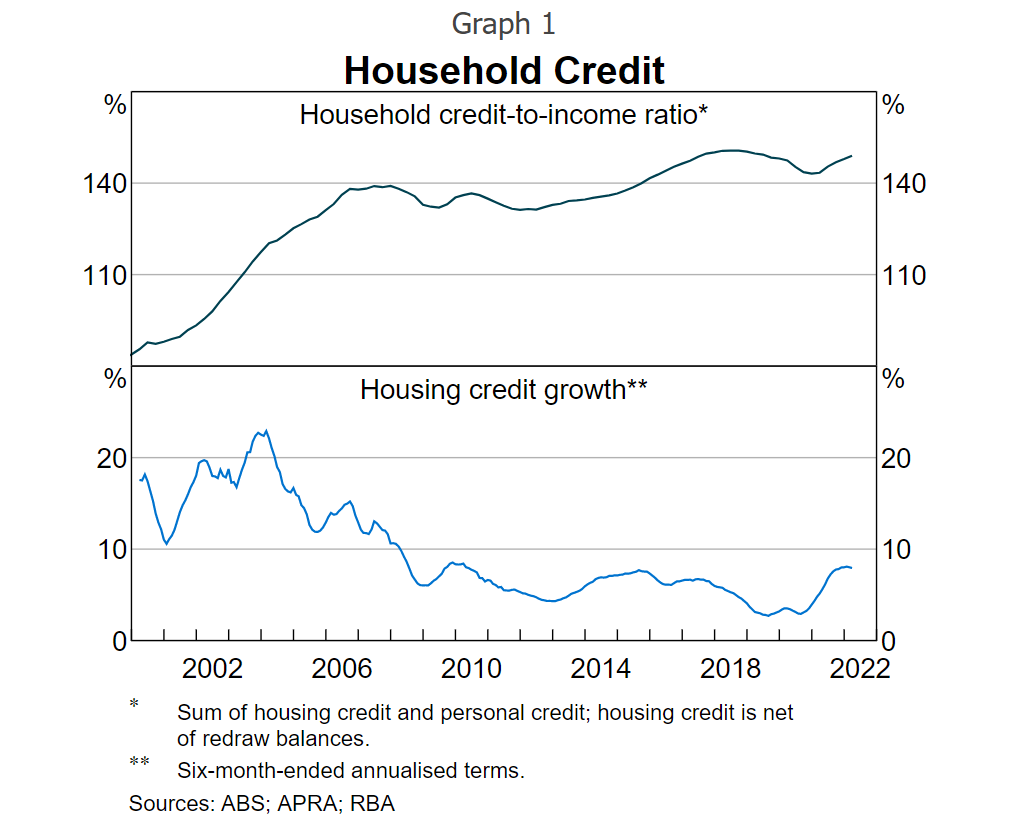
In a speech in Brisbane, RBA deputy governor Michele Bullock said: “The high level of debt held by Australian households might, on its own, suggest that many households will face difficulties as interest rates rise, with implications for their ability to service that debt, consumption and the economy more broadly.”
Bullock went on to list reasons why Australians would, in the main, be well placed to absorb rising costs, citing strong post-pandemic household balance sheets and savings and rallying housing prices.
She conceded, however, that: “If we look at the households that have debt, almost three-quarters of debt outstanding is held by households in the top 40% of the income distribution; indebted households in the bottom 20% of the income distribution hold less than 5% of the debt.”
Most fixed-rate loans are due to expire in the next two years, at which point borrowers will face a very different variable market and will likely face repayment increases of at least 40%.
For those whose fixed loans expire in the middle of next year, the RBA forecasts a median increase of about $650 a month on the average mortgage repayments.
Treasurer launches root and branch review of RBA
Still on the RBA, the federal treasurer today announced a broad-based review of the central bank, saying that it had served us well for 60 years but it was time to assess whether it is still promoting the best outcomes for the Australian economy.
The review would be the first time the RBA has been scrutinised in decades, taking in board composition – structure, experience, composition and appointments – along with the appropriateness of the inflation-targeting framework.
The move comes as many question the wisdom of using rates – a blunt tool – to target inflation and indeed whether inflation should be the bank’s sole target without the context of other economic indicators.
Stiglitz calls for windfall profits tax
During his whirlwind tour of Australia, Nobel laureate economist Joseph Stiglitz has called for a windfall profits tax, an idea many might remember was floated and put down during the last ALP government in the form of a mining tax.
Stiglitz said the idea was a “no-brainer” but was unlikely to gain traction because of the influence of big companies.
He said companies had profited during the COVID-19 pandemic and continued to rake it in after the Russian invasion of Ukraine pushed up energy prices.
“It makes a great deal of sense at this current juncture – it’s not as if the energy companies did anything to deserve it.”
“It was Putin who engaged in that reckless action. Why should the energy companies be rewarded?”
Such a tax would induce energy companies not to raise prices, he said, and would prevent largely foreign-owned resource companies from extracting money from Australia.
Stiglitz continued his warnings that excessive interest rate rises could push Europe, the US and then Australia into recession.
But companies can breathe out for now – the treasurer ruled out Stiglitz’s suggestion on Monday.
Mask mandates
The Australian Medical Association president Dr Omar Khorshid has called for renewed mask mandates to tackle winter illness, including a resurgent COVID-19.
He said that hospital numbers were becoming unsustainable, with thousands of health workers furloughed due to infection.
Victoria alone recorded 821 hospital cases of COVID on Monday – a 99% increase since June 22.
“I don’t know how far they can let the numbers go while still saying we don’t need mask mandates,” Khorshid said of state governments.