
Chilean Metals had one very good reason behind its name change to Power Nickel Inc (TSX-V:PNPN): the NISK nickel sulphide project in Quebec which has the potential to become one of the greenest sources of class-1 nickel in the world.
With its large land position hosting nickel, copper, cobalt, palladium, and platinum mineralization, the project is being developed by Power Nickel to meet the growing global demand for environmentally-friendly mined battery metals.
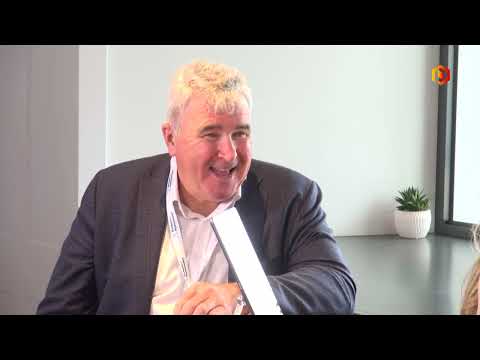
The company’s CEO Terry Lynch told Proactive that the project could become a producing 20 million tonne-plus resource in as little as five to six years, whereas other mines usually take a minimum of a decade to achieve this.
“Our mine would be as quick as you could develop any mine in the world,” Lynch explained. “You’ve got a great jurisdiction, it’s off the road so you don’t have logistical problems, and you’ve got broad community support because Quebec is very pro-mining as a culture.”
The project also has sustainability on its side because it is positioned across the road from a major Hydro-Quebec substation, which can provide the project with easy access to low-carbon power. “That will certainly help us go a long way in becoming the greenest nickel mine in history,” Lynch said.
Becoming Power Nickel
Under its former name, the company pivoted away from its Chilean focus because its leadership team felt a rumbling that the dynamic was going to become unsettled in the region.
“We’ve not given up on Chile but when you’re a junior miner you’ve got the be sensitive to when and where you can raise capital,” Lynch explained. “We sensed that Chile’s window was going to shut down for a while.”
In its search for other projects, the company came across several gold and copper projects in British Columbia’s Golden Triangle that were originally slated to be the company’s flagship project until the company came across the prospective but under-explored NISK project. Located near James Bay in Quebec, Canada, the property hosts 90 claims across an area of 45.9 square kilometres.
READ: Power Nickel adds $833,568.7 to the capital of the company as a result of warrant exercises
Lynch said what was attractive about the NISK project was the fact that it had a very efficient conversion of drilling to resource. “When we were looking at buying it, NISK was a historical resource with about 3.1 million tonnes [of resource] split equally between measured, indicated and inferred and they had done that with only 14,000 metres (m) of drilling,” he said. “We looked at Talon Metals, which is what every class-1 nickel mine wants to be when it grows up, and the value per metre of nickel in the ground they had which was $41,000 per metre drilled - we were getting $90,000 plus.”
On February 1, 2021, the company completed the acquisition of its option to acquire up to 80% of the NISK project from Critical Elements Lithium Corporation.
“We changed our name from Chilean Metals to focus people on where we want to be which is a class-1 nickel mine,” Lynch said. Meanwhile, the company plans to create a newly listed mining company focused on the non-NISK gold and copper assets in Chile and British Columbia that were held by Chilean Metals before the name change, with an announcement about this expected soon.
Taking NISK from historical to commercial
Power Nickel has recently completed a 2,500m, eight-hole drill program and 3D geological modelling of the NISK site as it works towards upgrading the 43-101 compliant resource estimate, expected to be released in mid-July 2022. Seven of the eight drill holes hit, with the final drill hitting a fault.
“Once we get the updated resource estimate out there, people will know NISK is no longer historical,” Lynch said. “10 million tonnes makes it commercial and we will be at least 50% of the way there. Our view is that we will get to be a Lynn Lake type deposit, which is 22 million tonnes, and if we’re lucky, we’ll get to be a Voisey’s Bay, which is 50 million tonnes-plus.”
READ: Power Nickel says drill results confirm the presence of high-grade nickel mineralization at the NISK nickel sulphate project
Spurring his confidence is the fact that nickel sulphide deposits tend to exist as a group of pods. “It’s a string of pearls formation where, when you find one pearl, then there’s always other pearls to be found,” Lynch explained.
To find those additional pods, Power Nickel’s next 5000m drill program, slated to run from mid-late June until August, will largely be targeting the fault identified during its first round of drilling.
“Our theory is that the resource is underneath this fault, so we are drilling out the flanks,” Lynch said. “We will be growing the current resource within the pod we’ve identified and also testing to find new pods on the flanks.” Lynch also expects the company would carry out an additional 10,000m to 15,000m of drilling in the fall, at which point he believes the site would be north of 10 million tonnes of nickel and fully commercial.
Bullish on nickel
With demand for nickel expected to double to 6 million tonnes per year, according to Wood Mackenzie, it’s no surprise Lynch is bullish on the metal. “That’s why we invested, we like the supply dynamics a lot,” he explained.
Demand for nickel is being driven by an increased need for stainless steel. “The rest of the world is catching up to North America and as India, Southeast Asia, China, Africa, and South America become more urbanized, people there are buying more pots and pans, fridges and stoves — that’s stainless steel,” Lynch said. “Stainless steel has always been the top driver for nickel demand, and it has a healthy growth rate of about 6%.”
Electrification is also upping the demand for nickel as it is the metal of choice for batteries due to it being relatively cost-effective. “Right now, that is 4% of the market, but it is expected that within 10 years that could be as much as 50%,” Lynch said.
He added that one neat thing about nickel was that, due to growing demand, it was not just about attracting the investor market but also about working with strategic partners. “We’re already talking to partners that in bygone years you’d never get to at this stage,” he said. “Class-1 nickel is so rare and desirable that they are talking to us now because they can see our project is going to become commercial,” he concluded.
Contact the author Emily Jarvie at emily.jarvie@proactiveinvestors.com
Follow her on Twitter @emilyjjarvie