
ASX Ltd (ASX:ASX) has launched the S&P/ASX Agribusiness Index (ASX:XAG), setting a new benchmark for monitoring the performance of ASX-listed agricultural companies.
The index, which was created in partnership with S&P Dow Jones Indices, will support agribusinesses by enabling them to tap into one of the deepest pools of investment capital worldwide.
It will also provide opportunities for investors to gain exposure to this sector.
The index, which started quoting as a real-time index on Friday, 1 July, captures about A$30 billion in market capitalisation, just under 2% of the ASX.
It has 25 constituent companies including Treasury Wine Estates, a2 Milk, Nufarm, Graincorp, Elders and Bega Cheese.
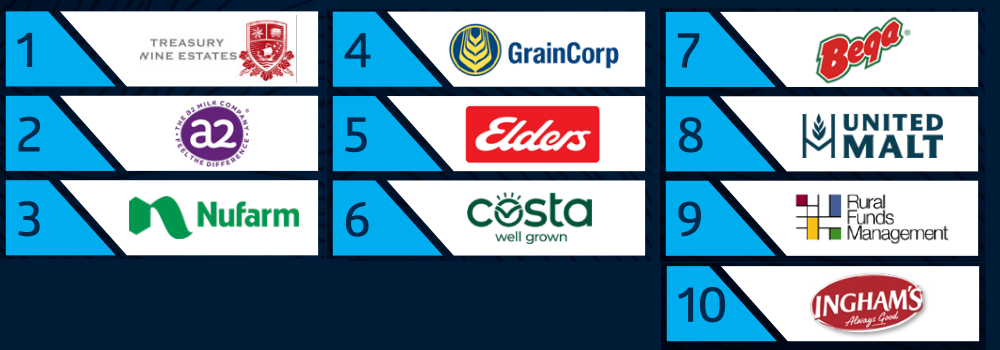
Top 10 constituents (by market cap).
ASX head of strategic delivery, capital markets, Ken Chapman said: “The profile of the agribusiness sector is hampered by the absence of an index benchmark akin to mining, energy, banking, property, healthcare or technology.
“The combination of accelerating climate risks, booming consumer demand, increasing complexity in geopolitical relations and supply chains, and exponential advances in technology is driving demand for capital in all stages in the value chain.
“By raising the profile of the sector, the AgBiz Index will increase investor understanding and interest, and be a critical ingredient in priming the market for the next phase of agricultural innovation.”

The XAG top 20 constituents now and their ranking since 2015 (source: asx.com.au).
The S&P/ASX Agribusiness Index selects companies from the largest 1,000 ASX-listed securities and will look beyond the Global Industry Classification Standard (GICS®) agricultural products sub-industry to include a total of 11 sub-industries such as brewers, packaged foods and meats, paper products, fertilisers and agricultural chemicals, distillers and vintners.
The index then uses a list of keywords such as beverage, dairy and farm to identify eligible companies.
Eligibility for the index includes minimum float-adjusted market cap, daily traded value and liquidity thresholds.
The index does not have a set number of constituents; its constituents and their respective weights can change at each semi-annual rebalance.
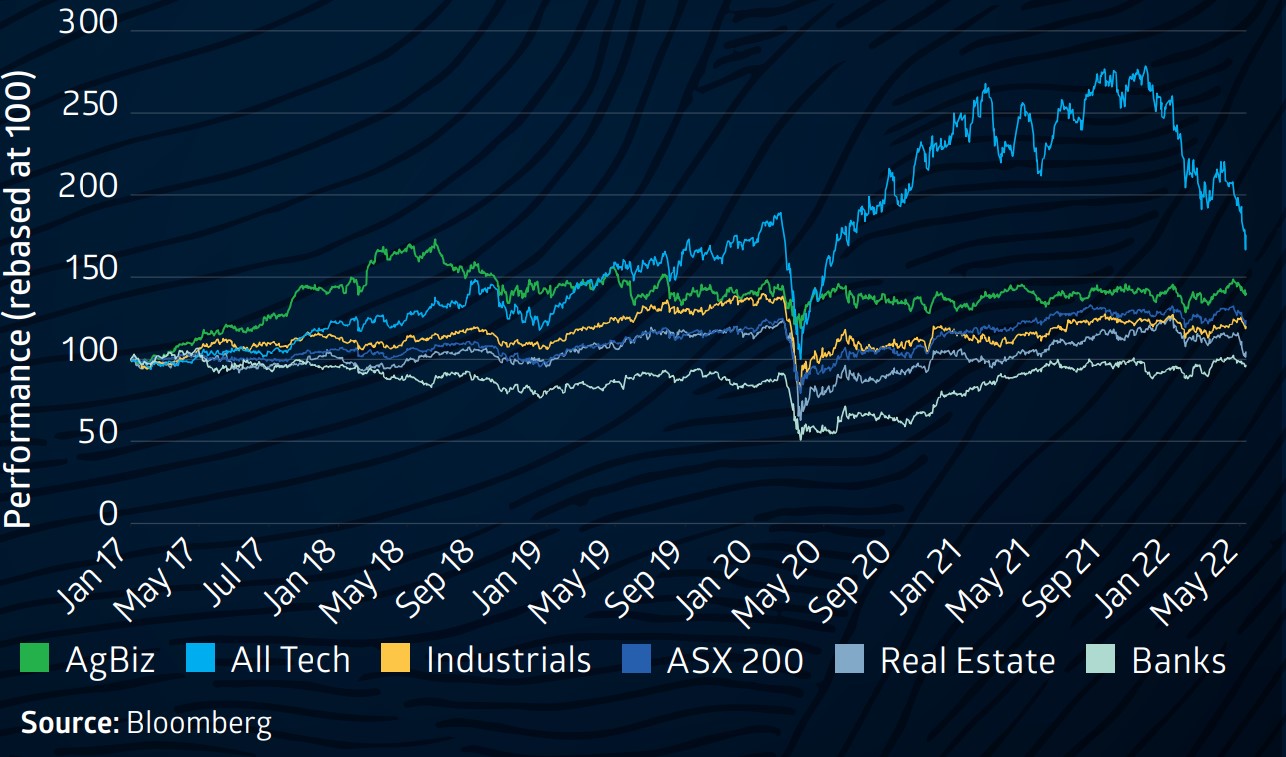
Relative performance of ASX indices.
Chapman added: “ASX facilitates access to the fifth largest pool of pension funds globally and has a long history as an efficient capital raising venue.
“By creating the AgBiz Index, ASX is supporting agribusinesses to grow and meet the Delivering Ag2030 goal of becoming a $100 billion industry by 2030.
“For many investors, the recent market volatility has highlighted the benefits of a diversified investment portfolio and of quality counter-cyclical stocks, such as those in the agribusiness sector.”
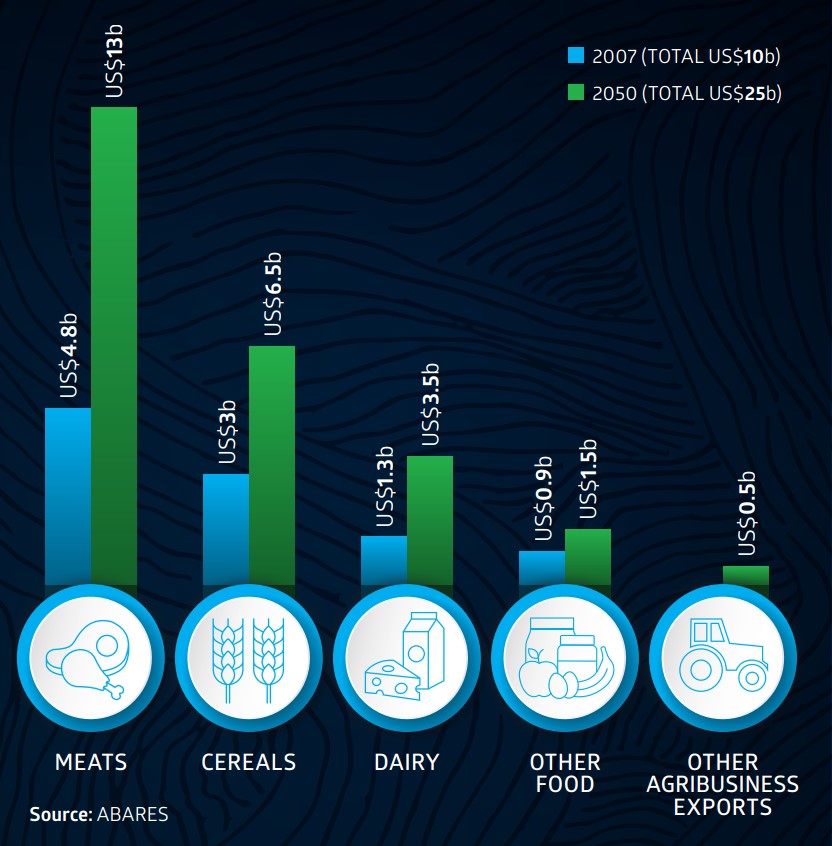
Projected growth in Australian agribusiness exports.
S&P Dow Jones Indices head of ESG and innovation Reid Steadman said: “We are honoured to collaborate with ASX and jointly bring this timely S&P/ASX Agribusiness Index to life, which aligns with the goal of the Australian Government to expand the agribusiness industry.
“This innovative index reflects the market’s heightened awareness of the need for sustainable agriculture.
“It will also serve as a valuable tool for investors seeking to gain exposure to this vital driver of Australia’s economy.”