
Forte Minerals Corp is all ready to drill its highly prospective copper and gold properties in Peru. They just don’t know which one yet.
The decision depends on how quickly they can get the necessary permits from the Peruvian government. Over the last two years, Peru has cycled through three different presidents. Even in the best of times, Peru has a complex permitting process: it can take up to two years to receive the proper permitting to drill on 40 platforms in Peru compared to just three months in Chile and a couple of weeks in Canada.
What makes a junior company like Forte Minerals want to stick it out is, of course, the resource potential. For Forte’s CEO Patrick Elliott, the chance to make a discovery in a nation full of the kind of metal wealth that Peru boasts outweighs the political turmoil.
READ: Forte Minerals unveils its exploration plans for Pucarini gold project in Puno, southern Peru
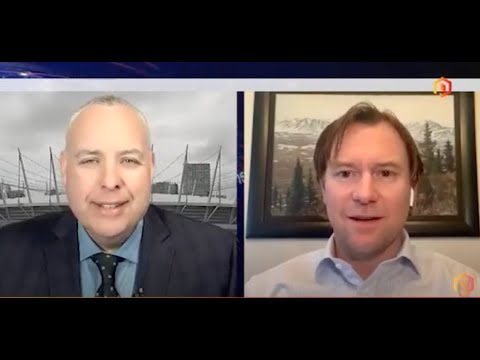
“Peru is really underexplored. There are tremendous deposits, not just copper, and a lot remains to be discovered mainly due to lack of modern day exploration in these extensive mineral belts.” Elliott told Proactive.
Peru is considered one of the top ten richest mineral countries in the world. One of the world’s biggest producers of base and precious metals, it is second-largest producer of copper, and it is also a major producer of gold, silver, zinc, among other minerals. The country has nearly 9% of the world’s copper reserves, 4% of its gold, 23% of its silver, and a good amount of zinc, lead and tin reserves, according to the most recent data published by the US Geological Survey.
There’s a lot of potential for Forte and its portfolio of projects in Peru, with three properties that are prospective for copper and gold discoveries. “With one porphyry already discovered, it de-risks the downside to add value through the drill bit.” Elliott said.
Elliott is echoing the sentiments of a team that has deep roots in Peru. Forte, which recently went public on the Canadian Securities Exchange, blended its assets with project generator GlobetTrotters Resource Group, which boasts a long history in the country. Forte also has a close relationship with another Peru-focused junior, Element 29, whose chairman Richard Osman sits on the board of Forte. Exploration manager Manuel Montoya has 43 years of experience in the mining and petroleum sectors of Peru, and notably discovered the Zafranal copper porphyry deposit for Teck. It’s a stacked team that is hoping for similar success with Forte’s three key projects.
Stacked portfolio
First up is the Don Gregorio porphyry copper-gold project, in the northern part of the country. Forte sees Don Gregorio in the same class as the massive Constancia and Zafranal copper operations in Peru, except Don Gregorio contains significant gold mineralization. Of the 12 holes drilled so far on the property, every single one has encountered and ended in copper and gold mineralization.
“With modern day geophysics and other exploration techniques that the joint venture has applied, it’s evident that Don Gregrerio has the potential to expand into a work class deposit.” Elliott said.
Further south in Peru lies the Pucarini project that Forte sees as a district-scale gold play. Pucarini is a high sulphidation, epithermal gold property that spans 1,000 hectares and 16,100 hectares of regional concessions that are 100% owned by Forte. The property was mapped and sampled by Teck Resources around ten years ago, and subsequently dropped without having been tested by drilling.
“This is probably the most exciting gold district play in the country.” Elliott said. “It's 17,100 hectares of undrilled, epithermal gold anomalies that are riddled throughout a historically producing gold region that flanks the Puno region of the Andes.”
And then there’s Esperanza, located in the Paleocene belt of southern Peru which is well endowed with some of the world’s most prolific copper deposits. Existing porphyry copper mines coupled with recent discoveries from exploration make this an optimal region for copper exploration, discovery, resource development, and permitting, according to Forte.
Exploration plans
Now it comes down to the drill bit. In the spring of 2022, Forte unveiled its exploration plans for Pucarini, which include a four-hole drill program once permitting is received. Following an extensive surface exploration program in 2021, Forte pinpointed four exploration targets that will require drilling as the next step.
On the other hand, Don Gregorio might see some drilling or even Esperanza. It all comes down to which project receives its drill permits first.
Forte is permitting all three properties at the same time. “Because of the legislative bottleneck, we just don’t know when and how and where, so it comes down to where the properties are located,” Elliott explained. “It’s almost like you’re permitting a small mine. So, we permit everything that we might drill in the future. Not all companies do this because you need the team and the financial resources to keep these going. We recognize that the most important thing in the exploration process if you are going to drill, is to start the process early.”
For juniors that rely on getting drills turning in order to build value, this waiting game sounds like a nightmare scenario. Forte is living it - and coming out the other side.
“We’ve already lived through the worst part of COVID-19 delays and this current political regime,” Ellliott said. “A lot of our efforts had to go dormant to buy time and let things unfold. It’s getting better and it’ll be a brighter, less toxic political atmosphere as we move forward.”
Regional elections are coming up in the fall, and Forte is committed to amplifying and funding pro-resource candidates who see the potential for economic prosperity and development.
Potential for Peru's mining sector
On a national level, Peru’s current mining minister has promised a more streamlined permitting process to attract more investment to the country. Jaime Gálvez, Peru’s Minister of Energy and Mines said last year that the government’s priority “continues to foster a sustainable and profitable mining sector in our country that benefits investors but also all our citizens.”
For companies like Forte Minerals - and for all of the other companies operating in the country - it is imperative that the government makes good on that promise. Today the mining sector accounts for nearly 10% of Peru's GDP, while mineral export revenues reached US$27.2 billion in 2021, representing 60% of the country's total exports.
Forte CEO Patrick Elliott and his team are bullish on Peru’s prospects. After all, a healthy mining sector is hugely important to the country’s fortunes.
“We’ve seen an industry that’s basically picked up the nation since the early 2000s, carried the GDP and the wealth of the nation to a level where it’s evident that the industry is important for the economic growth of the country,” Elliott said. “That’s really what’s important.”
Contact Angela at angela@proactiveinvestors.com
Follow her on Twitter @AHarmantas