First Graphene Ltd (ASX:FGR, OTCQB:FGPHF) is out to revolutionise some of the world’s key industries with the material that gave the company its name.
In this article:
- Introducing: the wonder material
- Enter: First Graphene
- What are the financials like?
- Graphene applications
The ASX-lister brands itself as the world’s leading graphene company, and it’s aiming to make the cement and concrete industry — among others — cleaner and greener with its technology offering.
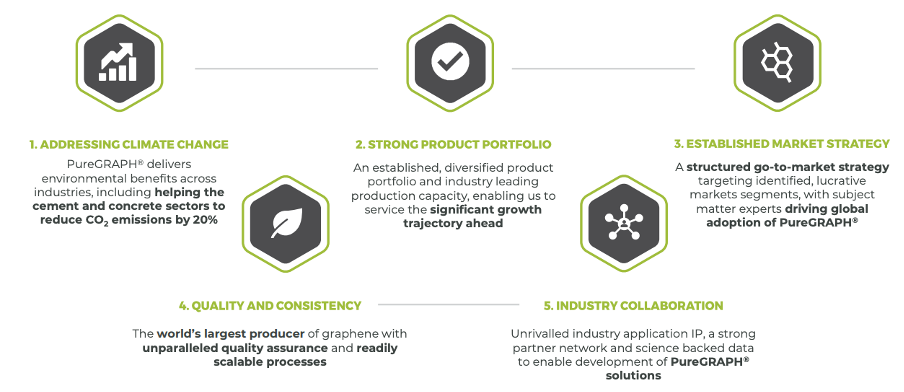
First Graphene outlines its investment highlights.
Introducing: the wonder material
Graphene is a dynamic material that holds promise across a number of applications.
From cement and concrete to composites and plastics, inks and coatings to rubbers, elastomers and foam — graphene is even making a name in the energy storage sector.
So what makes graphene so useful? It comes down to the wonder material’s unique properties.
Although it’s one of the thinnest materials in the world — measuring in at just one carbon atom thick — graphene is incredibly strong.
Scientists estimate it’s around 200 times stronger than steel, even though it weighs just 0.77 milligrams per square metre.
Among other things, graphene is flexible, stretch-friendly, conducts heat and electricity and has what many would consider “interesting” light absorption abilities.
Enter: First Graphene
First Graphene is a materials technology company that specialises in commercial applications for graphitic technologies.
The company operates out of a manufacturing facility in Henderson, Western Australia, where it boasts a 100-tonnes-per-year graphene production capacity.
First Graphene is known for its PureGRAPH® graphene products — high performing additives that can be used across a range of commercial and industrial applications.
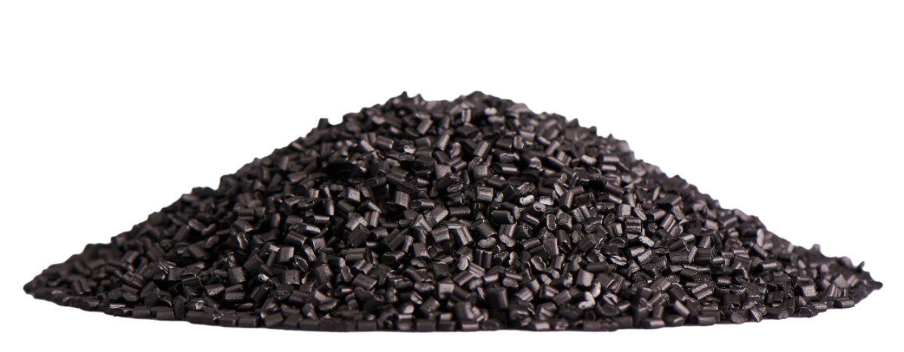
FGR is also a tier-one partner at the Graphene Engineering and Innovation Centre (GEIC), and it enjoys a major research and development capability in Manchester, UK.
The ASX-lister has amassed a client base, market channels and distribution partners that spans the Americas, Europe, Asia Pacific and South Africa.

What are the financials like?
As of last month, FGR had A$7.5 million in the bank to advance its graphene operations.
This financial year is also shaping up as the company’s most productive: it’s already surpassed FY21’s sales figure within the first three quarters.
There’s roughly A$200,000 in binding purchase orders in the pipeline for FY22’s fourth quarter, with additional orders expected to mature before the financial year’s end.
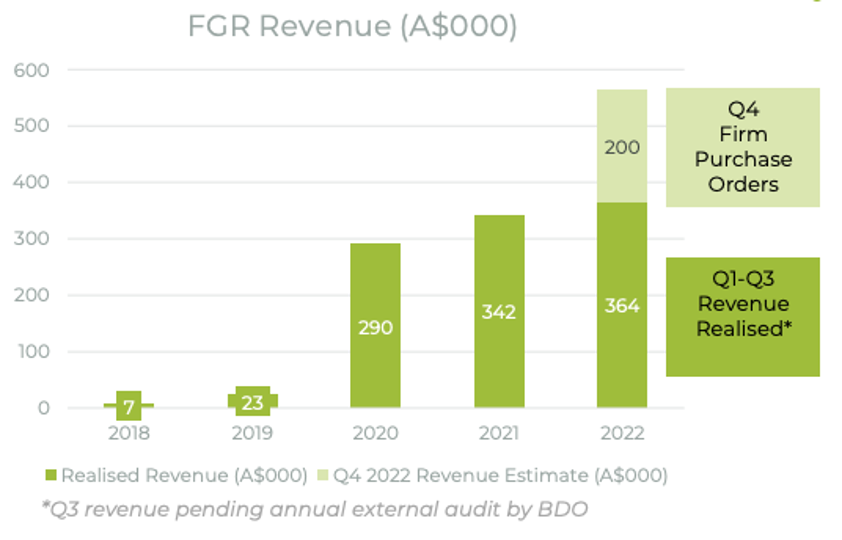
“The last quarter of 2022 is shaping up to be another strong quarter with significant orders within the composites and plastics, cement and concrete, and coatings and inks market segments,” the company stated today.
So just what is FGR out to accomplish in each of these segments?
Graphene applications
Cement and concrete
In 2020, 14 billion cubic metres of concrete was produced globally, along with 4.2 billion tonnes of cement.
However, these foundational materials are far from green: globally, cement and concrete contribute 8% of the world’s CO2 emissions.
It’s something the Global Cement and Concrete Association (GCCA) is eager to change. On behalf of 40 leading cement and concrete manufacturers, the GCCA has committed to cutting carbon emissions by 25% by 2030.
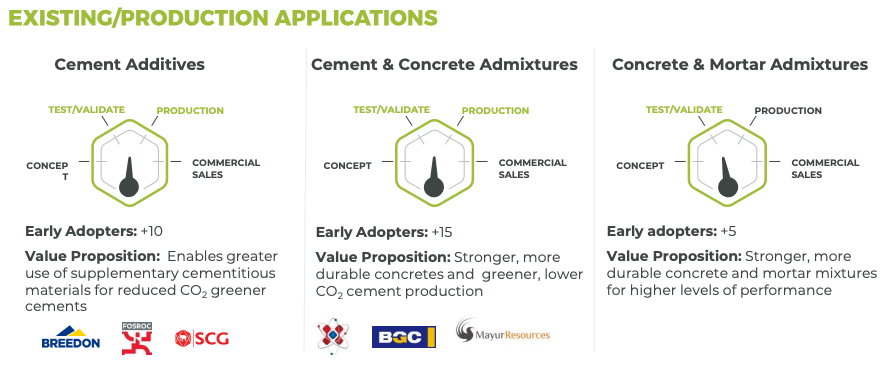
This is where graphene comes in: when it comes to cement, graphene additives can significantly improve strength and grinding efficiency, leading to far lower CO2 emissions.
In concrete, graphene bolsters strength and durability, opening the material up to applications in the heavy industry, marine and wastewater infrastructure sectors.
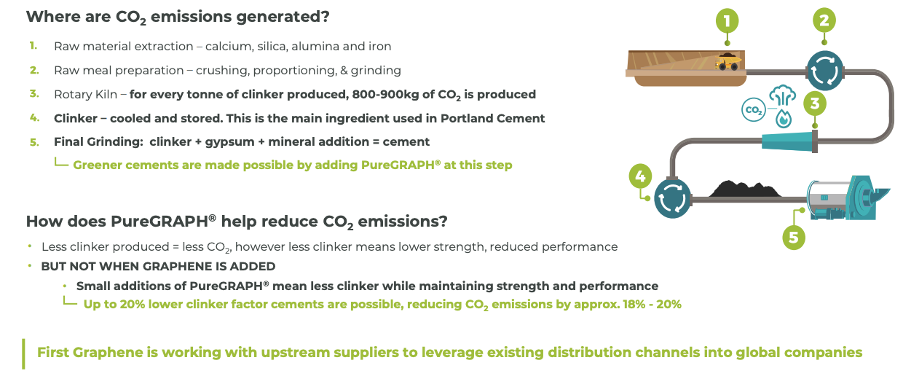
FGR outlines how PureGRAPH® can reduce carbon emissions in the cement and concrete industries.
360 Research forecasts the cement and concrete market will reach US$774 billion in value by 2027.
Of that, there’s a 420,000-tonne cement and concrete addressable market for graphene players.
FGR’s current client opportunity base accounts for 3% (or around 12,600 tonnes) of that market. It’s projected to reach 10% (42,000 tonnes) in the first half of FY23.
Composites and plastics
Beyond the concrete and cement market, graphene also has applications in the composites and plastics industry.
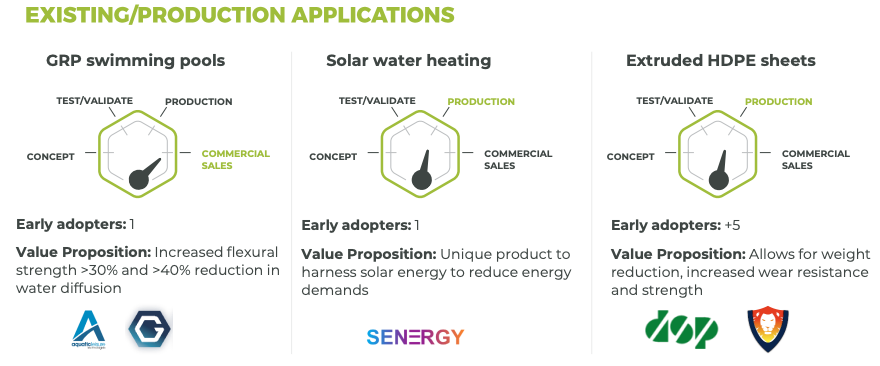
Graphene additives can increase performance and reduce weight, reduce carbon emissions by providing products with a longer lifespan and create conductive materials that can be used in renewable and smart technologies.
Inks and coatings
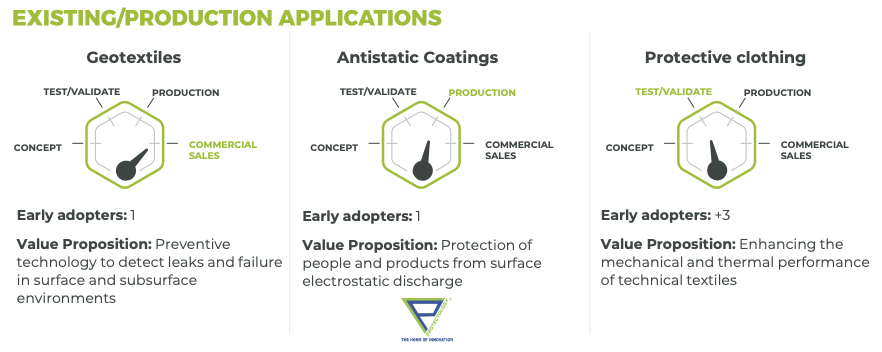
Graphene additives can improve on the sustainability and longevity of coating and ink products across sectors that are facing environmental, energy management, safety and technical challenges.
Graphene can enhance their durability, add mechanical strength and help develop smart coatings that are electrically and thermally conductive.
The inks and coatings market has a combined market value of roughly US$15 billion, and there’s an addressable market of around 100,000 tonnes per annum.
Rubbers, elastomers and foams
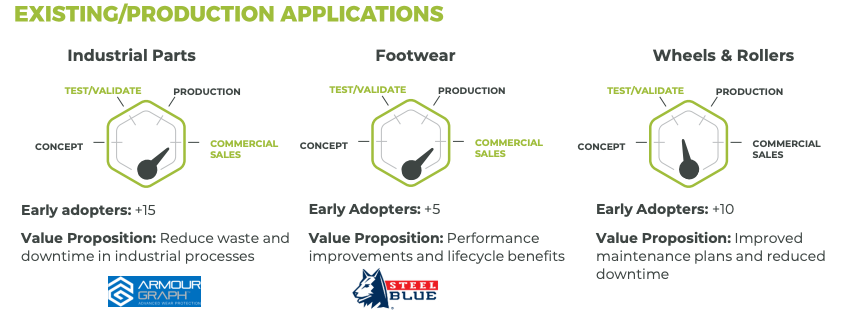
When used in the rubbers space, graphene serves as an alternative refined carbon source to carbon black, thereby enhancing a wide range of industry targets in sustainability and smart solutions.
Across elastomers, graphene can provide wear resistance and life extension in aggressive heavy industry environments. It can also fill the gap in the polymer space to enhance gas and vapour controls for energy and material storage, as well as transportation solutions.
And in the foams business, graphene can make lighter, stronger and more wear-resistant products that can also boast fire resistance.
Altogether, these market segments are valued at roughly US$250 billion, with an established addressable market weighing in at 200,000 tonnes per annum.
Energy storage
There’s a new technology space where graphene is taking off: the energy storage market.
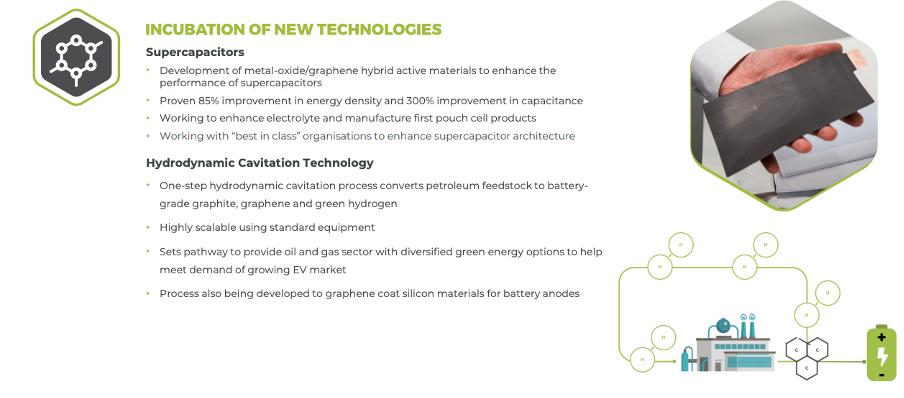
Amid the electric vehicle (EV) boom and demand for cleaner, greener energy sources, First Graphene is eager to explore what impact its offering could have on this market.