Altech Chemicals Ltd (ASX:ATC) was higher after releasing a pre-feasibility study (PFS) described as "outstanding" for a 10,000 tonnes per annum silicon/graphite alumina coating plant in Saxony, Germany.
The proposed hub would produce high capacity silicon/graphite battery anode materials, known as Silumina Anodes™, under an exclusive licence from Altech.
Altech plans to split ownership 75-25 with its Frankfurt listing vehicle and supply the burgeoning European electric vehicle market.
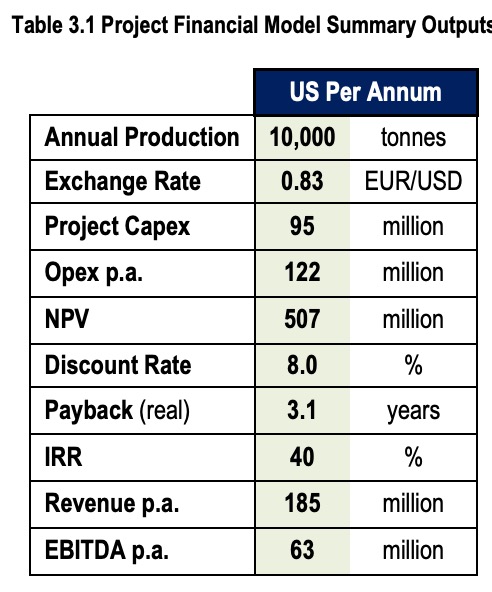
The battery materials hub is expected to cost just US$95 million to get off the ground, and the land in Germany has already been purchased.
Altech’s project will be green-accredited and use renewable energy as it supplies high-quality graphite and silicon to the domestic market. Pilot plant engineering to support product qualification is already underway.
Investors responded strongly to the PFS, sending ATC shares as much as 38.16% higher to A$0.105 intraday with around 74 million changing hands during the day.
DFS already on the way
Commenting on the PFS, Altech managing director Iggy Tan said: “While Altech’s top priority continues to be financing its Johor HPA project, the Silumina Anodes™ project represents an exciting downstream opportunity to utilise its HPA coating technology in silicon/graphite battery materials.
“We are pleased and excited about the results of the 10,000-tonne-per-annum Silumina Anodes™ PFS.
“Due to the attractive economics of the study, a decision has been made by the Altech Industries Germany’s (AIG) board to immediately progress to a definitive feasibility study (DFS) for the project.
“AIG has already purchased land in Germany suitable for the project, and the plan is for the AIG team in Saxony to immediately commence DFS work.
“We believe that the production of Silumina Anodes™ materials could be a game-changing technology for the lithium-ion battery industry”.
Project financials
As per the PFS, Altech estimates a net present value of US$507 million at an 8% discount rate. It expects to generate US$63 million a year from operations.
The internal rate of return is estimated at 40%, while investment capital is forecast to be paid back in just over 3 years.
Total annual revenue at full production (10,000 tonnes per annum) is estimated US$185 million a year.
Why silicon?
Tesla, a global leader in the electric vehicle and lithium-ion battery industry, has declared that the required step-change to increase lithium-ion battery energy density and reduce costs is to introduce silicon in battery anodes.
That’s because silicon has roughly 10 times the energy retention capacity compared to graphite, and silicon metal has been identified as the most promising anode material for the next generation of lithium-ion batteries.
However, until now, silicon was unable to be used in commercial lithium-ion batteries due to two critical drawbacks.
First, silicon particles expand by up to 300% in volume during battery charge, causing particle swelling, fracturing and ultimately battery failure.
The second challenge is that silicon deactivates a high percentage of the lithium ions in a battery.
Lithium ions are rendered inactive by the silicon, immediately reducing battery performance and life. As a result, the industry has been in a race to crack the silicon barrier.
Through in-house research and development, Altech announced late last year it had “cracked the silicon code” and successfully achieved 30% higher energy retention in a lithium-ion battery, with improved cyclability and battery life.
Altech says higher density batteries result in smaller, lighter batteries and substantially less greenhouse gases, and are destined for the EV market.
To achieve its breakthrough, Altech combined silicon particles that had been treated with its patented alumina coating technology, with alumina coated battery-grade graphite, producing the Silumina Anodes™ product.
So far, Altech reports the major drawbacks above have been substantially overcome with its product.
Why Europe?
AIG’s strategy is to solely supply the European battery and electric vehicle sector.
According to the European Union Commission, the European Union could produce enough batteries by 2025 to power its fast-growing fleet of electric vehicles without relying on imported cells.
By 2025, the EU will be able to produce enough battery cells to meet the needs of the European automotive industry.
As part of its plan to become climate neutral by 2050, the EU wants to boost local production of the building blocks for green industries and batteries to power clean vehicles.
Today, China hosts around 80% of the world’s lithium-ion cell production, but Europe’s capacity is set to expand rapidly.
Europe has 15 large-scale battery cell factories under construction, including Swedish company Northvolt’s plants in Sweden and Germany, Chinese battery maker CATL’s German facility and South Korean firm SK Innovation’s second plant in Hungary.
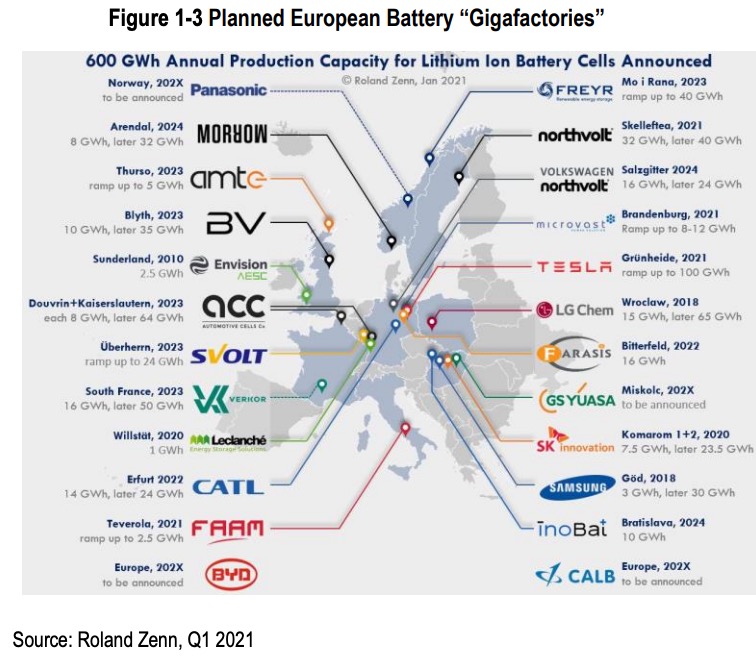
The EU Commission said that by 2025, planned European facilities would produce enough cells to power at least six million electric vehicles.
While the pandemic has seen overall car sales plummet, combined sales of battery and plug-in hybrid cars in Europe are expected to roughly double this year to one million units, according to the NGO Transport & Environment.
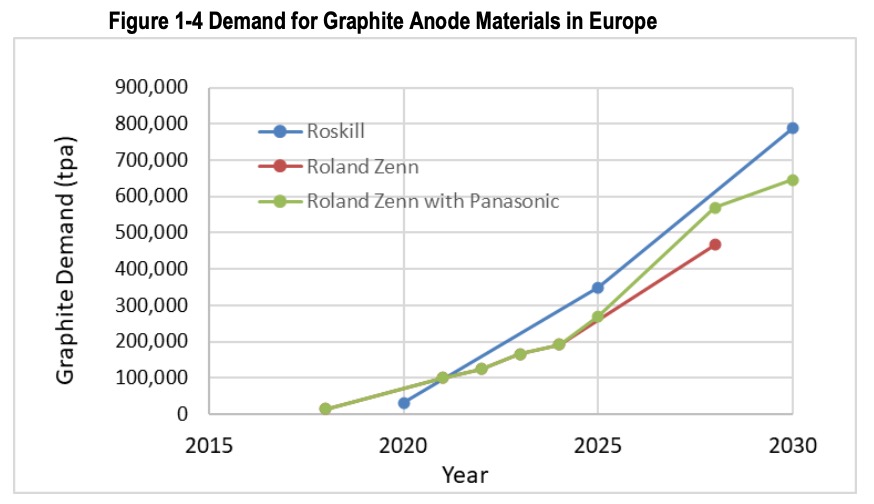
Analysts estimate the demand for graphite anode in Europe alone is to rise to around 600,000 tonnes per annum by 2030.
As a result, market pricing for high quality, carbon-coated graphite used in the manufacture of lithium-ion EV batteries is in the range of US$10,000 to US$12,000 per tonne.