
American Rare Earths Ltd (ASX:ARR) has delivered positive results from a metallurgical testing campaign at its flagship La Paz Rare Earth Project in Arizona with ore responding well to conventional processing technology.
The test-work campaign has been designed to investigate how composites prepared from diamond drill core produced during 2021 respond to currently used processing technologies.
These tests reveal that ARR will be able to make significant savings in capital and operating costs as 75% of the gangue (non-mineralised) material will be reduced prior to the flotation tests
Moving forward, in conjunction with ongoing extraction tests, the results will contribute to a Preliminary Economic Assessment (PEA), planned for the second half of 2022, aiming to demonstrate the economic viability of the large La Paz resource.
“Incredibly positive”
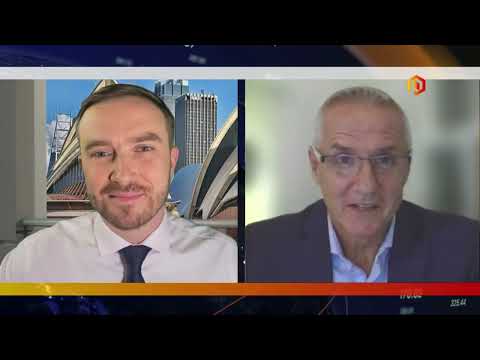
ARR managing director Chris Gibbs said: "These recent metallurgical results are incredibly positive and continue to move the La Paz Project forward.
“Metallurgy is key for all rare earth projects and we are seeing the allanite hosted minerals respond well to widely used ore processing technologies.
“We are excited to see 75% of the gangue material removed before the flotation circuit.
“This will significantly help to reduce operating and capital costs for the project.
"We appreciate the work Wood Australia has been conducting on our behalf, as they project manage the metallurgical test-work program conducted at Nagrom Laboratories in Perth, Western Australia.
Program summary
ARR’s test-work program comprises mineralogy, high-intensity magnetic separation and rare earth mineral flotation to upgrade the target rare earth mineral content before extraction tests.
La Paz's rare earth mineralisation is primarily hosted in allanite, a sorosilicate group mineral related to epidote.
As the gangue rocks hosting allanite comprise feldspars and silicates, innovative separation techniques are needed to upgrade the ore.
Significantly, sequential grinding and rougher-cleaner Wet High-Intensity Magnetic Separator (WHIMS) effectively reject 75% of silica/silicate gangue minerals, an essential step before employing flotation.
The next testing phase will focus on flotation to further increase Total Rare Earth Oxides (TREO) recoveries.
Furthermore, ARR sees further potential to cut operating and capital costs for La Paz using Watts and Fisher’s propriety leaching technology.
Forward plan
Test work conducted so far on the diamond drill core from the La Paz deposit confirms previous findings regarding mineral liberation and upgrade potential.
Planned work will build upon these results to produce a beneficiated concentrate that maximises rejection of acid or alkali consuming gangue minerals.
In conjunction with extraction test work, these results will underpin a PEA planned for the second half of 2022, which aims to demonstrate the economic viability of the large La Paz resource.
Gibbs adds: "Significant progress has been made and we look forward to the next round of test work on the flotation and leach stages.
“Under the guidance of Wood, we are also pleased to be partnering with Watts and Fisher, who have proprietary technology that could be a game-changer for this project.”