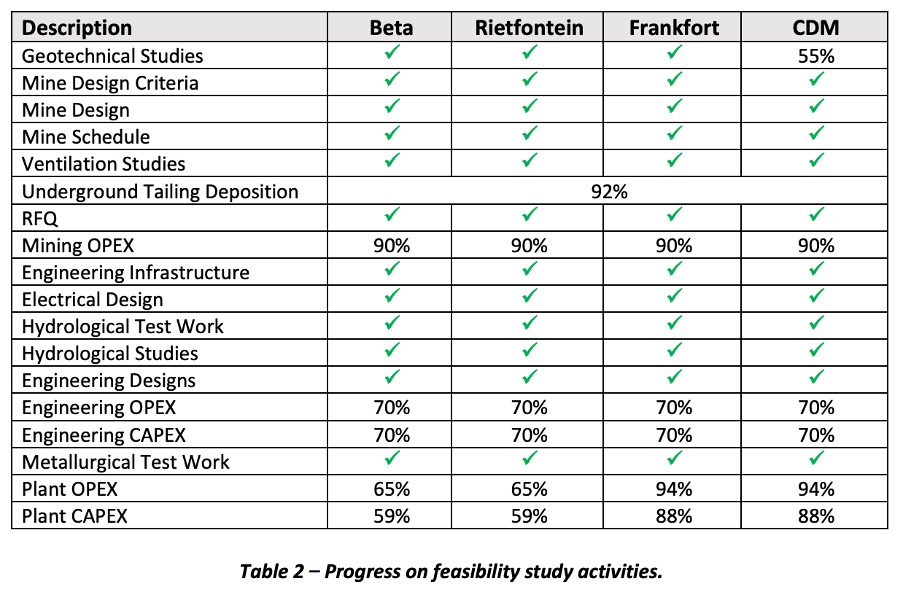
Theta Gold Mines Ltd (ASX:TGM) is putting the finishing touches on a definitive feasibility study (DFS) for its TGME Underground Project in South Africa, which considers gold mining operations across the company’s Beta, Frankfort, CDM and Rietfontein mines.
The gold stock is 85% of the way through the study after it made headway on a number of key activities, including metallurgical test-work and rock engineering modelling for the Rietfontein mine.
In the meantime, Theta’s plant design continues to take shape and the company is dotting the I’s and crossing the T’s on underground tailing work for the facility.
Theta is gearing up to release the key study this quarter, which will pave the way for mine build and project financing discussions.
“One step closer to completion”
Once online, Theta’s DFS will incorporate four mines and a shared metallurgical facility.
It brings together a suite of detailed studies and test-work programs across the four sites, designed to support discussions around TGME’s next chapter.
Describing the work to date, Theta chair Bill Guy said: “The completion of metallurgical test-work and rock engineering modelling moves the feasibility study one step closer to completion.
“With Rietfontein now included in the TGME Underground Project DFS alongside the Beta, CDM and Frankfurt mines, the board hopes to extend the life of mine to approximately 10 years.
“With the feasibility now moving into its final stages, we will continue to ramp up initiatives in order to remain on track for completion in quarter two.
“I look forward to updating shareholders as initiatives are completed and milestones hit.”
Once the DFS is complete, Theta will move into advanced discussions with a series of parties around capex funding options.
Testing underway at Rietfontein
Recently, Theta recovered 89.5% gold during simple leach testing on free milling ore from the Rietfontein mine.
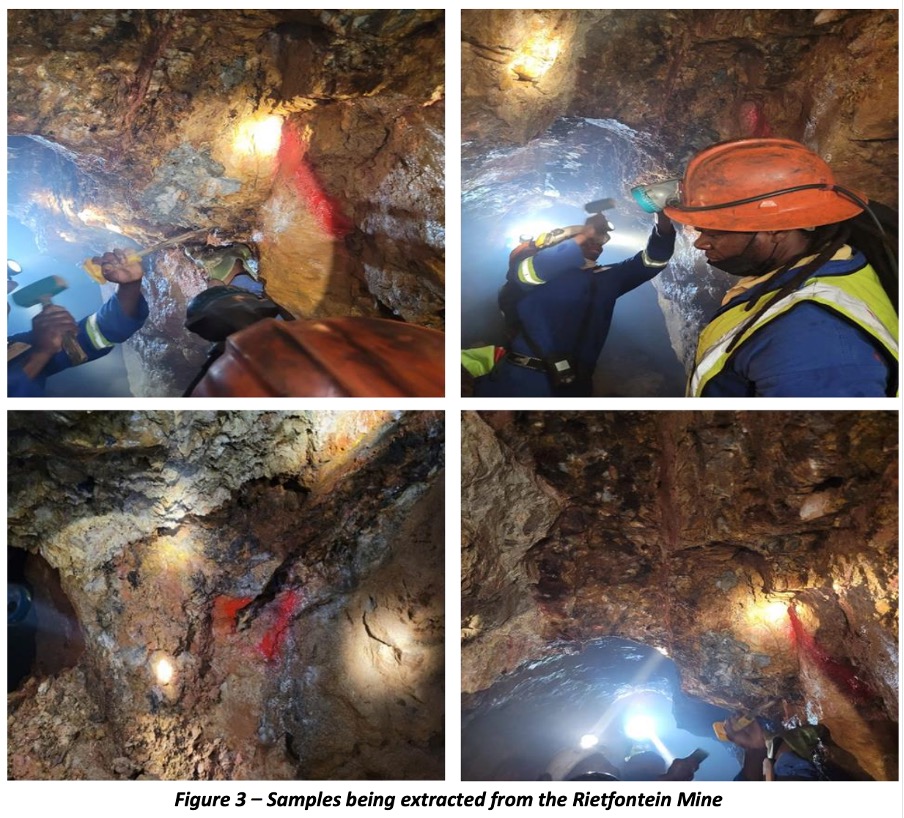
The ASX-lister took 1.5-tonne representative ore samples along the mine’s 3.2-kilometre orebody strike, with five roughly equal samples collected by channel sampling across the gold reef system.
Seeking to best represent Rietfontein’s mineralogy, field workers took samples from both high and low-grade gold areas across the mine.
From here, the bulk sample was dispatched to Ready Lead Assay Laboratory for a bottle roll leach test.
Ultimately, testing confirmed a free-milling ore with a head grade of 4.41 g/t and an overall ore recovery factor of 89.5%.
Rock engineering modelling
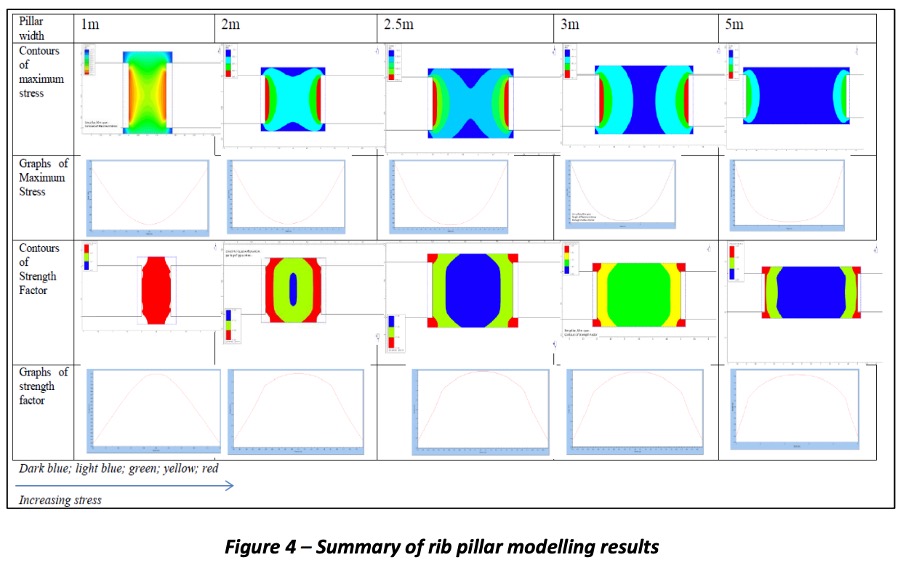
Rock engineering modelling, designed to assess the optimum rock support system at Rietfontein, was also completed on the mine’s vertical gold reef system.
Results from Rock Mechanics Laboratory revealed that a 2.5-metre rib pillar, a 5-metre crown and a sill pillar will provide adequate support.
Further testing also implied that the Rietfontein mine’s reef can be blasted out without causing excessive damage to the hanging wall and footwall.
It also implies that the correct sized pillars will intentionally crush without damaging the host rock.