
Sovereign Metals Ltd (ASX:SVM, AIM:SVML) has received promising results from an independent Life Cycle Assessment (LCA) Study analysing the global warming potential (GWP) of natural rutile to be produced at the company’s flagship Kasiya Rutile Project in Malawi, one of the world's largest natural rutile deposits.
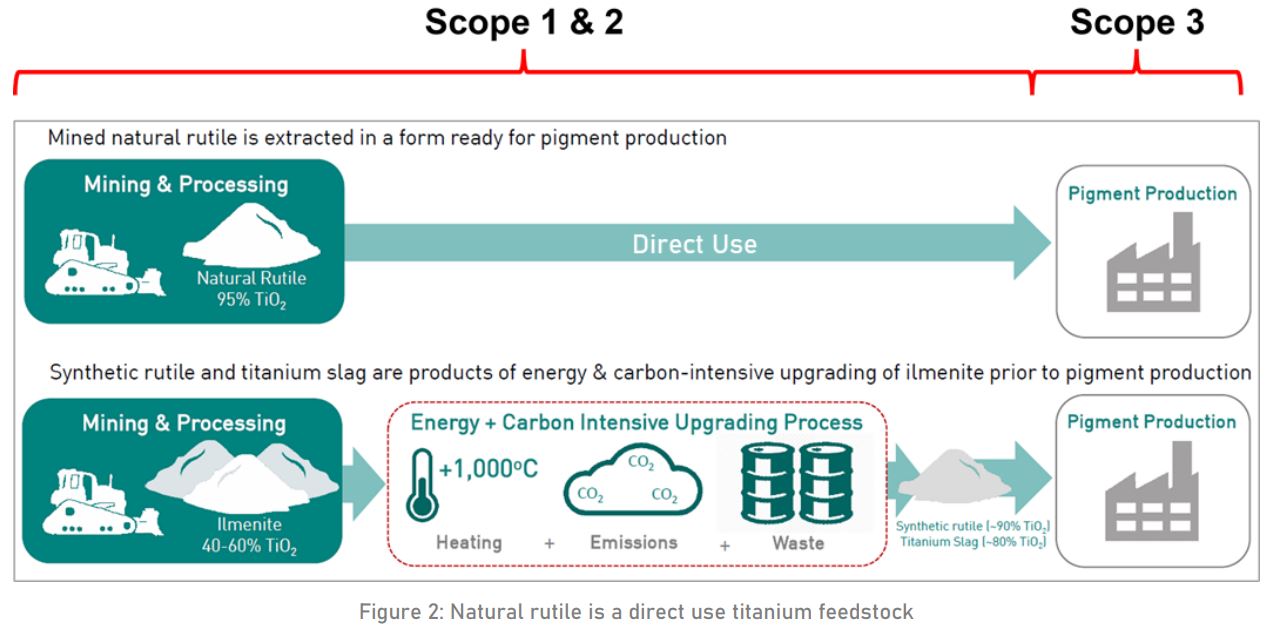
The study – undertaken by Minviro Ltd – concluded that Sovereign’s rutile product is expected to have substantially lower GWP (Scope 1,2, and 3 emissions) compared to other titanium feedstocks like synthetic rutile or titania slag.
Titanium feedstock is a key component of many industrial and consumer products, often used as a whitening pigment in paints, plastics and paper.
Using a low-impact material like SVM’s natural rutile as a direct titanium feedstock would contribute to reducing the carbon-footprint of these products and aid in the creation of low-carbon paints.

“Direct economic benefits to end users”
“We knew from the previous work done by Minviro that natural rutile has a lower carbon footprint than its upgraded substitutes produced from ilmenite,” Sovereign Metals managing director Julian Stephens said.
“The expanded study now highlights the significant reduction in greenhouse gas emissions the titanium pigment industry could achieve by utilising natural rutile produced at Kasiya.
“This has direct economic benefits to end users in jurisdictions such as the EU, where industry pays for carbon dioxide emissions via the EU’s Emissions Trading System and the proposed Carbon Border Adjustment Mechanism.”
Project designed to decarbonise industry
Sovereign Metals chair of ESG Committee Nigel Jones commented: “Since its discovery, the Kasiya Rutile Project has been designed to help decarbonise the myriad of uses of titanium pigment in industrial and consumer products.
“This LCA is another step towards providing a solution to an industry targeting material reduction in its global carbon footprint while wholly encompassing values of sustainability.”
Sovereign Metals designed the Kasiya project to meet high ESG standards from the outset.
The company intends to install a solar power system and create access to hydro-generated grid power to ensure a low carbon power supply for the project. SVM has chosen to use mostly rail over road transport for the same reasons.