
Russia's invasion of Ukraine and the international backlash against the federation has thrown energy markets into chaos, threatening serious economic consequences that rival those of the 1970s oil shocks.
In this article:
- Crude oil price surges
- Further sanctions cannot be ruled out
- Replacing Russian oil
- Gas prices hit new record high
- Pain of inflation
- Coal gets a boost
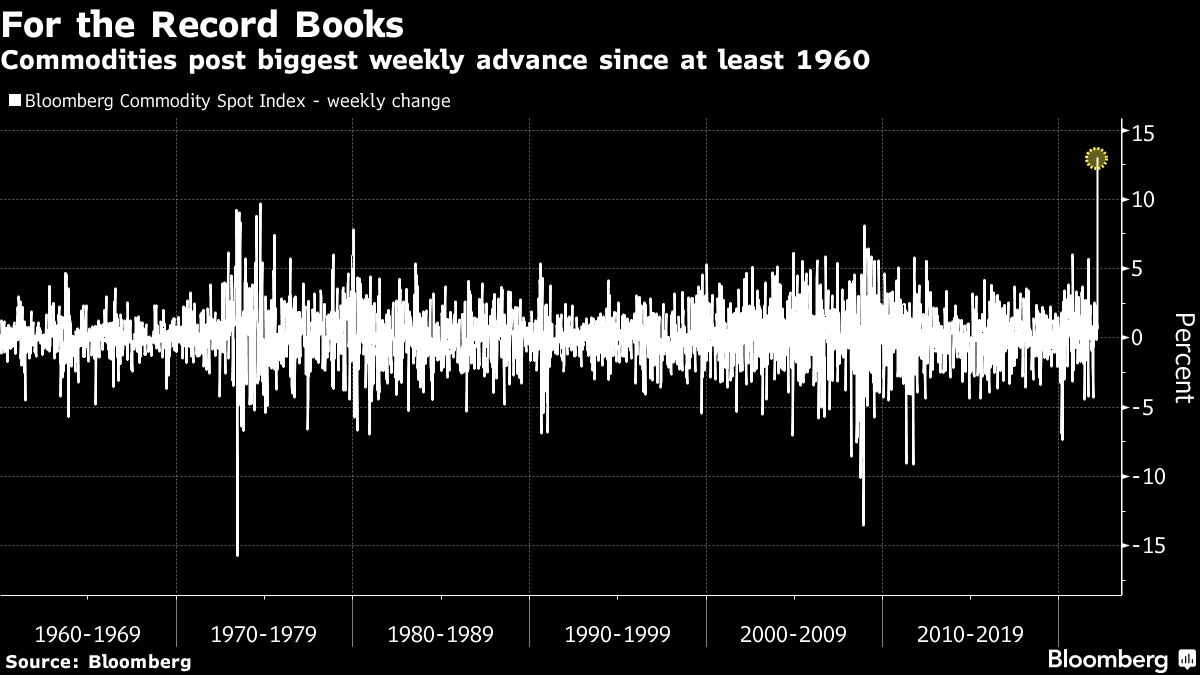
Commodity prices soared the most on record last week with the Bloomberg Commodity Spot Index, which tracks 23 futures contracts, climbing 13% in the week ended last Friday.
That’s the biggest weekly advance since 1960.
Crude oil price surges
Crude oil futures have soared more than 20% since the US and allies sanctioned Russia following its February 24 invasion of Ukraine.
Russian oil supply has been disrupted, with Russian sellers finding it very difficult to make deals even as they offer massive discounts to the benchmark Brent crude price.
On Saturday, March 5, Brent futures rose US$7.65, or 6.9%, to settle at US$118.11 a barrel, while U.S. West Texas Intermediate (WTI) crude rose US$8.01, or 7.4%, to settle at US$115.68.
According to CNBC, this was the highest close for Brent since February 2013 and for WTI since September 2008.
Further sanctions cannot be ruled out
The US and the European Union have been reluctant to slap sanctions on Russia's oil and gas exports as they are concerned about the consequences on Europe's energy supply and surging oil and gasoline prices.
However, potential sanctions on Russian energy exports cannot be ruled out.
Analysts say that if the West bans Russian oil, international crude prices could skyrocket to more than US$150 per barrel.
But even in the event of no sanctions on Russian oil, prices are set to remain elevated and rise further because buyers and refiners are not buying Russian crude and are looking for alternative supplies.
Although there is a possibility of an Iranian nuclear deal that would allow Iran to legitimately return to exporting its oil, analysts note that Iranian oil cannot replace the loss of Russian oil.
Sanctions on buying oil from Russia, which accounts for about 8% of the global oil supply, would have a much bigger effect on the market compared to historical sanctions on Iran and Venezuela.
Replacing Russian oil
Refiners have already started to replace Russian oil.
Some of the biggest U.S. buyers of Russian crude oil have started suspending their purchases, including the third-biggest U.S. buyer of Russian oil, Monroe Energy.
Neste of Finland said last week that: "Due to the current situation and the uncertainty in the market, Neste has mostly replaced Russian crude oil with other crudes, such as North Sea oil."
Portugal's energy group Galp said that it was suspending all new purchases of petroleum products either sourced in Russia or from Russian companies.
The company said: "Our decision is simple — Galp will not contribute to finance war."
Gas prices hit new record high
Surging prices for natural gas in Europe is quickly becoming a worrisome signal for the region’s economy.
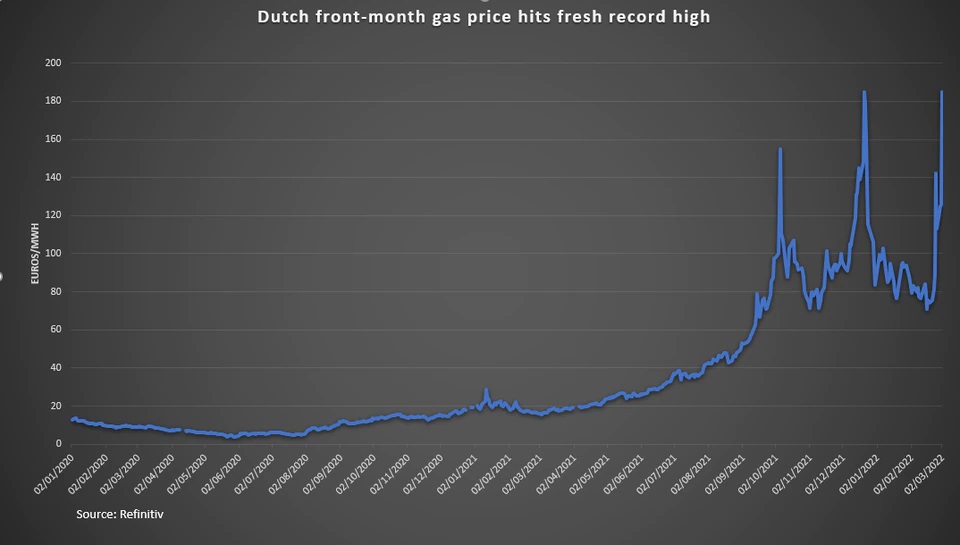
European gas prices surged last week, with a benchmark Dutch gas price hitting a record high as countries said EU sanctions against Russia could affect gas shipments.
The benchmark Dutch front-month gas contract at the TTF hub hit a record intra-day high of 185 euros a tonne last week, beating the previous high of 184.95 seen last December.
The higher gas prices come as Russia invades Ukraine and pressures mount on governments around the world to cease all energy trading with Moscow.
Europe may have dodged the bullet of gas shortages this winter, but it could see shortages next winter.
The European Union gets around 40% of its gas from Russia, with the dependence growing in recent years.
Replacing Russian gas is easier said than done, as alternate LNG cargoes will come with a much higher price tag than piped Russian gas, threatening a European economy squeezed by soaring energy prices.
According to a WSJ report, filling up enough gas in European storage ahead of next winter would cost at least 70 billion euros at current prices, compared with 12 billion euros in previous years.
Pain of inflation
In the coming days and weeks, Europe will have to increase its gas stockpiles—but it must do so at near-record prices.
If Europe ceases energy trading with Russia, its job will be significantly harder.
Not only will it make it more difficult, but it would raise gas prices even more, wreaking havoc on households and businesses who have already been struggling with inflation.
Coal gets a boost
Although coal isn’t part of Western sanctions on Russia, buyers in Europe and Asia are scrambling to address their dependence on Russian coal.
A surge in a benchmark thermal coal price to a record high of US$446 a tonne last week reflects a reordering of priorities among governments that have been trying to phase out fossil fuels.
According to WSJ, Russia accounts for roughly 15% of thermal coal traded by sea and around 16% of metallurgical coal, which is used to make steel and has also experienced a rally in prices to a record high.
Analysts note that buyers are concerned that financial restrictions on banks might prevent trades, or that coal could be included in a broader set of sanctions if the crisis worsens.
Major coal producers in Australia, Whitehaven Coal and New Hope Group, said they have been approached to supply countries, including Poland, which have traditionally relied on Russian coal.
Australia’s resources minister Keith Pitt recently said coal was leading a surge in Australia’s export earnings from natural resources.