
Meeka Gold Ltd (ASX:MEK) has released a partial suite of rare earth oxide (REO) results compiled from historical drill records for the Cascade Rare Earth Project within the Albany-Fraser Mobile Belt of WA, outlining grades up to 2,563 parts per million (ppm) REO.
The historical assay results are related to the 4,426 metres of reconnaissance drilling completed between 2012 and 2015 across the 100-kilometre-long southern corridor of the Cascade Rare Earth Project, with highlight results including:
- 2,563ppm REO at 37 metres to 38 metres downhole;
- 1,275ppm at 31 metres to 32 metres downhole; and
- 1,260ppm at 23 metres to 24 metres downhole.
Notably, analysis of reported results from other explorers in the province shows that the three elements used to calculate the REO grade for Cascade make up between 50-60% of the total rare earth oxide (TREO) grade.
“Province scale exploration”
Commenting on the historical drilling results for the Cascade REE Project, Meeka CEO Tim Davidson said: “As we systematically review all available data for the Cascade REE Project our view that we are in the early stages of identifying a province scale exploration opportunity is strengthening.
“The results released in this announcement relate to end of hole samples where only three of the 15 rare earth elements were assayed, however, the high-grade nature of the results and thickness of the preserved regolith above these samples suggest there is a great potential for large scale IAC-REE style deposits.
“Reviewing the existing REE assay data from explorers in the province also highlights the fact that lanthanum is a good indicator of total REE enrichment.
“This is an indication of the potential scale of the Cascade REE Project as drilling demonstrates highly elevated levels of lanthanum along the full 100-kilometre southern corridor of the project.
“I look forward to providing more results from historical work completed within the project tenure as we finalise the review and verification process in the coming weeks.”
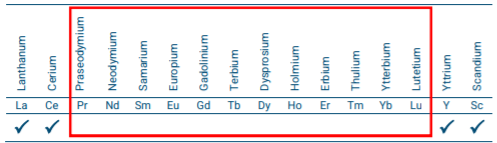
These REE not previously assayed for in historical drilling.
REE results
Meeka has outlined results from existing explorers in the province also show higher REE enrichment in the saprolite above the end of hole sample location showing an idealised schematic of the regolith profile and zone of maximum REE enrichment.
The final metre of each drill hole was assayed for a partial suite of rare earth elements (three of the 15 REE) and scandium.
Assays results show grades up to 2,563ppm REO (La2O3 + CeO2 + Y2O3) only accounting for three of the 15 rare earth elements.
Moreover, 65 of the 147 holes (44%) returned >200ppm REO, with other strong results including:
- 868ppm REO at 15 metres to 16 metres downhole;
- 861ppm at 32 metres to 33 metres downhole;
- 805ppm at 56 metres to 57 metres downhole;
- 763ppm at 13 metres to 14 metres downhole;
- 729ppm at 13 metres to 14 metres downhole;
- 649ppm at 71 metres to 72 metres downhole;
- 574ppm at 19 metres to 20 metres downhole;
- 546ppm at 15 metres to 16 metres downhole; and
- 543ppm at 32 metres to 33 metres downhole.
Furthermore, Meeka believes the samples reported were collected below the zone that is expected to have the highest-grade TREO.