C29 Metals Ltd (ASX:C29) has observed native copper and copper-lead-zinc sulphide mineralisation in four diamond drill holes completed to date at the Reedy Creek Mine prospect in New South Wales.
The Reedy Creek Project comprises a granted exploration license (EL8541) and covers an area of ~42 square kilometres, located 20 kilometres west of the township of Cudal in the Eastern Lachlan Fold Belt (ELFB) of Central New South Wales.
C29 believes the visual observations of sulphide mineralisation and presence of disseminated native copper, highlight the potential for discovering new areas of possible economic copper-lead-zinc mineralisation adjacent to the structural corridor between the historical Reedy Creek Mine and Endeavour 1 mine zone.
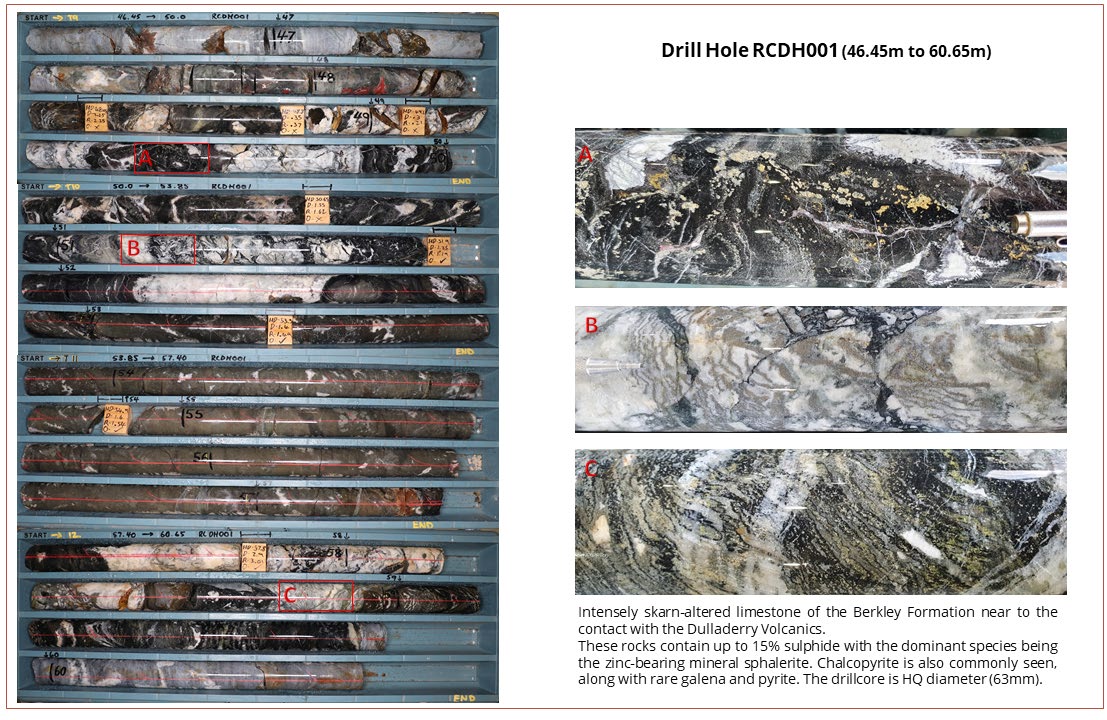
Reedy Creek Drill Hole RCDH001 – Core from 46.45 metres to 60.65 metres downhole showing skarn alteration and sulphide mineralisation.
Diamond drilling commenced at Reedy Creek in early December, with four drill holes for 610 metres completed to date.
The drilling program being undertaken is planned to confirm the significant historical high-grade zones of copper, lead, zinc, manganese, silver and gold and to test the extensions of the mineralisation between the two historical mines.
A fifth drill hole is currently in progress, and the company intends to drill at least three to four more holes during this program.
Samples from the first three holes have been submitted to ALS Laboratories in Orange. No assay results have been received yet.
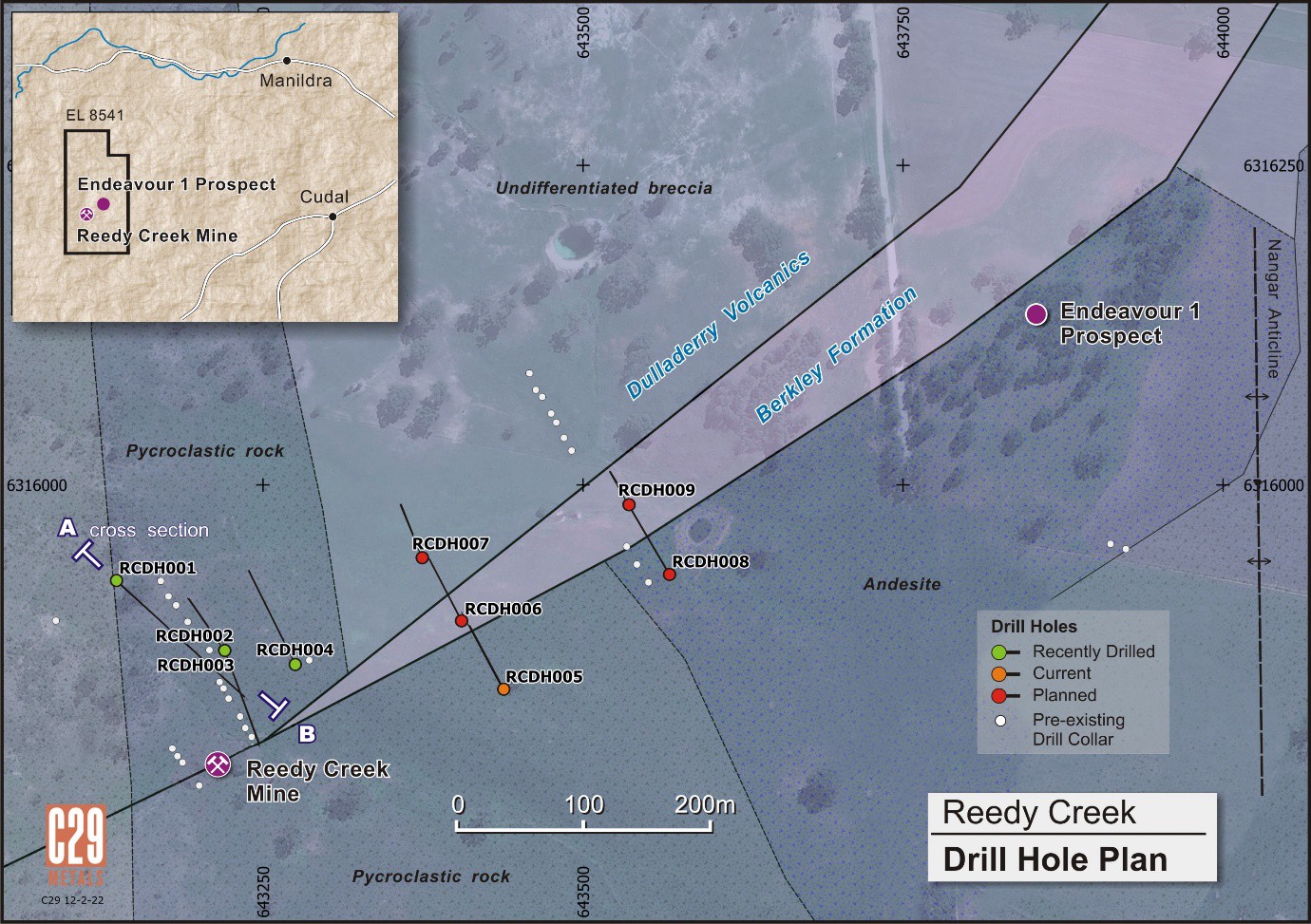
Location of the drill holes across the Reedy Creek Mine and Endeavour 1 prospect showing NSWGS regional geology
C29 executive director Mark Major said: “We couldn’t ask for a better start to our drilling campaign at Reedy Creek after intersecting various base metals (Cu-Zn-Pb) sulphides, native copper as well as copper oxide mineralisation in our first four drill holes.
“We are learning about the relationship of the various mineralisation and relationship with the geology, including skarn and epithermal alteration types.
“We believe what we are seeing here is the start of a larger system, which we will systematically test.”