
RemSense Technologies Ltd (ASX:REM) is a technology solutions and visualisation company, aiming to deliver productivity improvements, safer workplaces and increased operational efficiency.
Listing in November last year, the company has a three-pronged approach involving engineering and innovation, data capture and insights, and the Virtual Plant digital twin technology.
Proactive spoke to RemSense CEO and managing director Steve Brown about the company’s goals, advantages, and collaborations.
In this article:
- The Digital Landscape
- The RemSense Virtual Plant
- Into the Industrial Metaverse
- Putting the easy in ESG
- Partnerships and Collaborations
The Digital Landscape
Since the dot com boom in the 1990s, tech and digitalisation have become endemic in our lives. Every facet of society from classrooms and factory floors, court rooms to roadways have been deeply embedded with a variety of technologies, necessary to engage with in any given moment.
The benefits of this digitisation became even more obvious under COVID-19, when everything from doctors’ appointments to classrooms were forced to operate online, and QR codes and zoom meetings became part of everyday life.
The business sector has embraced this accelerated shift toward digitisation almost across the board, especially manufacturing, mining, and industrial players.
These companies commonly operate with decentralised assets, sometimes spread across multiple state or country borders.
The ability to monitor, inspect and assess these assets has in the past necessitated long-distance travel, reams of data, and specialists to interpret and present said data.
The digital twin industry seeks to eliminate the need for unnecessary travel, while interpreting and presenting data in a visual, actionable format with a remotely accessible digital copy of assets.
In 2020, the global digital twin market was valued at US$3.1 billion and is projected to reach US$48.2 billion by 2026 at a spectacular compounding annual growth rate (CAGR) of 58%, well over double the lithium-ion battery market’s current growth.
Digital twin technology has existed commercially since 2002, but was originally developed and used by NASA in the 1960s to link modules in space with physical duplicates on the ground.
Similarly, industrial companies are seeking ways to access their mines, plants, and facilities remotely to support maintenance, safety, ESG, and management efforts.
Enter, RemSense’s Virtual Plant.
The RemSense Virtual Plant
Originating in 2018 as a technology development project for Woodside Energy Ltd, Virtual Plant technology is designed to create a digitised real-world environment.
Based on photo-realistic scanning and digitisation that blends core maintenance and management information with a high-resolution photographic fabric, RemSense has built the Virtual Plant technology to integrate data and visual analytics into a virtual, accessible visual environment.
“Virtual Plant offers an extremely effective user interface to bring data into a business,” RemSense CEO and managing director Steve Brown said in an interview with Proactive.
“It's so easy to look at the image and immediately understand. You don't have to think about it or analyse it, it's there.
“It's very much bringing data to bear in a way that's simple to use, simple to action, in a visual environment, which is the way our brains actually work.
“It takes a lot of the interpretation out of the equation. For us, the visual part of what we're doing is absolutely crucial, and we've done it in a way that is incredibly cost effective and very fast to implement.”
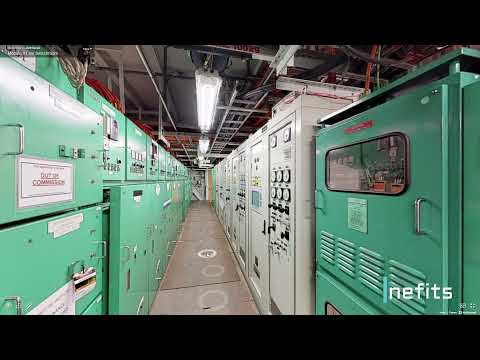
RemSense first gathers data from the site with cameras, LiDAR scanners, Internet-of-Things feeds, sensors, drones, and asset tags.
Then, engineering data from drawings, Building Information Modelling (BIM), original equipment manufacturer (OEM) manuals, and point clouds are incorporated into the digital model.
Finally, work orders, maintenance records, and safety and inspection records are input.
The data, scans and modelling are then incorporated into a Virtual Plant by RemSense’s AI, where it is linked with the client company’s own operational and management systems via individual asset ID numbers.

“Virtual Plant was designed in such a way that we do not need a new client to implement our safety system, or our maintenance system or our asset system or finance system, because we don't have any of those,” Brown continued.
“For us, going to a company, we're not trying to propose a change in the way they operate their business.
“What we're doing is providing a platform that is able, through API (application program interface) calls, to grab the data about the assets and bring it together without anyone having to access those systems.”
The benefits of this type of modular integration are extensive, presenting the opportunity for potentially unlimited tie-ins and add-ons based on the needs of each individual business.
“We're in discussions at the moment with the three leading ERP (enterprise resource planning) system providers to be able to actually use Virtual Plant as the interface for their product and their system as well,” Brown explained.
“So, it's not just us selling Virtual Plant to everyone, it's saying to other companies ‘you've got this great product, if you put this as your visual layer at the front, the way people use it becomes completely different and simpler’.”
Into the Industrial Metaverse
The metaverse is shaping up to be the next step in integrating the physical and digital worlds.
The industry is booming, with major players like Meta (Facebook), Apple, Microsoft, Nvidia and Epic Games throwing their hats in the ring and developing their own metaverse technology.
The global metaverse sector reached a market size of US$47.69 billion in 2020 and is expected to register a revenue CAGR of 43.3% over the forecast period up to 2028, very high growth for a newly emerging industry.
The metaverse is already beginning to branch into multiple subsectors now, with entertainment, military, and industrial applications staking out space in the digital expanse.
RemSense believes the Industrial Metaverse will be a game-changer in data visualisation and management opportunities, fully integrating Virtual Plant with a digital framework that will allow clients to meet and discuss issues as if they were on-site and in-person.
“The industrial metaverse will bring data to the forefront in a way that people can easily understand,” Brown explained.
“The other part of that is being able to put people into a virtual environment within the photographic twin environment, so they can walk around the plant, meet several other people, talk about a problem and discuss it with all the data at hand.
“The second part will really rely on companies like Microsoft or Facebook (Meta) to develop that environment and make that happen. Once that standardises, it's off.”
Putting the easy in ESG
Environmental, social and governance responsibilities have emerged as vital concerns for companies over the last few years, becoming integral to business credentials and off-take agreements worldwide.
While many companies are focused on big-ticket wins like carbon-neutral power sources and similar manufacturing and production-based carbon offset initiatives, digitalisation technologies like Virtual Plant have built-in ESG benefits.
“The environmental side is coming more and more to the front, where people travelling generates carbon,” Brown said.
“Every time we reduce the need to travel, you reduce the carbon footprint.
“We'll be announcing very shortly the integration of some visual and data analytics to Virtual Plant, that will enable us to be able to display carbon utilisation within plant spaces.
“It's an incredibly cheap win if you can achieve safety, all those cost saving benefits, and also improve your ESG without having to invest any more money in that.
“You're getting a double benefit through products like Virtual Plant.”
Partnerships and Collaborations
RemSense recently extended its partnership with leading spatial data and visualisation company Matterport Inc to include full participation as the lead industrial partner promoted within the Matterport Marketplace, set to launch in the second quarter of 2022.
The Virtual Plant system is built upon Matterport 3D software which forms a base for its own software to provide all the unique user interface and business solutions.
RemSense’s globally licensed partnership with Matterport provides the company with access to Matterport’s international market and enhanced technical features and support.
Just last week, RemSense secured another win when it partnered with Amazon subsidiary, Amazon Web Services (AWS), joining an extensive partner network of over 100,000 entities from more than 150 countries.
The partnership will allow RemSense to collaborate with AWS to develop the next release of Virtual Plant in the AWS environment, which will support easier integration with enterprise resource planning (ERP) systems and asset management solutions.
“Our full integration through Matterport and the common development platform provided by AWS both simplifies and extends the reach and capability of our industrial Virtual Plant product,” Brown said in the announcement.
“The collaboration with AWS is a key step in our ongoing development of the industrial metaverse.”
RemSense is in the midst of developing a resilient, global data visualisation company, well placed to grow internationally into the emerging digital transformation industry and emerging metaverse.
“We're walking the walk,” Brown stated, “We are absolutely focused on where we're heading. There's no question about what we're doing.”