
Calima Energy Ltd (ASX:CE1) has found further exploration success at the Brooks oil and gas property after its Gemini #5 well reached total depth.
Gemini #5 represents the first Sunburst well of the new year and was spudded on January 9, 2022.
The drill rig, which has since been released, took three days to drill and reached a measured depth of roughly 1,059 metres.
Earlier this week, Calima drilled its Pisces #3 well to 2,600 metres deep.
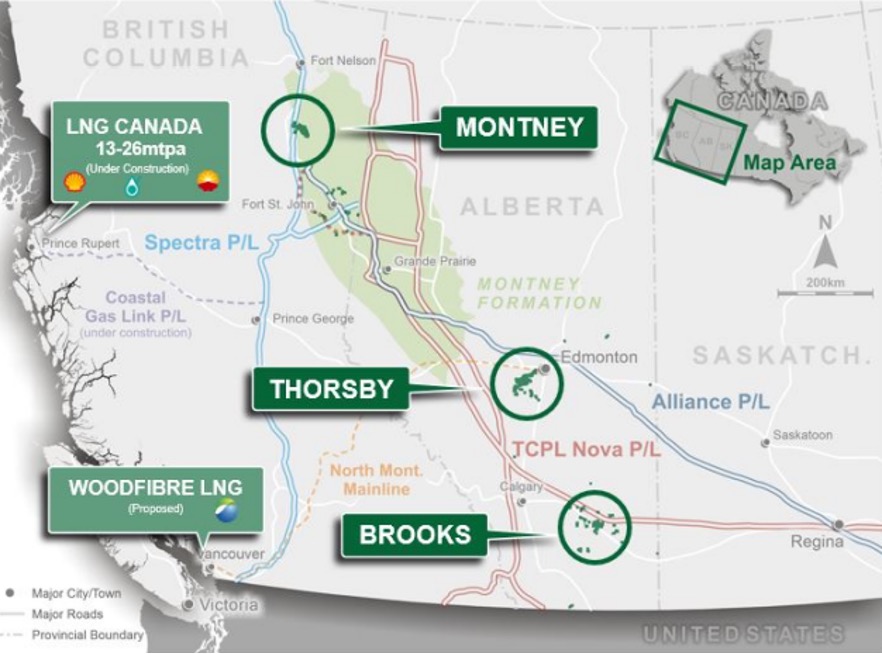
Gemini #5 was spudded at the Brooks asset.
Turning the soil at Gemini #5
Calima’s latest well was drilled to prove the presence of the Sunburst Formation at Brooks, as well as provide further data for a geological model that shows a further extension of the company’s prospective acreage.
Promisingly, open hole well logging at Gemini #5 indicated a Sunburst interval with reservoir properties sufficient for potential production from this deviated vertical well.
It also provided key geological information that may lead to previously un-booked Sunburst horizontal locations.
While potential production rates from this vertical are unknown, Calima believes the well is unlikely to require fracture stimulation to produce oil.
This vertical stratigraphic test well may lead to the addition of between one and six new horizontal Sunburst locations, which are within roughly 2.5 kilometres of Calima’s main 2-29 oil facility.
Looking ahead to production test
Speaking to the achievement, Calima CEO and president Jordan Kevol said the Gemini #5 well represented an exciting new discovery for Calima at Brooks.
“Gemini #5 has proven the presence of the Sunburst interval in a core area that is relatively underexplored.
“Our 3D seismic interpretation provided us this lead, and the open hole logs have proven the geophysical mapping.
“We look forward to Gemini #5’s production test in due course.”
Vertical exploratory test
The Gemini #5 well targeted the Sunburst Formation in an area where there was very little well penetration through the Sunburst.
Blackspur completed a 3D seismic program a few years ago that provided the lead, and the vertical stratigraphic test well has proven the presence of Sunburst age rock that appears to have sufficient porosity and enough pay-zone above the water contact to be a producible prospect.
The prospective zone is anticipated to be perforated in the coming months, and a subsequent production test will provide data on whether the well warrants equipping and tie-in.
If the production test is successful, and pending further geological and geophysical work, the company believes that between one and six new horizontal Sunburst locations may be present, that were previously un-booked.
Completion and flowback
As this Sunburst well is considered a conventional oil play, no fracture stimulation is anticipated for this vertical well.
The porous zone will be perforated, and inflow is expected immediately.
It will take a number of weeks of production testing to accurately determine inflow rates and water cuts.
If sufficient, the well will be then shut in and will await production equipment and pipeline tie-in.
Tie-in operations
Upon a successful production test, and if sufficient oil and gas rates are realised, the Gemini #5 well will be tied into Calima’s nearby 2-29 oil processing facility.
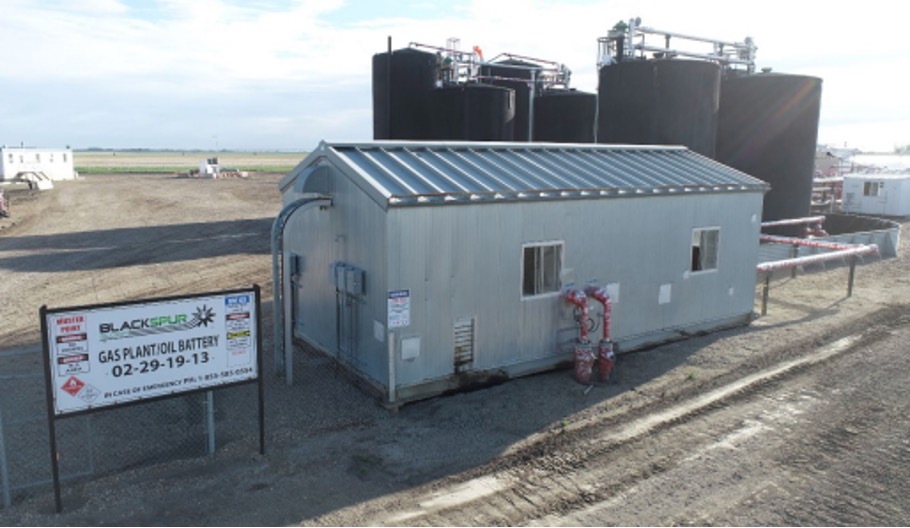
Calima’s Bantry Oil Processing Plant 2-29.
This tie-in will be part of a larger infrastructure project that Calima anticipates embarking on in the coming months.
Future horizontal Sunburst wells drilled as a result of this exploration success may also be tied into the same facilities.
Secondary discovery
Gemini #5 was drilled in this location to not only prove up the Sunburst zone but also to test for the potential of a mid-Mannville gas-bearing zone.
3D seismic indicated the potential for the Mannville zone, which would be analogous to a nearby gas-producing vertical well that had an IP30 of over 1 million cubic feet per day and has produced 0.8 billion cubic feet of gas.
Gemini #5 has confirmed the presence of this zone, and the electric logs indicate this may be a new producing zone.
To follow up on this opportunity, further geoscience work is required.