
As we work, live and play, we’re increasingly reliant on the precious minerals that lie under the earth’s surface.
They’re becoming so important, in fact, that the US Geological Society (USGS) tracks which elements are vital for our livelihoods on what’s known as the critical minerals list.
Last year, four minerals were out: helium, potash, rhenium and strontium no longer make the cut.
But the redraft paved the way for two newcomers that are becoming increasingly important in the new decade: nickel and zinc are rising up the ranks.
So just what makes these two minerals critical? And where can we expect to find them in 2022?
What is the critical minerals list?
Essentially, the USGS keeps a list of the minerals it considers most important to the US’ supply chains.
The catalogue is relatively new, established in 2018 by the US Department of the Interior and other government agencies.
In November last year, the USGS unveiled a draft of its 2021 iteration and sought public comment on the proposed amendments.
The government body defines a critical mineral as a non-fuel mineral or mineral material that’s essential to the economic or national security of the US, as well as its supply chain, which is vulnerable to disruption.
Critical minerals are also characterised as essential to product manufacturing — so much so that their absence would pose significant economic or national security consequences.
Speaking to the list’s revamp in November, Assistant Secretary of the Interior for Water and Science Tanya Trujillo said: “The USGS’s critical minerals list provides vital information for industry, policymakers, economists and scientists on the most important minerals when it comes to US supply chains.
“The statistics and information are crucial to understanding America’s vulnerability to disruptions in the supply of critical minerals, including data on the worldwide supply and demand for minerals and materials essential to the US economy and national security.”

A USGS office in the United States. Source: USGS.
New addition: Nickel
Nickel is fast becoming one of the world’s most critical minerals, but it’s also one of our most abundant.
The silvery-grey ore is the fifth-most common element on earth, making up an 80 parts per million concentration in the earth’s crust.
According to the Nickel Institute, the world’s nickel resources are currently estimated at almost 300 million tonnes.
Where does it come from?
More than half of our nickel comes from just five countries — Australia, Indonesia, South Africa, Russia and Canada — meaning other nations are increasingly reliant on nickel imports to meet growing demand.
For example, the USGS reports the US uses refined nickel imports in roughly half of its annual consumption.
What’s it used for?
Much of the nickel we get from the ground goes into what’s known as a ‘first-use’ scenario.
This means nickel products are converted into intermediaries, which then form the basis for nickel-containing end-use products.
The Nickel Institute has tracked data from commodity research firm and consultancy Roskill to determine where first-use nickel is used, and nearly three-quarters of the ore goes to stainless steel production.
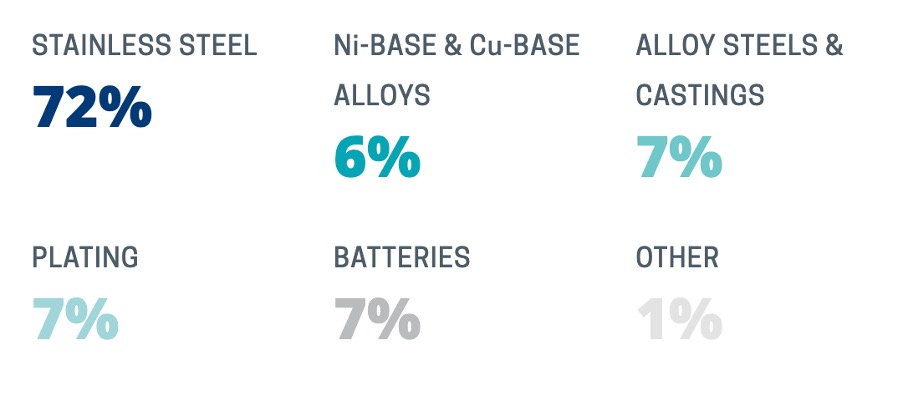
Source: Nickel Institute.
When it comes to nickel’s end-use applications, however, the results are much more varied:
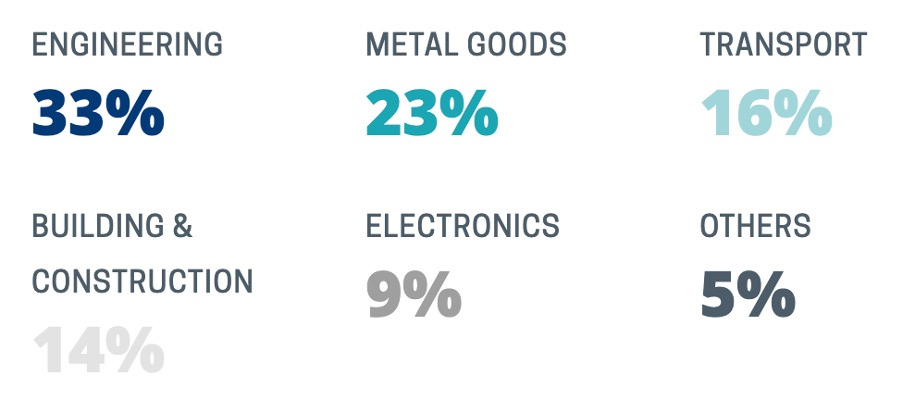
Source: Nickel Institute.
Of course, nickel is fast gaining traction amid the electric vehicle revolution.
The element forms a crucial component in some of the leading battery compositions, meaning demand for the ore will continue to grow in the coming decades.
What’s its superpower?
Nickel plays a huge part in the circular economy because of one defining factor: it’s recyclable.
Generally speaking, the ore can be repurposed again and again without losing its quality, meaning the nickel recycling industry can complement primary production.
According to the Nickel Institute, 57% of all mined nickel is still in use due to the long lifetime of products that use it.
However, around 17% of the nickel found in consumer goods still ends up in landfill, primarily found in metal goods and waste electrical and electronic equipment.
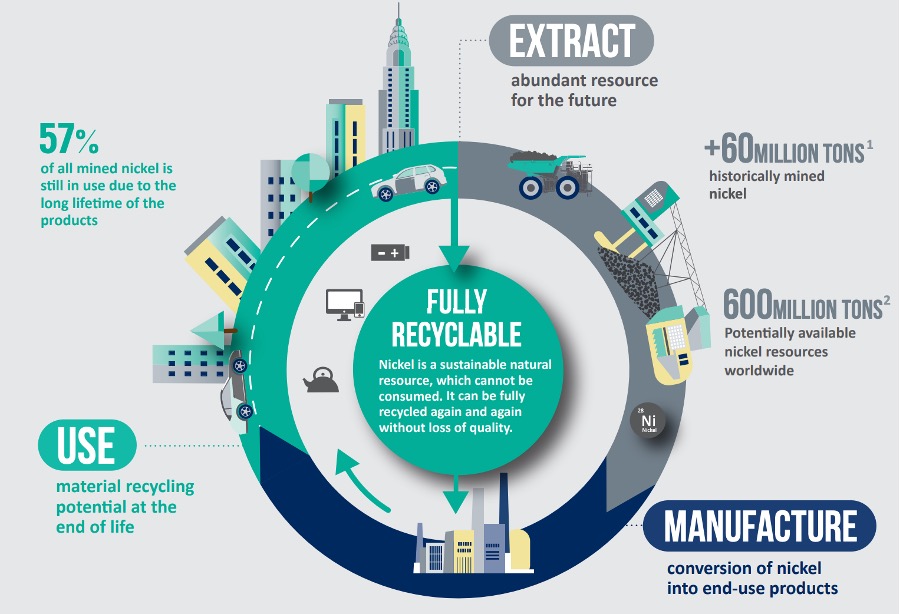
Nickel is part of the circular economy. Source: Nickel Institute.
What about the market outlook?
Nickel’s growing prospectivity is reflected in its pricing.
In the last five years, nickel prices on the London Metals Exchange have more than doubled from around US$10,000 a tonne to US$21,670.
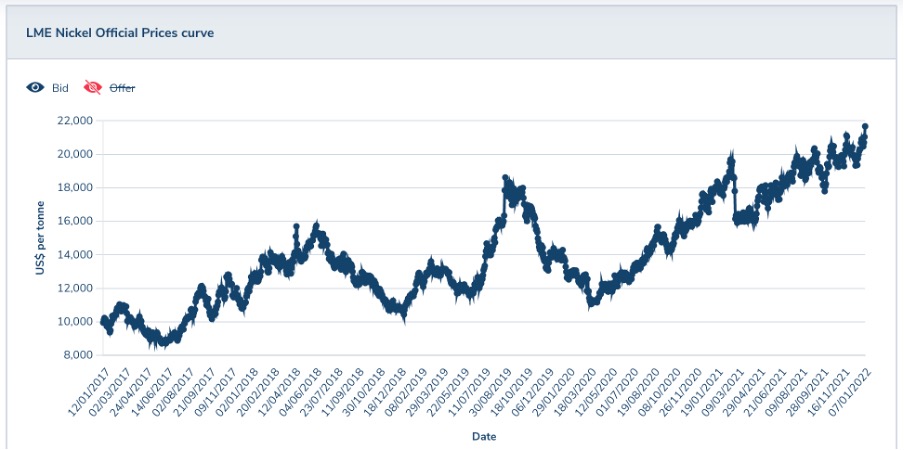
Nickel pricing on the London Metals Exchange, 2017 – 2022.
Growing nickel usage — particularly in a rebounding stainless steel industry — is expected to drive further demand for the commodity in 2022.
What’s more, a 2021 paper released by the International Nickel Study Group saw experts forecast the electrification of vehicles will continue to have a positive impact on nickel usage.
The uptake in nickel products, combined with supply impacts, could keep pricing buoyant in the new year.
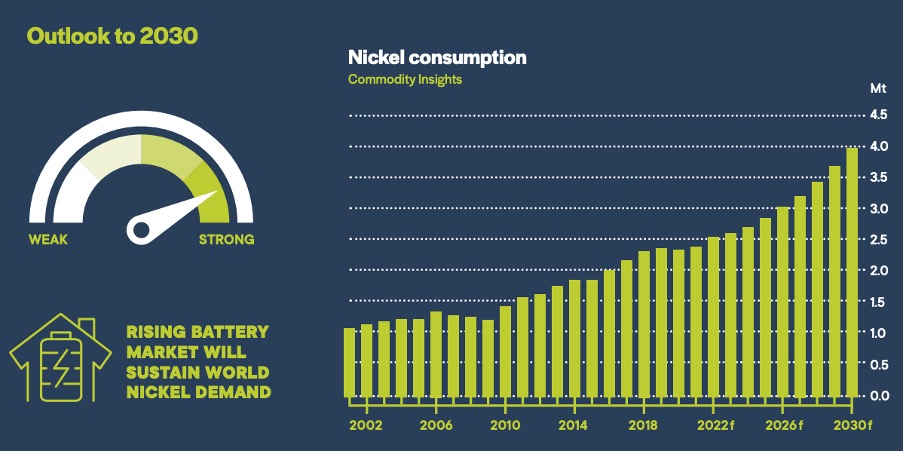
An outlook report on commodity demand through to 2030, published by the Minerals Council of Australia and consultancy firm Commodity Insights, remains bullish on nickel’s prospects.
Source: Commodity Demand outlook paper (2020).
According to data from Commodity Insights, the battery industry’s market share of nickel consumption will rise to 26% by 2030, with the sector consuming more than 1 million tonnes of nickel per year.
This will underpin nickel demand growing from 2.4 million in 2019 to 3.9 million in 2030 – an increase of 67% over the forecast period.
“World nickel demand has already more than doubled since 2001. But it will be rising demand for batteries that will spur future growth,” the report stated.
New addition: Zinc
Although not as common as nickel, zinc is still the 24th most common element in the earth’s crust.
The mineral has a broad range of applications and can be used in everything from metal production to human health.
According to the International Lead and Zinc study group, zinc and lead are the two most widely used non-ferrous metals after aluminium and copper and are vital materials in everyday life.
Where does it come from?
Zinc production is varied, with more than 50 countries producing the mineral around the world.
Among the top producers are countries like Canada, Australia, China, Peru and the United States.
The vast majority of zinc is mined underground, with just 8% of the resource unearthed from open-pit mining techniques.
Between January and October last year, world zinc mine production rose by 6.1% as smaller countries upped their production and offset falls in nations like Brazil and Canada.
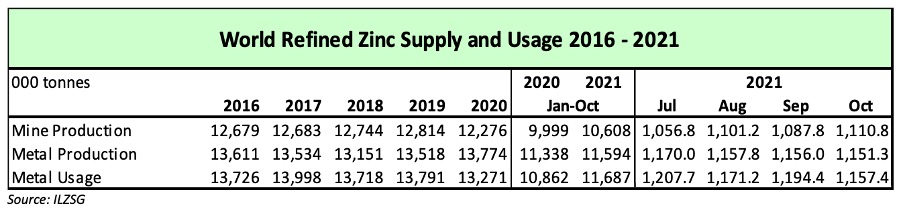
Global mines produced 10.6 million tonnes of zinc for the year by October 2021. Source: The International Lead and Zinc Study Group.
What’s it used for?
Far more than a vital mineral for the human body, zinc also has a key role to play in metal production.
According to the International Zinc Association (IZA), protecting steel against corrosion is the most important market for zinc, representing 60% of the mineral’s use worldwide.
Beyond this, zinc is also used in brass and bronze, as well as the die-casting industry, which produces metal parts in moulds.
Zinc can also be turned into zinc oxide, which is the product you find in your sunscreens and solar cells.

Global refined zinc consumption by first use. Source: International Zinc Association.
What’s its superpower?
Just like nickel, a big part of zinc’s prospectivity lies in its ability to be recycled.
A 2017 brochure from the International Zinc Association reported around 70% of the zinc produced worldwide originates from mined ores, while the remaining 30% comes from recycled or secondary zinc.
Ultimately, establishing recycling infrastructure to collect zinc at a product’s end of life can reduce energy use and emissions, as well as minimise waste disposal.
“Zinc’s unique metallurgical and chemical properties have made it the material of choice for an extensive range of applications in modern society,” the IZA stated.
“At the end of useful life, the zinc recovered from these products can be recycled without loss of physical properties.”
What about the market outlook?
Zinc has endured a somewhat turbulent run in the past few years after hitting a 10-year high in 2018.
While a two-year decline subdued the market in 2019 and 2020, prices rebounded to $2,965 per tonne in May 2021, representing a 50% increase year-over-year.
However, it may take the market some time to go steady with this critical mineral.
In its commodity forecast report, The World Bank posits zinc’s average spot price will fall to $2,400 per tonne in 2022 — down from the $2,700 recorded at the end of 2021.
After that, however, it predicts a slow growth period will start.
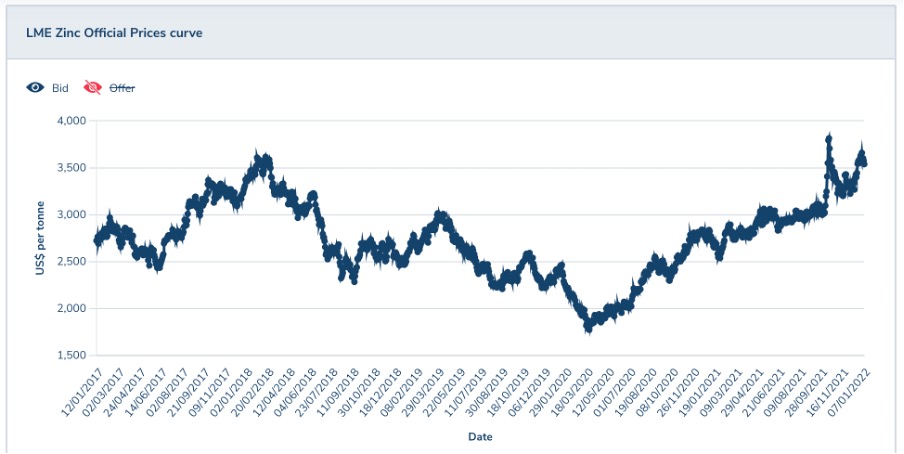
Zinc pricing on the London Metals Exchange, 2017 – 2022.
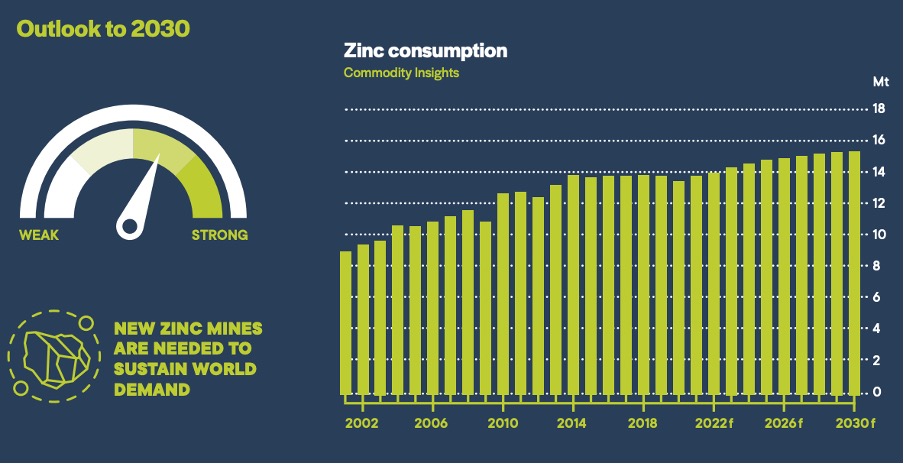
The Mineral Council of Australia and Commodity Insights also touched on zinc’s prospects in its 2020 outlook paper.
Their forecast for the critical mineral remains moderately strong, tied to zinc’s use in the galvanised steel industry.
Source: Commodity Demand outlook paper (2020).
“Rising urbanisation in highly populated Asian nations will be the main trend supporting increased use of galvanised steel over the next decade,” the report stated.
“Taller apartment buildings with higher steel intensity, larger cities with more apartments to house their growing populations and increased government spending on transport infrastructure to connect them will require greater zinc to manage corrosion risks.”
Commodity Insights believes world zinc consumption will rise gradually over the outlook period, jumping from 13.7 million tonnes in 2019 to 15.3 million tonnes in 2030.