
PVW Resources NL (ASX:PVW) traded higher following further success during a follow-up field program at the Tanami rare earth element (REE) and gold camp in Western Australia.
The wholly-owned, multi-element exploration play returned more high-grade rare earth rock chip results from Killi Killi East and Watts Rise prospects, underlining its broader mineralised potential.
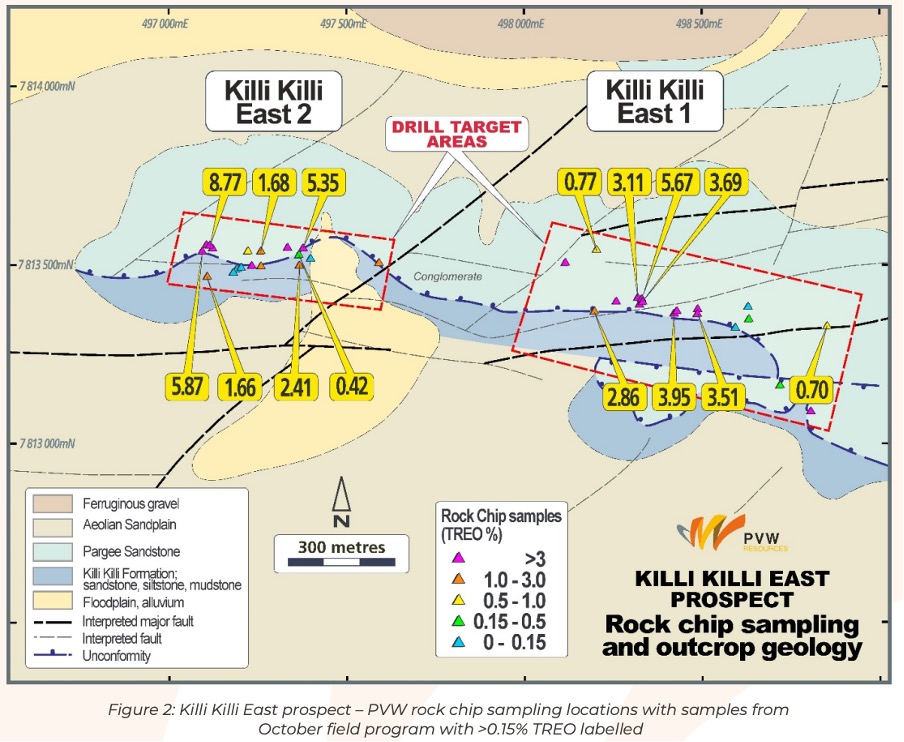
Specifically, assays up to 8.77% total rare earth oxides (TREO) came back from the field program, including 6,221ppm dysprosium, with 13 out of 23 samples returning greater than 1% TREO and heavy rare earths comprising, on average, 76% TREO.
The results bode well for drill targets at Tanami’s prospects, with the REE target at Killi Killi East 1 extended to at least 800 metres in strike length, while Killi Killi East 2 now runs for 500 metres.
There’s also gold in the ground: rock chip samples returned as much as 3.13 g/t gold and confirmed the precious metal mineralisation uncovered in a previous sampling program.
New record price
Investors responded positively, sending shares up as much as 17% higher to A$0.62, a new record.
Looking ahead, geochemical soil sample results from Killi Killi East and Watts Rise are anticipated late this month or early next.
In the meantime, preparations continue for PVW’s maiden Tanami drilling program, slated to kick off at the two prospects in April on the hunt for REE and gold mineralisation.
Emerging rare earths province
Speaking to the findings, PVW Resources executive director George Bauk said: “These results continue to confirm the huge potential for heavy rare earth mineralisation at the Killi Killi Project.
“The exploration team continues to define heavy rare earth mineralisation along the 18-kilometre corridor and now has identified two priority drill target areas …
“Following the receipt of soil samples and the geophysical interpretation of recent airborne surveys, the team will finalise the maiden drill program, which is being prepared to commence in April following the northern wet season.
“The significant number of high-grade rock chip samples provide PVW with a large number of walk-up targets in an emerging rare earths province.
“While the results continue to deliver the significant presence of heavy rare earths, including dysprosium and terbium, we have also seen some significant numbers for neodymium and praseodymium, which are all critical in the permanent magnets.”
Sampling program
PVW’s latest field expedition served as a follow-up to a previous rock chip sampling program, with results from that campaign reported in October.

As part of the second sampling program, 20 samples were taken from the Killi Killi East prospect, and 12 of those returned greater than 1% TREO, with a 76% average ratio of heavy rare earths to TREO.
Some of the best results include:
- 8.77% TREO including 6,221 parts per million (ppm) dysprosium;
- 5.87% TREO including 3,214ppm dysprosium and 10,836ppm neodymium;
- 5.67% TREO including 4,407ppm dysprosium; and
- 5.35% TREO including 2,686ppm dysprosium and 8,643ppm neodymium.
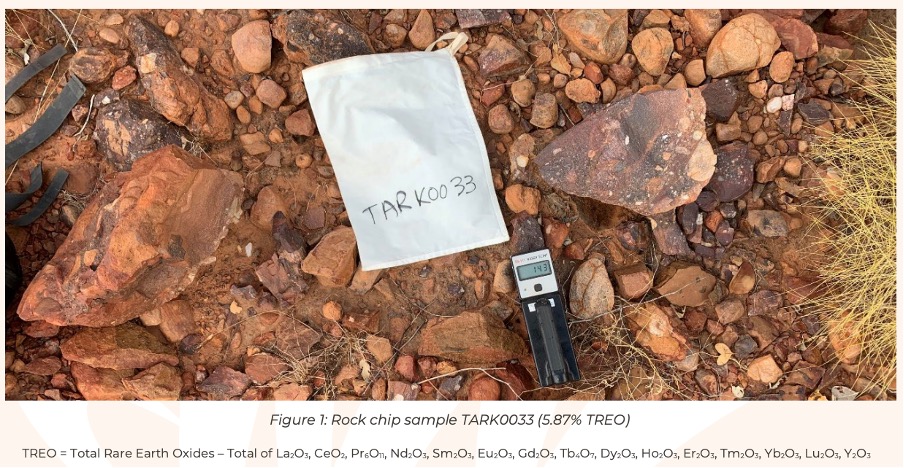
This dominance of heavy rare earths is linked to the rare earth mineral xenotime — an element that was confirmed at the Tanami prospects by PVW’s own mineralised studies.
What’s more, three of the rock chip samples from Killi Killi East 2 also returned anomalous gold assays, returning results such as 3.13 g/t, 1.33 g/t and 0.58 g/t gold.
These samples were taken as a follow-up to the gold assays of up to 8.94 g/t and 4.43 g/t recorded in the August sampling program.
Next steps
A new interpretation of geophysical data from the Watts Rise-Killi Killi East trend is nearing completion, which will assist in drill targeting across the 18-kilometre-long Pargee Sandstone - Killi Killi unconformity.
Drilling is planned to commence in April at both Watts Rise and Killi Killi East, focused on the surface REE mineralisation identified to date as well as regional conceptual drill targets.
Preliminary metallurgical studies are also underway, with results expected in March.