
The world is changing, and the technology that mines, builds and powers the globe is under the spotlight.
Mining, infrastructure and energy companies are increasingly finding themselves in a new world — one that’s going green and triggering innovation across the sector.
Last year, multinational accounting firm Deloitte released its annual Tracking the Trends report — a paper that reports on 10 themes set to impact the mining industry.
Of those 10 in 2021, three centred on environmental, social and governance considerations — a trend that is sure to stay in centre stage in the year ahead.

The trends piqued to define mining in 2021. Source: Deloitte.
Now, engineering firm Hatch is on the lookout for developments in this space in 2022 — and managing director of Australia and Asia and chair of the Green Hydrogen Consortium Jan Kwak already has some trends to watch.
He believes these are the emerging movements that will define the new year:
- Hydrogen will start replacing diesel in heavy industry;
- Global metals supply chains will reorganise;
- Renewable energy projects will grow exponentially, including projects owned and operated by First Nations companies;
- Post-industrial land use will fuel clean energy production;
- A balance of focus in social, environmental and financial value in infrastructure will emerge; and
- The pandemic will influence city shape.
Shaping Australia on the path to net-zero
Speaking to the year ahead, Kwak explained: “Following the government’s commitment to net-zero, the energy transition to renewables and reducing the carbon footprint of heavy industry will be the key focus of 2022 and beyond.
“The challenge for Australia, and the mining industry, is that to supply the materials to support the transition to electrification, mining will need to increase.
“Paradoxically, to construct this greener future, electricity consumption will also need to increase so that we can produce the green materials to build renewable energy projects.
“The decisions we make now will shape whether Australia can meet its net-zero targets.”
Six industry forecasts to watch
Hydrogen will take off as a diesel replacement in heavy industry
A leaner, greener energy source is needed to power the shift to net-zero — and hydrogen is the up-and-comer on everyone’s lips.
“Australia is in a unique position to become a hydrogen world-leader, but a baseload domestic economy is needed before we can export it,” Kwak explained.
He believes Australia will begin to build its domestic market by replacing diesel with green hydrogen.
“Other markets, such as Europe, are already outpacing Australia, thanks to governments levelling the cost.”
Involving First Nations in clean energy projects
Looking ahead, Kwak believes First Nations people will be fundamental when it comes to developing renewable energy projects.
“The failures of the mining industry, particularly Rio Tinto’s destruction at Juukan Gorge, exposed the need for better inclusion of First Nations peoples in managing the land,” he stated.
“The switch to renewables in Australia, particularly solar, is a massive change in the way we use land, often traditional lands.
Right now, Australia’s listed renewable utilities segment is a small but mighty corner of the market.
There’s just 11 stocks in this part of the Utilities sector — which in itself is the smallest in terms of company volume on the ASX — but the segment hosts a combined $30.7 billion in market capitalisation.
Major players in the renewables segment include Meridian Energy Ltd and Mercury NZ Ltd — both NZ-based renewable electricity generators and traders — and Australian electricity and gas retailer AGL Ltd.
A balance of focus in social, environmental and financial value in infrastructure will emerge
In the past, we’ve seen social value and the environment take a back seat to a company or project’s bottom line.
But the balance in power has started to shift — and it’s a movement that’s poised to advance in the new year.
Kwak predicts that in 2022, social and environmental values will begin to emerge as key elements in infrastructure design and measurement.
“Currently, there are ways of measuring environmental value; for example, through proxies such as carbon footprint or similar, but no clear agreed measure of the ultimate variables that matter – diversity and lifecycle vibrancy.
“Similarly with social value, the ability to measure and quantify the value infrastructure brings to society, such as improved health and education, reduced crime or as a platform for enterprise is an invaluable way to inform design and make the business case for our future infrastructure.”
Post-industrial land use to fuel production
What happens to industrial land after it’s served its purpose?
We could see these areas get a new lease on life in 2022.
“As the lifecycle of a mine comes to an end and industries close, the changed typography of the land presents an opportunity for renewable energy projects,” Kwak noted.
Looking ahead, he predicts that Australia will see more of its industrial land reshaped for clean energy.
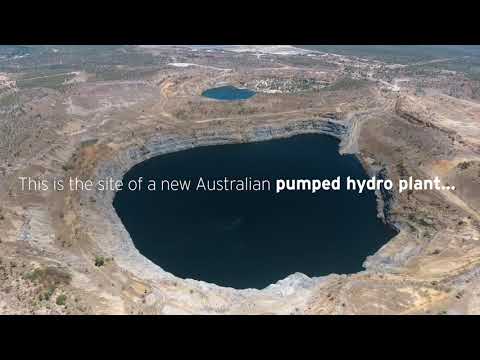
“Tailings dams offer flat ground perfect for solar farms, while disused open-pit mines provide the elevation needed for hydropower.”
For a picture of what this could look like down the track, look no further than the decommissioned Kidston gold mine, northeast of Townsville in Queensland.
It’s soon to get a second life as a pumped hydroelectric plant — and it’s just one example of what this kind of second-hand industrial space can do.
Pandemic will continue to influence city shape
COVID-19 dominated the discourse in 2020 and 2021, and it’s unlikely to go anywhere in the new year — especially as we learn to live with infections.
Kwak believes the COVID-19 pandemic will influence medical resilience in cities and shape neighbourhoods.
He forecasts people will return to the cities, and, as a way to draw them back, new technologies will aid in transforming ventilation, particularly in public transport, offices, shopping centres and residential buildings.
“While suburbs were created during the 1918 pandemic to escape dense urban areas, this time the urban design will focus on walkable, accessible 20-minute neighbourhoods closer to the city,” he explained.
Shifting supply chains will drive decarbonisation
Finally, Kwak believes the Morrison Government’s focus on technological breakthroughs will not be the key driver of decarbonisation.
The federal roadmap lauds future innovations as the key to curbing our carbon emissions on the path to net-zero.
Instead, the Hatch managing director predicts that the mining industry will reshape its supply chains to achieve net-zero.
“Currently, the most carbon-intensive processing of coal, LNG and iron ore are undertaken offshore,” Kwak noted.
“However, with abundant natural resources, Australia is able to bring these processes back onshore, such as the metallurgical work in steel production, using renewable energy.”