
2021 saw US markets continue to storm ahead like a rampaging rhino while the UK was more like a bulldog, dogged but lacking in stamina.
The US’s S&P 500 has delivered a total return of 26.5% so far this year, noted Jason Hollands, managing director of online investing service, Bestinvest. That compares to a 17.9% total return for the MSCI United Kingdom All Cap index, with the UK running out of puff a bit in the second half of the year.
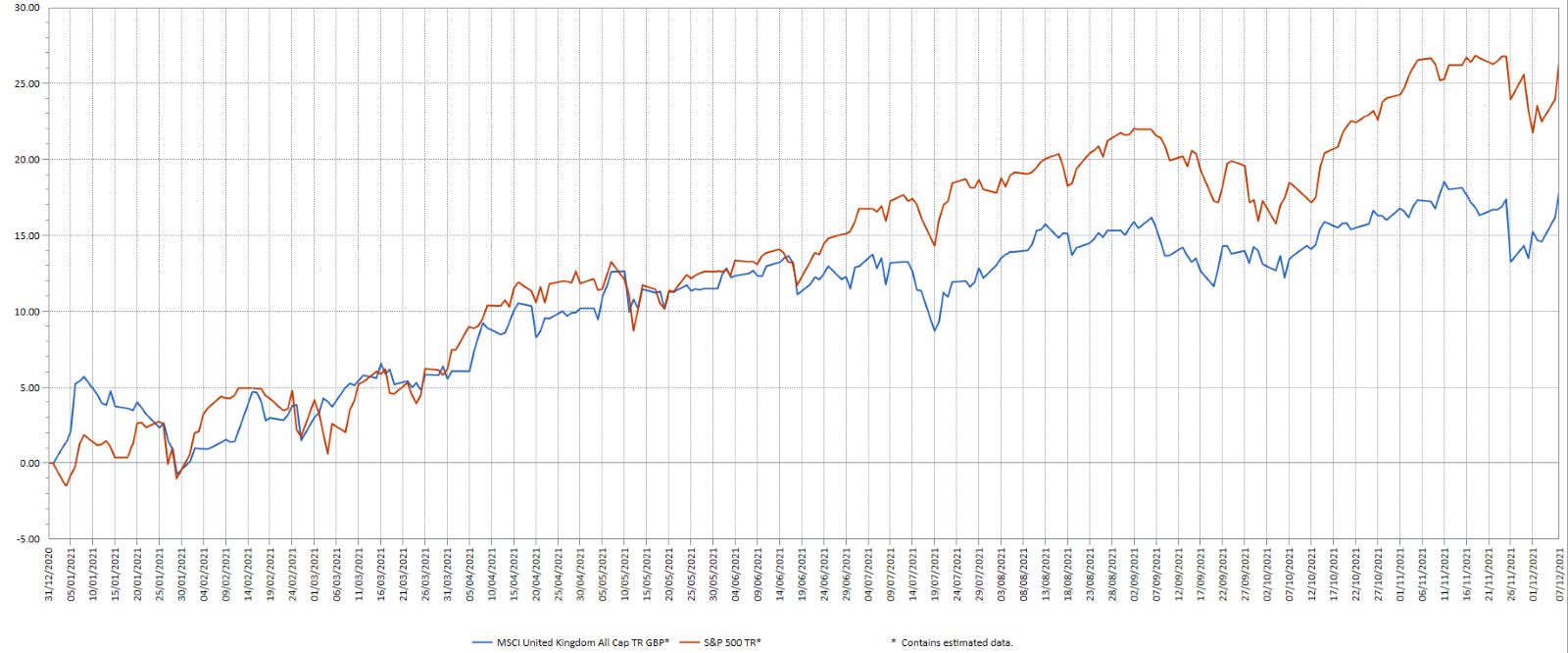
Source: Bestinvest / Lipper, total return in local currency, 31/12/20 to 7/12/21
"UK equities were a much bigger laggard in 2020, due to the London market’s low exposure to technology and online stocks - areas which fared well during the lockdowns," said Jason Hollands, managing director of online investing service, Bestinvest, which has attempted to sum up 2021 in just six charts.
“However, unlike US shares – where valuations have only been higher than now during the dot com bubble – UK equities are a bargain in comparison. A fact not lost on international private equity firms who have been engaged in a frenzy of bids for UK companies this year,” he added.
Given the pandemic and the resources available to countries to combat it, it is perhaps not surprising that markets in the developed world had a much better time of it in 2021 than did emerging markets.
Developed markets, as measured by the MSCI World Index, are up by around 20.5% year to date but the MSCI Emerging Markets Index is down by about 2%.
Source: Source: Bestinvest / Lipper, total return in US Dollars, 31/12/20 to 7/12/21
That being said, Indian and Taiwanese equities had a great year, according to Hollands, returning 22.8% and 23.3% respectively but it has not been a good year for Chinese stocks where Hollands said there has been “something of a reckoning”.
“A range of legal and regulatory crackdowns by the Chinese authorities, concerns about the fragility of its property sector and the regime’s aggressive stance towards Taiwan have spooked fund managers and other investors,” Hollands claims.
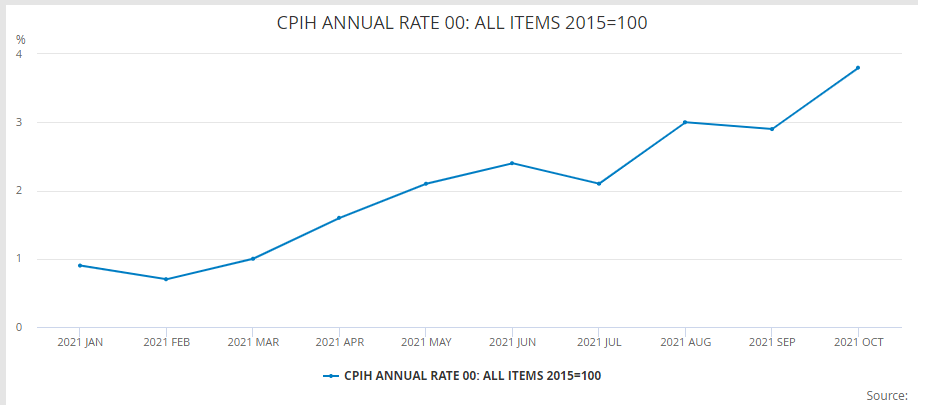
Office for National Statistics
Meanwhile, the spectre of inflation has returned like the ghost of Christmas past – long past. Those of us who lived through the Thatcher administration will perhaps be inclined to snort, “you call that inflation?” but a rise in the UK inflation rate from around 1% to 4.2% is perhaps worth keeping an eye on.
A number of factors are at play, not least supply chain difficulties and soaring oil and energy prices.
Hollands suggested that investors who like to manage their own portfolios might seek out funds with exposure to commodities, financials and even income-paying sectors such as infrastructure.
“On the government debt side of things inflation-protected bonds have done well this year – but it makes more sense to invest in these when inflation isn’t a problem rather than after the event,” Hollands advised.
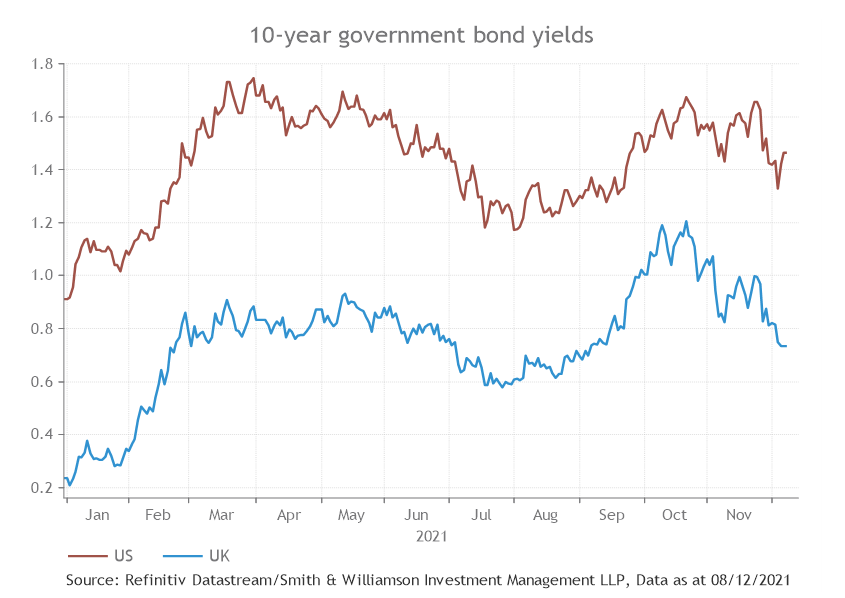
Talking of government debt, 10-year government bond yields remain “dismally low”, despite rising inflation. After adjusting for inflation, government bonds are now sporting negative yields and it is “hard to see the attraction”, according to Bestinvest.
If a steady income is your aim then alternatives such as investing in private equity, infrastructure or music royalties are attracting increasing attention. Although the underlying assets are illiquid, investors can usually gain exposure to them through investment companies listed on the stock exchange, thereby solving the liquidity issue.
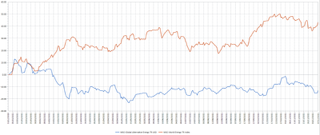
If inflation has been “a thing” as the kids (no longer) say, then so has an increased emphasis on ESG – environmental, social and governance – in investing circles in the UK and elsewhere, so it is interesting to note that old school fossil fuel companies outperformed renewables in the stock market in 2021.
The MSCI Alternative Energy Index slumped -12.6% in 2021 after rising sharply in 2020, Hollands observed. In contrast, the MSCI World Energy Index, which is dominated by oil and gas giants, has rocketed 43.9% as oil and gas prices have soared.
In a rehash of the tried and tested “spread your risk” advice, Hollands advises that diversified funds with an investment strategy that has feet in both camps – “bad old” energy and renewable energy - are less likely to be vulnerable to short-term changes in investment fashions.
Source: Bestinvest / Lipper, total return in US Dollars, 31/12/20 to 7/12/21
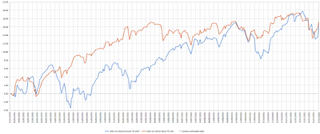
Lastly, the return of value investing has been forecast more often than the return of the miniskirt, although like the miniskirt, for some sections of society it never really went away.
Nevertheless, the shake-out caused by the first round of lockdowns led to a number of investors trawling for companies whose share prices had fallen too far. With the success of vaccine programmes across the globe, there was reason to suspect that life would eventually get back to something approaching normality and that hard-hit companies would survive to fight another day.
“As economies have reopened, undervalued business and those hit hard by the recessions of 2020 came soaring back in the first half the of the year, while “growth” companies wobbled before regaining their stride,” Hollands stated.
If the return to favour of value stocks seems at odds with the earlier assertion that the US has outperformed the UK because of its greater proportion of fast-growing tech stocks, it’s all relative.
“Year to date, the global returns from ‘growth’ and ‘value’ stocks are pretty much neck and neck,' said Hollands.
Source: Bestinvest / Lipper, total return in US Dollars, 31/12/20 to 7/12/21